💎 A Beginner’s Guide to Crystal Meanings (Without Going Full Woo-Woo)
🧭 The 60-Second Take
Imagine this: you're browsing an online store, captivated by a stunning amethyst pendant. The description is sprinkled with enticing phrases, and the price seems just right. Yet, doubt creeps in. Is it truly natural or just cleverly marketed?
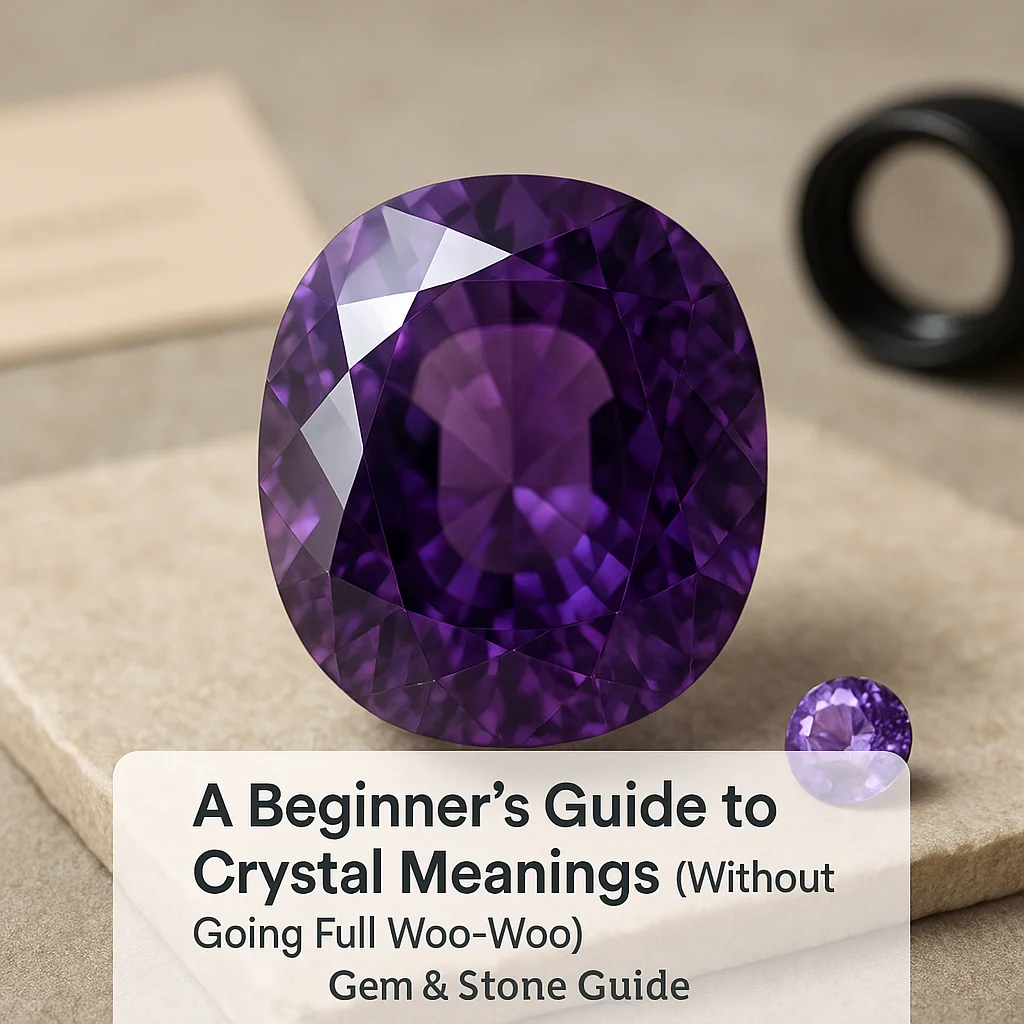
This scenario is all too common, especially for beginners venturing into the world of crystals. The allure of gemstones often comes with the challenge of discerning authenticity from deception.
To navigate these murky waters, it's essential to arm yourself with savvy steps. Here's a quick checklist:
- Research seller credibility: check reviews and ratings.
- Ask about the stone's origin and treatment.
- Request multiple photos in different lighting conditions.
- Examine return policies before purchase.
- Compare prices against similar listings.
- Seek a lab report for higher-value stones.
- Trust your instincts; if something feels off, consider other options.
🧪 What Actually Makes It “Real”
When considering a crystal's authenticity, it's vital to understand the differences between natural, lab-grown, and imitation stones. Natural gems are formed over time within the earth, carrying unique inclusions and characteristics.
In contrast, lab-grown stones share the same chemical properties as their natural counterparts but are crafted in controlled environments. This often results in fewer imperfections.
Imitation stones, however, mimic the aesthetic of real gems without replicating their chemical structure. These are often glass or plastic.
Photos online can be deceptive, often enhanced or staged. It's essential to balance visual cues with detailed knowledge and documentation when assessing a stone's authenticity.
🔍 My Buyer Checklist (Step by Step)
- Start with the seller's reputation: If there's negative feedback, proceed cautiously.
- Examine the price: If it's significantly lower than others, question its authenticity.
- Request photos with a white balance card: True colors matter.
- Verify the stone's description: Natural vs. treated can impact value.
- Check for visible inclusions: Too perfect might mean synthetic.
- Ask for a lab report on expensive purchases: Certified documentation matters.
- Inquire about enhancements: Coatings or dyes can alter appearance.
- Review the return policy thoroughly: No returns should be a red flag.
- Question any vague language in the description: Clarity is key.
- Seek additional opinions from gemologists if uncertain.
This checklist serves as a guide, not a rigid rulebook. Use it to make informed decisions, but remember, not every point will apply to every purchase. Stay flexible and considerate in your approach.
⚠️ Mistakes People Make (And the Fix)
- Relying solely on one photo: Ask for more in varied lighting.
- Believing 'too perfect' claims: Natural imperfections add character.
- Ignoring return policy details: Understanding them protects your purchase.
- Assuming all certificates are equal: Verify the issuing authority.
- Overlooking seller feedback: Reviews often hold valuable insights.
- Jumping at low prices: Successful bargains require careful evaluation.
- Forgetting to inquire about treatments: They impact both appearance and value.
- Neglecting proper storage tips: Preserve your investment's longevity.
- Underestimating lighting influence: It alters the stone’s perceived hue.
- Overlooking personal instincts: Trust your gut feelings about a shop or item.
🎨 Look & Red Flags That Matter
The appearance of a gemstone is influenced by several factors beyond its mere presence. Lighting is a prime suspect; under different conditions, a stone's color and luster can appear vastly different.
The cut of the crystal affects not only its aesthetic but also its brilliance. Poor cutting might result in uneven facets that dull the stone.
Surface coatings, common in some markets, enhance appearance temporarily but may wear off. Dyed stones possess vibrant color, but it may not be permanent.
Inclusions, naturally occurring, add personality to stones but too many may lessen value. Pay attention to context when judging them.
🧼 Care & Storage (Safe Defaults)
- Do use mild soap, water, and a soft cloth for cleaning.
- Don't use ultrasonic cleaners without proper knowledge.
- Do store crystals separately to avoid scratching.
- Don't expose stones to extreme heat or sun.
- Do keep opals and pearls away from chemicals.
- Don't store porous stones in direct sunlight.
- Do use gentle handling to minimize scratches and chips.
- Don't use harsh chemicals on treated stones.
- Do periodically check settings on jewelry for security.
- Don't forget to wipe down with a soft cloth to remove oils.
- Do reinvestigate storage for special care stones, like turquoise.
- Don't assume all stones have the same care needs.
- Do protect softer stones from knocks and drops.
- Don't leave stones in damp conditions for prolonged periods.
🧾 What Certificates Can (and Can’t) Prove
A certificate from a reputable lab can provide peace of mind, detailing a gemstone's properties such as carat weight, color, cut, and clarity. The presence of any treatments will usually be reported.
However, not all certificates are created equal. Some sellers may provide documentation from lesser-known labs that exaggerate claims or omit critical information. Always verify the credentials of the certifying body.
Investing in a certificate is often worthwhile for higher-value purchases, but may not be necessary for smaller acquisitions. Consider the significance and rarity of the gem in question when deciding on a report.
❓ Quick Questions Buyers Ask
Q: Can I trust photos for authenticity?
A: Not fully; they should be one factor in a balanced evaluation.
Q: What is the most crucial factor to check in a gem?
A: Consider the stone's origin, as it influences value and rarity.
Q: Should I always insist on a certificate?
A: It depends on the gem's value and importance to you.
Q: Is price a good indicator of quality?
A: Not always; both overpriced and underpriced stones require scrutiny.
Q: Are inclusions bad?
A: Not necessarily; they can be seen as enhancing character.
Q: How can I detect treated stones?
A: Ask direct questions and review any provided documentation.
Q: What to do if a stone seems altered?
A: Request verification from a trusted gemologist.
Q: Do all crystals need special storage?
A: Not all; focus on more delicate, porous options.
Q: Should I worry about stone coatings?
A: Yes, they can wear over time and affect appearance.
Q: Is it safe to clean all crystals the same way?
A: No, tailor care to the stone type and treatment.
📌 If You Only Remember 5 Things
- Always research your source thoroughly before purchase.
- The true beauty of a stone shines with informed care.
- Trust but verify when it comes to certificates and documentation.
- Never underestimate the power of good lighting and thorough examination.
- Instincts matter; if it feels wrong, pause and reconsider.