💎 Gemstones by Color: How to Choose Without Regretting It
🧭 The 60-Second Take
You've found yourself captivated by a stunning gem in an online listing. Its color radiates vibrantly, and the price seems too good to pass up. You're tempted to trust the "certificate" provided, but doubts linger about lighting effects and photo filters.
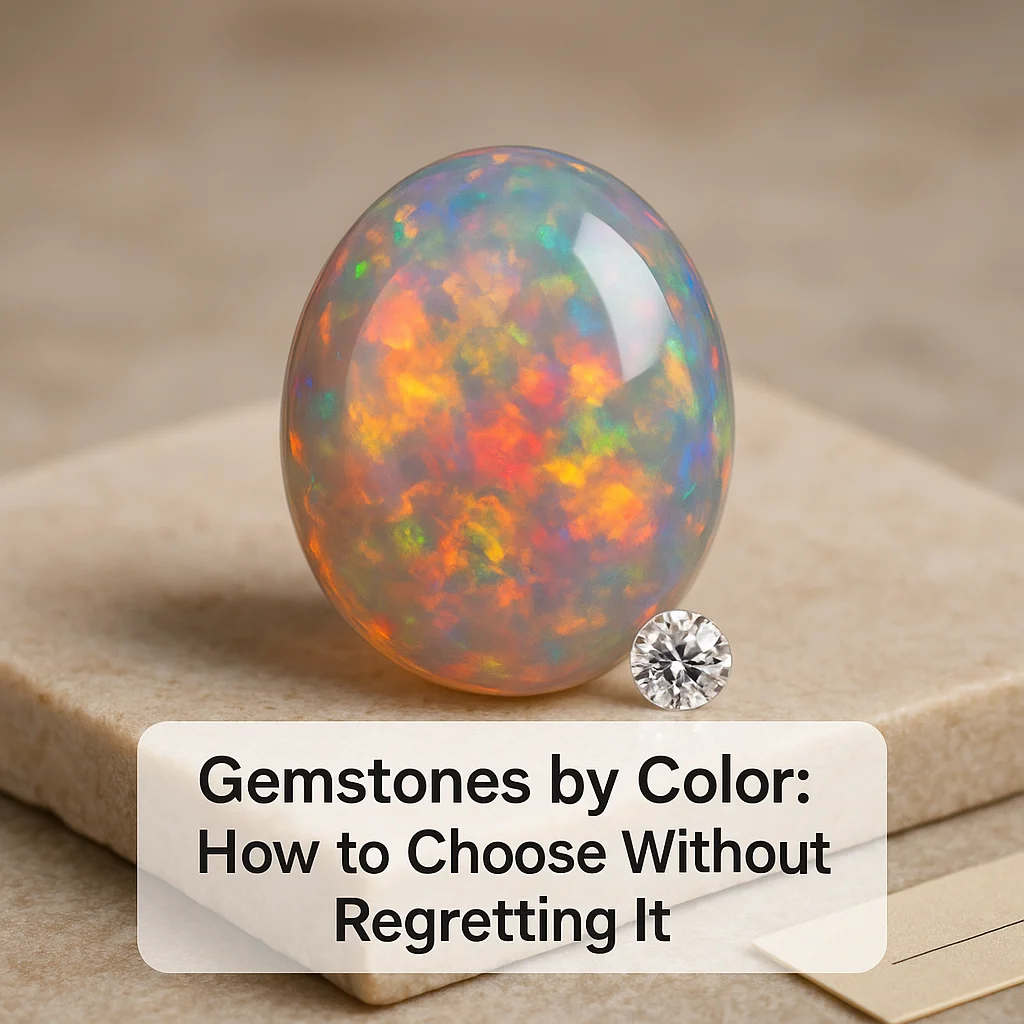
In such scenarios, let’s remember that lighting can dramatically alter the appearance of gemstones. Images online may not reflect the true color under all lighting conditions. This is especially true when manipulated to enhance colors visually.
Before diving headlong into an impulse purchase, here’s a concise action list to guide you:
- Ask the seller for photos of the gem in different lighting conditions.
- Cross-check the “certificate” for legitimacy and specific information.
- Consider the reputation of the seller as a deciding factor.
- Set a realistic budget and stick to it.
- Determine if the return policy is fair and feasible.
- Seek a second opinion from a gemologist, if uncertain.
- Remember, if it appears too perfect, it may not be real.
- Stay informed about the market value of the gem in question.
🧪 What Actually Makes It “Real”
Buyers often grapple with the question: is my gemstone natural, lab-grown, imitation, or assembled? In simple terms, natural gemstones are formed in the earth, while lab-grown gems share the same physical and chemical properties but are created in a controlled environment.
Imitations, on the other hand, mimic the appearance but not the substance of a gemstone. Assembled stones, like doublets and triplets, combine different materials to present a more appealing look.
From photos alone, it can be difficult to verify authenticity. Prices and paperwork should not be taken as definitive proof. Instead, they should be part of an informed assessment process involving expert verification if necessary.
🔍 My Buyer Checklist (Step by Step)
- Determine the purpose of your purchase. If it’s for collection, invest in quality. If for casual wear, consider budget options.
- Assess gemstone type and color preferences. Be clear on what you’re seeking.
- If a gem sparkles under particular lighting, ask for more daylight images.
- Check market reports for an understanding of fair pricing.
- If paperwork is available, verify its issuing authority.
- If impressed by a gem’s perfection, question its authenticity and ask for lab verification.
- Consider potential treatments and request disclosure from the seller.
- If inclusions bother you, note they often add uniqueness.
- Visit a reputable jeweler for specialized advice if uncertain.
- Make use of a reliable return policy to safeguard your purchase.
- Stay patient; avoid purchases that seem rushed or pressured. >
This checklist should guide you calmly. Each step serves to protect your investment without inducing unnecessary stress.
⚠️ Mistakes People Make (And the Fix)
- Over-relying on photos: Always request images in various lighting conditions.
- Assuming paper guarantees quality: Verify certificates with independent labs.
- Overlooking return policies: Ensure returns are easy and feasible before buying.
- Trusting “perfect” appears: Be wary; nothing is flawless.
- Ignoring light effects: A gemstone’s color can shift significantly in different lights.
- Confusing synthetic for fake: Lab-grown gems are real but differently sourced.
- Failing to research: Always check market value to avoid being overcharged.
- Disregarding personal taste: Select a gem that resonates personally, not just what’s popular.
- Underestimating inclusions: They can enhance a gem’s character rather than blemish it.
- Skipping professional advice: Consulting a gemologist can clear doubts effectively.
🎨 Look & Red Flags That Matter
Understanding what impacts a gemstone’s appearance can mitigate buyer’s regret. Lighting plays a pivotal role in how colors are perceived. The cut and polish amplify a gem’s brilliance, while inclusions add unique character to each piece.
Beware of surface coatings and dyes commonly applied in the market to enhance color. These treatments can alter the gem’s long-term appearance and should be disclosed by sellers.
In real life, treatments like irradiation or heat are common, especially in stones like sapphires or topaz, to improve color. Understanding these can empower you to make more confident choices.
🧼 Care & Storage (Safe Defaults)
- Do clean with mild soap, water, and a soft cloth.
- Don’t use ultrasonic cleaners on fragile gemstones (e.g., opal, emerald).
- Do keep gems away from direct sunlight to avoid color fade.
- Don’t expose porous gems (e.g., pearl, turquoise) to harsh chemicals.
- Do store separately to prevent scratching.
- Don’t wear soft gems (e.g., amber) during rigorous activities.
- Do regularly check settings for security.
- Don’t apply perfumes or lotions before putting on jewelry.
- Do consult a professional for special care instructions applicable to treated gems.
- Don’t forget to have high-value items appraised for insurance purposes.
🧾 What Certificates Can (and Can’t) Prove
Gemstone certificates often provide insight into identity, weight, dimensions, and any known treatments. However, not all labs are equal and some certificates could only supply basic information or even embellish the gem's quality.
Certificates don’t always confirm a gemstone's value. Instead, they give details that can influence its market worth. A report from a reputable lab can significantly affirm authenticity, so it’s worth considering for high-value purchases.
While certificates can add confidence, they should complement thorough research and expert advice, particularly when determining the authenticity of a stone.
❓ Quick Questions Buyers Ask
Q: Can online photos deceive buyers?
A: Yes, lighting and editing can skew color and clarity.
Q: Are low prices always a red flag?
A: Generally, yes. Cross-check the market price for assurance.
Q: Do all gemstones scratch as easily?
A: No, hardness varies; diamonds resist scratches, pearls do not.
Q: Is a gemstone certificate always necessary?
A: It depends on gem value; it’s prudent for expensive stones.
Q: How do I know if a gem is treated?
A: Ask sellers for disclosure and verification from reputable labs.
Q: What is an assembled gemstone?
A: It’s a stone composed of different parts (e.g., doublets).
Q: Can gemstone treatments fade over time?
A: Yes, some treatments may alter with exposure to elements.
Q: Do inclusions lower gem quality?
A: Not necessarily; they add uniqueness and character.
📌 If You Only Remember 5 Things
- Always verify authenticity beyond just a certificate.
- Trust your eye for personal taste, not just popular trends.
- Understand light significantly changes how color appears.
- Research fair market prices to prevent overspending.
- Be informed about common treatments that affect lasting quality.
- Choose reputable sellers with transparent return policies.
- Embrace inclusions—they can be uniquely beautiful.