💎 The Best Affordable “Luxury Look” Stones Under $50
🧭 The 60-Second Take
You're online, scrolling through listings of shimmering gemstones, each more dazzling than the last. You pause at a particular piece, staring at the beautiful hues, the clarity, and the enticing price tag. The description promises authenticity, natural origins, and a high-quality certificate.
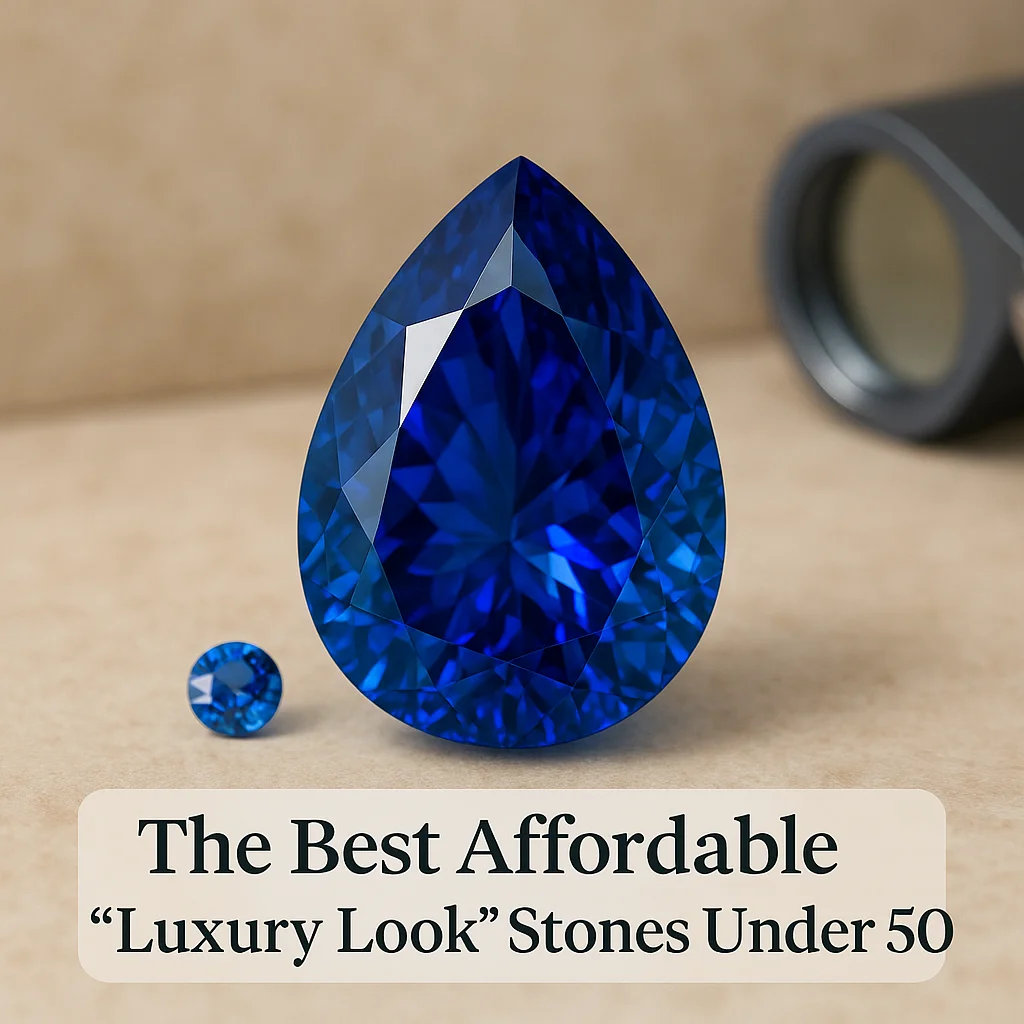
It's tempting to believe that you've discovered a hidden treasure. But in the world of gemstones, appearances can be deceiving. Lighting tricks and clever photography often play a part, and the true nature of a gem can be obscured by the very tools used to sell it.
Here's a brief guide to help you make informed decisions as you navigate the exciting—but complex—world of affordable luxury gemstones:
- Read descriptions critically and note any terms like "enhanced," "synthetic," or "simulated."
- Always check return policies before purchasing.
- Verify the credibility of the seller's certifications.
- Compare prices across multiple sources.
- Understand the limitations of photographs in revealing gem flaws.
- Factor in added costs like shipping and insurance.
- If possible, consult with a professional gemologist.
- Remember that if it seems too good to be true, it probably is.
🧪 What Actually Makes It “Real”
In the realm of gemstones, "real" can refer to a variety of different creations. Natural stones are those formed by the earth, untreated and unaltered. But there are also lab-grown alternatives, which mimic natural formation processes and can be equally stunning.
Imitations, on the other hand, are look-alikes that replicate the appearance of more valuable gems without possessing the same properties. Assembled stones, such as doublets or triplets, are constructed from multiple pieces bonded together to enhance appearance.
Unfortunately, photos alone can't always tell you what type of gem you're looking at. Online images are often enhanced, and paperwork might not be as reliable as it appears. When it comes to price, a lower tag often implies treatments or synthetic origins, so approach budget finds with the right level of skepticism.
🔍 My Buyer Checklist (Step by Step)
- Examine the stone's description for mentions of treatments or origins.
- If available, request a video of the stone in natural light.
- Research the seller to check for reviews or complaints.
- Clarify any use of terms like "real" or "natural" with the seller.
- Inquire about the stone's origin and any known treatments it has undergone.
- If an independent lab certificate is available, review its contents carefully.
- Compare the stone's weight and dimensions against standard pricing for its type.
- Double-check return and refund policies before committing.
- If uncertain, have a local gemologist appraise the stone after purchase.
- Consider how the stone fits your desired aesthetic and budget.
This checklist can help guide your buying process without overwhelming you. Start from the top and don't rush your decisions. Each step is designed to arm you with the knowledge to differentiate between various gem offerings sensibly.
⚠️ Mistakes People Make (And the Fix)
- Relying solely on seller photos—Always verify with additional lighting perspectives.
- Ignoring minor flaws—Some inclusions can add character; know your preferences.
- Skimming through return policies—Ensure you can return unsatisfactory purchases.
- Judging by price alone—Consider the full history and identity, not just cost.
- Falling for "too perfect" gems—Authentic stones usually have unique quirks.
- Overvaluing certificates—Research the certifying lab for credibility.
- Assuming one lab result reveals all—Lab findings vary; seek multiple opinions if needed.
- Not accounting for enhancements—Understand common treatments in today’s market.
- Overreacting to perceived value—Evaluate the stone based on confirmed details.
- Underestimating lighting effects—Observe stones in varied lighting before deciding.
🎨 Look & Red Flags That Matter
When evaluating gemstones, several factors can influence their visual appeal. Lighting is a significant consideration; gems can appear different under varied lights, affecting their perceived value and beauty.
The cut and polish of a stone directly impact how it catches light and shines. Imperfections or inclusions may also alter appearance, but slight imperfections are normal and can add to the stone's uniqueness.
Treatments such as surface coatings or dyes are often applied to enhance a gem’s color or clarity. While some treatments are standard, others may not hold up over time. Verify whether a treatment is common or might undermine the longevity of the stone.
🧼 Care & Storage (Safe Defaults)
- Do use mild soap and warm water for cleaning, with a soft cloth.
- Don't expose your gemstone to harsh chemicals or abrasive materials.
- Do store gems separately to avoid scratches.
- Don't leave gems in direct sunlight for extended periods.
- Do use cloths or pouches for storage to prevent damages.
- Don't wear gemstones during heavy physical activity.
- Do keep gems away from acidic substances.
- Don't clean porous or treated stones ultrasonically.
- Do clean settings gently and regularly to maintain shine.
- Don't forget to check for loose settings periodically.
- Do bear in mind the specific needs of porous stones like turquoise or opal. >
🧾 What Certificates Can (and Can’t) Prove
Gemstone certificates can provide helpful information about a stone’s characteristics, such as carat weight, dimensions, and whether it’s natural or lab-grown. These documents offer a degree of assurance, but they're not conclusive evidence of a gem's overall worth.
Sellers may exaggerate a certificate’s significance to enhance perceived value. Certificate details can vary significantly based on the issuing entity. Such documents are more valuable when originating from recognized labs known for stringent verification processes.
Purchasing a certified gemstone can be beneficial, especially for higher-value items. Still, it is essential to scrutinize the certificate to understand its scope. Not all certifying bodies adhere to the same standards, and some certifications may omit crucial details.
❓ Quick Questions Buyers Ask
Q: Are lab-grown stones real?
A: Yes, they possess the same physical properties as natural stones.
Q: Can I trust online gemstone sellers?
A: Research seller reviews and verify return policies to make an informed choice.
Q: Do treatments reduce stone value?
A: It depends on the treatment type and its long-term stability.
Q: Are inclusions always bad?
A: Not necessarily; some inclusions add character and authenticity.
Q: What’s the best way to clean gemstones?
A: Use mild soap, water, and a soft cloth for most stones.
Q: Should I insure inexpensive stones?
A: Insuring depends on personal preference and the stone's value to you.
Q: How do I spot enhancements?
A: Look for unnatural coloring or clarity, which may indicate treatments.
Q: What’s a red flag at purchase?
A: “Too perfect” stones at a low price are often suspect.
Q: Do gem certificates guarantee authenticity?
A: They provide information but aren’t a foolproof guarantee. Check the lab’s reputation.
📌 If You Only Remember 5 Things
- Natural, lab-grown, and imitation stones each present unique characteristics; know what to expect.
- Photographs can mislead; see gems in various lights when possible.
- Certificates add value when from credible labs but aren't flawless guarantees.
- Understand common treatments and their implications on durability.
- Your satisfaction hinges on knowing what you value most in a gemstone.