💎 August Birthstone Spinel vs Peridot Differences
🪨 What It Is
Spinel and peridot are both treasured gemstones associated with the month of August. While both stones carry the title of birthstone, they are distinct in composition, appearance, and properties. Understanding these differences can help enthusiasts and buyers make informed decisions when selecting jewelry.
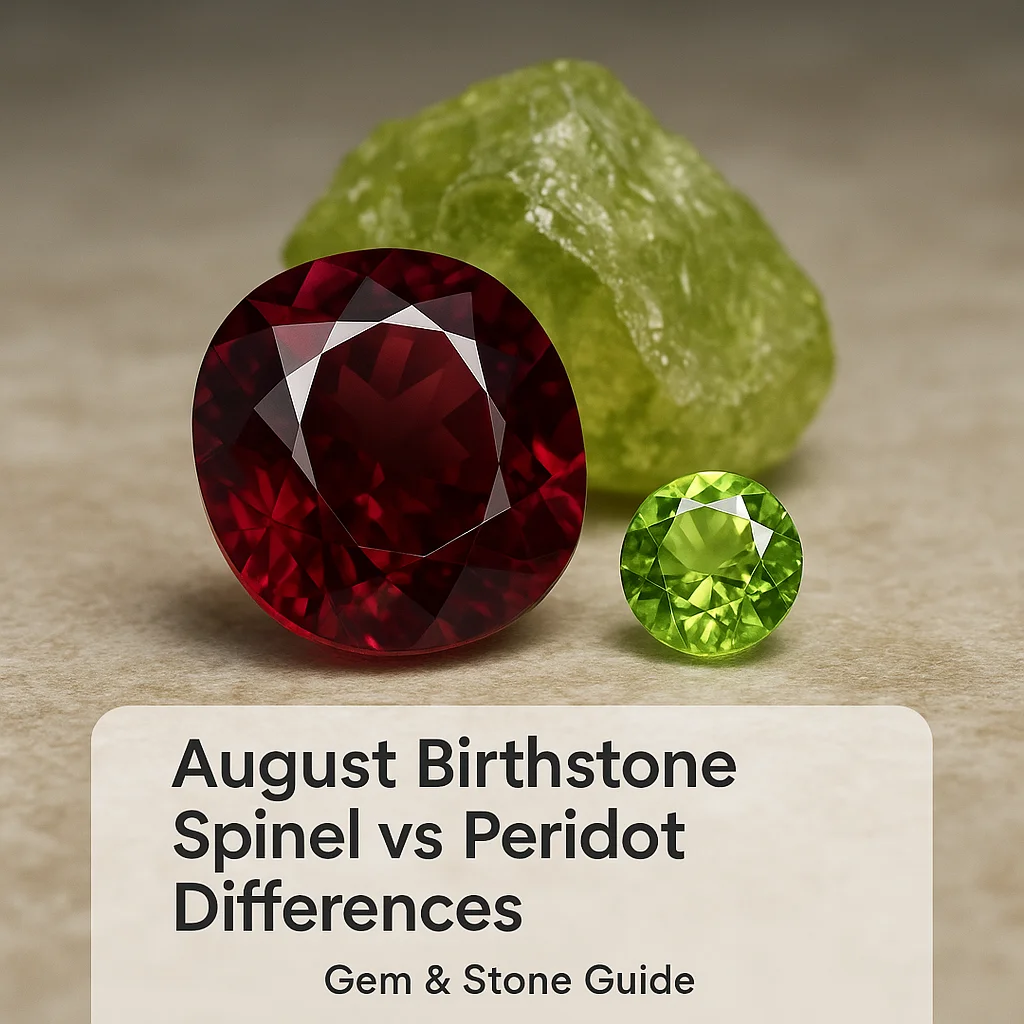
Spinel is known for its wide range of colors and sparkling clarity, often resembling the more famous ruby and sapphire. It is a mineral composed of magnesium aluminum oxide. Peridot, on the other hand, is the gem-quality variety of the mineral olivine, and it is renowned for its vibrant green color. Peridot is the traditional birthstone for August, known for its dazzling lime to olive green hues.
In this article, you will learn about their origins, formation, visual characteristics, physical properties, cultural significance, and practical care. Additionally, we will explore buying tips and common misconceptions associated with each stone. As beginners delve into the world of gemstones, this knowledge will be a comprehensive guide to understanding and appreciating spinel and peridot.
🌍 Where It Comes From
Spinel is typically found in metamorphic rocks, such as marbles, and in some igneous rocks. It is often mined from gravel deposits where it forms along with other gem-quality minerals. Some well-known origins include parts of Southeast Asia, particularly Myanmar, Sri Lanka, and Vietnam. In recent years, new sources in Tanzania and Madagascar have been discovered, bringing beautiful specimens to the market.
Peridot is formed deep within the earth's mantle and is brought to the surface through volcanic activity, making it primarily an igneous mineral. It is found in volcanic rocks like basalts and occasionally in meteorites known as pallasites. Major producers of peridot include the United States, particularly the San Carlos Apache Reservation in Arizona, which is renowned for its rich green varieties.
The geographical origin of both spinel and peridot can influence their color, clarity, and market value. For spinels, Burmese and Mahenge (Tanzania) stones are highly prized for their vivid colors and rarity. Peridots from Arizona are celebrated for their bright clarity and consistent color. Collectors often seek stones from these prestigious locations, resulting in higher demand and value.
Understanding the geological settings and origins of each gemstone can enhance appreciation and assist in assessing the nuances related to market reputation, as each location may impart unique characteristics to the gems.
🔬 How It Forms
Spinel forms when limestone undergoes contact metamorphism— a process involving heat and pressure. Magnesium from limestone combines with aluminum from surrounding rocks, fostering the growth of spinel crystals. The colors in spinel are primarily due to trace elements like chromium, which can produce vivid reds, or iron, which may result in blue or violet hues.
Peridot, a member of the olivine family, forms in the earth's mantle under high temperature and pressure. It is primarily composed of magnesium iron silicate, and its green coloration is due to the presence of iron, which is an essential component of the mineral structure. Peridot is unique in that it does not require any additional elements for its color than what naturally exists within its formation makeup.
When exploring the formation of spinel and peridot, it is clear that their development involves intricate processes deep within Earth's crust, eventually bringing these stunning gems to the surface throughout eons of geological activity.
🎨 Color and Look
Spinel is celebrated for its broad color range, including shades of pink, red, orange, violet, blue, and even shades of black. The most valued colors are vibrant reds and cobalt blues, which may rival or even surpass some rubies and sapphires in beauty. The appearance of spinel is enhanced by expert cutting and polishing, revealing its exceptional sparkle and brilliance.
Peridot, on the other hand, is primarily restricted to green shades. Its color spectrum extends from yellowish-green to lush, deep olive tones, typically exhibiting high transparency and a characteristic oily or vitreous luster. Peridot stones may occasionally show a slight brown tint depending on their iron content, and they maintain their green hue under artificial lighting.
Both spinel and peridot are usually cut into various shapes to maximize their beauty. Common treatments, if any, are uncommon for spinel, making it a favorite for those seeking untreated gems. Peridot is typically left untreated, but care in cutting is necessary to reduce visible inclusions and enhance its natural glow.
🧪 Properties That Matter
The Mohs hardness scale, which measures scratch resistance, rates spinel at 8, indicating that it is a durable gemstone suitable for everyday jewelry. It has a good toughness and a conchoidal fracture, meaning it does not have a defined cleavage direction but can chip along curved surfaces.
Peridot ranks at 6.5 to 7 on the Mohs scale. Its lower hardness means it requires more care than spinel to prevent scratches and abrasion. Its toughness is rated as fair, with a likelihood of cleavage along defined planes, which requires thoughtful consideration in jewelry designs likely to experience daily wear.
The luster of spinel is vitreous to sub-adamantine, contributing to its brilliant appearance. In contrast, peridot has a softer, vitreous luster that complements its vibrant green color. Clarity can vary in both, with spinel often being eye-clean, while peridot may exhibit inclusions that require careful cutting to minimize their visibility.
Knowing these properties can aid in choosing the right gemstone for the intended use, such as selecting spinel for a ring due to its hardness or opting for peridot in settings that offer protection from daily knocks.
✨ Meanings, Birthstones, and Culture
Spinel and peridot both enjoy notable recognition as birthstones for August, although peridot holds the more traditional and historical title. Spinel was reintroduced as an alternative August birthstone in 2016 by the American Gem Trade Association, highlighting its rising popularity and appreciation among gem enthusiasts.
In various cultures, spinel is associated with revitalizing energy and is thought to inspire creativity and self-discovery. Peridot, steeped in ancient lore, is believed to ward off nightmares and bring protection and healing to its wearer. These associations should be perceived as cultural traditions rather than established truths.
In modern jewelry, both stones are used to celebrate birthdays, anniversaries, and milestones, making them cherished gifts that carry personal and cultural significance.
🧼 Care and Cleaning
For both spinel and peridot, gentle cleaning with warm soapy water and a soft brush is recommended. Avoid using harsh chemicals or ultrasonic cleaners, especially for peridot, which may be more vulnerable to damage. Spinel generally withstands more vigorous cleaning methods due to its hardness.
When storing spinel and peridot, keep them separate from harder stones like diamonds or sapphires to prevent scratches. Utilize soft pouches or lined jewelry boxes to provide additional protection.
It is advisable to avoid exposing peridot to sudden temperature changes, as extreme conditions may adversely affect the stone due to its inherent structural characteristics. Spinel is more resilient to these changes but should still be treated with care to maintain its brilliance.
🛒 Buying Tips and What to Check
When purchasing spinel, focus on its color saturation, clarity, and cut quality, as these factors greatly influence its value. Burmese spinels command premium prices due to their vivid colors and prestigious roots. For peridot, prioritize bright green colors without brownish tones and fewer visible inclusions.
Both stones should be accompanied by full disclosure regarding any treatments or enhancements. Always consider requesting a gemological report from a reputable lab, especially for high-value purchases, as it confirms authenticity and quality.
For online buying, ensure sellers provide high-quality images, clear return policies, and positive customer feedback. A trustworthy seller will transparently disclose all relevant details, offering peace of mind during the transaction.
⚠️ Real vs Fake and Common Look-Alikes
The jewelry market includes synthetic spinels, often created to mimic natural stones. While lab-grown spinel is physically and chemically identical, it is considered less desirable than its natural counterpart. Differentiating requires expert gemological tools.
Imitations, particularly glass or cubic zirconia, can resemble spinel and peridot but lack their distinct properties. Assembled stones like doublets or triplets may incorporate non-gem materials and should be identified by professionals.
Common look-alikes include diamond for spinel, while for peridot, green tourmaline or green quartz may cause confusion. Professional testing, rather than home experiments, is crucial for accurate identification and validation.
❓ Common Questions and Misconceptions
"Is it a mineral or a rock?" Spinel and peridot are individual minerals, not rocks.
"Is it a birthstone?" Both are associated with August, peridot being traditional, spinel a recent addition.
"Will it scratch easily?" Spinel is more scratch-resistant (Mohs 8), peridot less so (6.5–7).
"Can it go in water?" Brief contact is fine, but avoid prolonged soaking, especially for peridot.
"Does color fade in sunlight?" Generally, both stones are stable, but continued exposure is not recommended.
"What treatments are common?" Spinel is rarely treated, peridot is typically untreated as well.
"Is lab-grown 'fake'?" Lab-grown is not fake but is synthetic; it mirrors natural properties.
"How do I store it safely?" Use soft pouches and avoid contact with tougher gemstones.
"Do inclusions always lower value?" Lesser visibility inclusions are less impactful, while prominent ones can reduce value.
"How do I pick a good one for jewelry?" Focus on color, clarity, and cut that suits personal style and use intent.
📌 Summary
- Spinel and peridot are both August birthstones, each with unique features.
- Spinel comes in diverse colors, while peridot is known for its green spectrum.
- Spinel forms in metamorphic settings; peridot originates deep within the mantle.
- Spinel is durable (Mohs 8), better for rings; peridot is softer, better for protected settings.
- Spinel is rarely treated, while peridot is generally untreated.
- Gentle cleaning and suitable storage can extend both stones' life.
- Spinel is flexible for all jewelry types; peridot should avoid rough use.
- Common look-alikes include glass for both stones.
- Authentication needs professional examination and lab reports.
- A buying checklist should include color, clarity, origin, and treatment details.
- Peridot is the traditional August gem, with spinel added recently.
- Memorable takeaway: Color, durability, and origin define value and use.