💎 December Birthstone Tanzanite vs Turquoise Differences
🪨 What It Is
Tanzanite and turquoise are both associated with December, making them popular birthstones for this month. Tanzanite is a gemstone variety of the mineral zoisite, known for its stunning blue to violet hues. Turquoise, on the other hand, is an opaque, blue-to-green mineral that has been cherished for centuries.
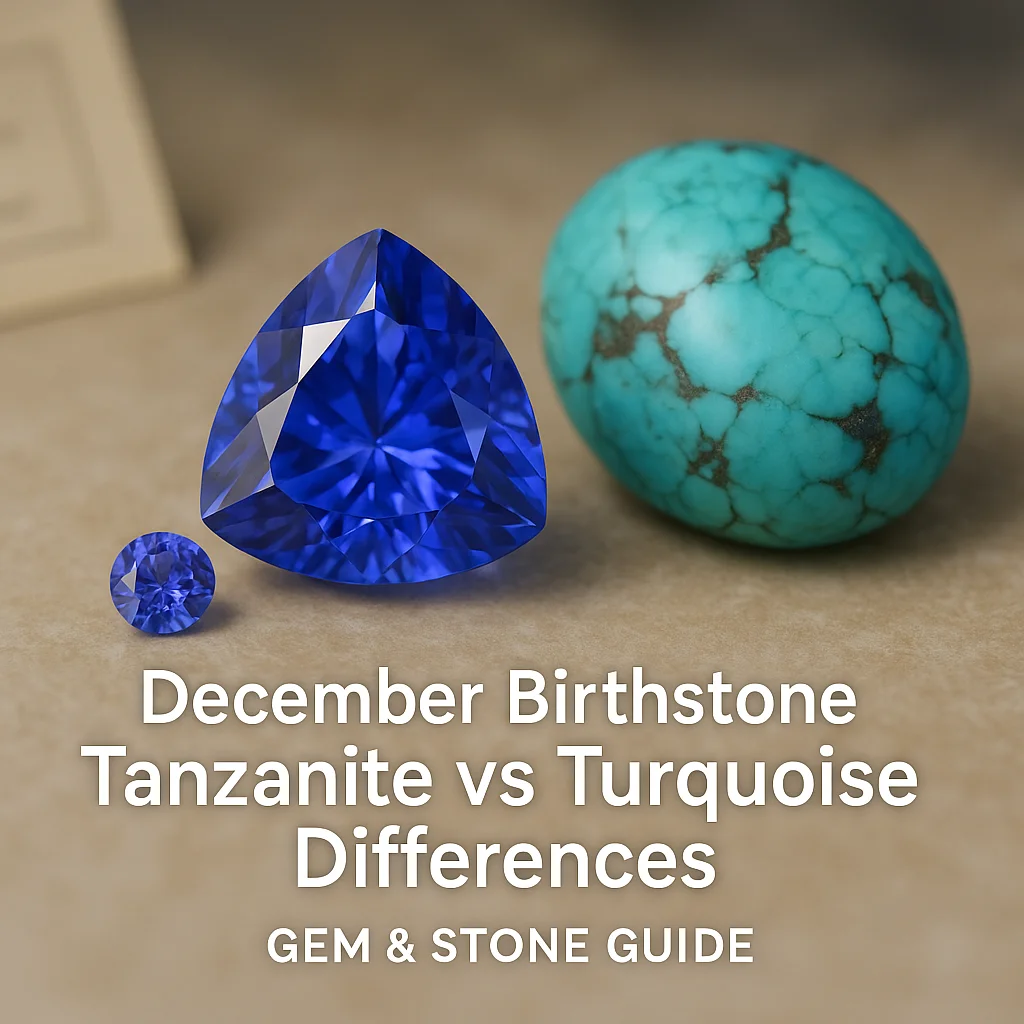
Tanzanite is a modern discovery in the gemstone world and has quickly gained popularity for its vibrant color. Turquoise, rich in historical and cultural significance, has been used in jewelry and ornamentation for thousands of years. This article will explore their differences in appearance, properties, origins, and care.
As we dive deeper into these gemstones, you will learn about their unique attributes, how to distinguish between them, and what to consider when selecting one for your collection or as a meaningful gift.
🌍 Where It Comes From
Tanzanite is primarily found in a specific region of Tanzania in East Africa, which is its only known significant source. The gemstone occurs in metamorphic rocks formed by heat and pressure below the Earth's surface. The limited geographic origin contributes to its rarity and exclusivity.
Turquoise, by contrast, is mined in several parts of the world, including the southwestern United States, Iran, and China. This gemstone forms in arid regions where groundwater interacts with copper deposits, resulting in turquoise's unique colors. The diversity in origin impacts the quality and color variations found in turquoise.
The origin of these gemstones can significantly influence their market value. Tanzanite from its native Tanzania is often sought after, while turquoise's desirability may depend on its provenance, such as high-quality stones from Iran or the United States known for their intense color.
🔬 How It Forms
Tanzanite forms through a complex geological process involving the metamorphosis of pre-existing rock under high temperatures and pressures within the Earth's crust. The presence of trace elements such as vanadium gives tanzanite its characteristic blue-violet color.
Turquoise forms in arid environments through a chemical reaction between water, copper, and aluminum and phosphorus-rich minerals found in the earth. This process often results in nodules and veins of turquoise within host rocks, typically found near the Earth's surface.
The formation processes of these gemstones contribute to their distinct crystal structures and appearances. Tanzanite's pleochroism, or ability to show different colors when viewed from different angles, is a notable feature, while turquoise's matte finish and unique color are products of its unique formation environment.
🎨 Color and Look
Tanzanite is celebrated for its vivid blue to violet hues, a feature enhanced by its pleochroic nature, meaning it displays different colors when viewed from various angles. The gemstone often presents a range of blues and purples, depending on the angle and lighting conditions.
Turquoise exhibits a range of blue to green colors, often with unique black or brown veining. Its color can vary significantly depending on the presence of copper or iron, with copper typically imparting a bluer tone and iron contributing to greener hues.
Both tanzanite and turquoise can be treated to enhance their appearance, such as heating tanzanite to intensify its color or stabilizing turquoise to improve its durability. These treatments should be disclosed when purchasing to ensure informed decisions.
🧪 Properties That Matter
Tanzanite has a Mohs hardness of about 6 to 7, meaning it is relatively scratch-resistant but not as hard as more durable gemstones like sapphires or diamonds. This makes tanzanite suitable for earrings and pendants, where wear and tear are minimal, rather than rings.
Turquoise is softer, with a Mohs hardness of about 5 to 6, meaning it is more prone to scratches and should be worn as occasional jewelry, stored separately from harder stones to prevent damage. Its toughness varies depending on the stone's quality and treatment.
The luster of tanzanite is vitreous, giving it a brilliant shine when polished, whereas turquoise has a more subdued, waxy luster. These properties influence care and setting choices in jewelry design.
✨ Meanings, Birthstones, and Culture
Turquoise has a rich history and is traditionally associated with protection and healing. This stone has been used in various cultural settings as a symbol of good fortune and success. As a birthstone for December, turquoise is believed to bring prosperity and safeguard those born in this month.
Tanzanite, a relatively new gemstone, does not have the same historical associations as turquoise. However, its vibrant color represents transformation and new beginnings, making it a meaningful gift for personal milestones. As a December birthstone, it symbolizes prosperity and good fortune.
While these associations with tanzanite and turquoise are culturally significant to many, they should be viewed with respect to tradition and folklore rather than proven scientific outcomes.
🧼 Care and Cleaning
Cleaning tanzanite involves using a soft cloth with gentle soap and water, avoiding abrupt temperature changes or ultrasonic cleaners, which could damage the stone. Its sensitivity to scratches means it should be stored separately from harder gemstones.
Turquoise requires careful handling due to its porosity and softness. Use a damp cloth with a mild soap solution for cleaning and avoid long immersions in water to prevent discoloration or damage. Harsh chemicals and direct sunlight can also adversely affect turquoise.
Store both gemstones in soft, separate pouches to prevent scratching and damage from harder jewelry. Taking these precautions ensures that both tanzanite and turquoise maintain their admired allure over time.
🛒 Buying Tips and What to Check
When purchasing tanzanite, focus on color, as intense blue-violet stones are generally more valuable. Verify if the stone has been heat-treated, which is common. A reliable seller will disclose such treatments willingly.
Turquoise's value often depends on its color and matrix pattern, with clear, deep blue stones being highly prized. Check for stabilization, a common treatment to enhance durability, and confirm that it is not a dyed substitute or imitation.
Always request a certificate of authenticity or a lab report for high-value purchases and use a checklist for online buying: reputable seller, clear photos, return policy, and full disclosure of any treatments or enhancements.
⚠️ Real vs Fake and Common Look-Alikes
Distinguishing between natural and synthetic gemstones can be complex. Tanzanite does not currently have a synthetic counterpart but can be imitated by certain glass or composite materials. Professional testing is crucial to confirm its authenticity.
Turquoise has many imitations, such as dyed howlite or glass compositions. Some turquoise can be cut into doublets or triplets, where thin layers are bonded to give the appearance of more valuable gemstones.
Identifying natural from imitation requires testing by a gemological lab. Attempts at home examination may not yield reliable results and could potentially damage the stones.
❓ Common Questions and Misconceptions
Is it a mineral or a rock? Tanzanite and turquoise are both minerals. Tanzanite is a variety of zoisite, while turquoise is a phosphate mineral.
Is it a birthstone? Both tanzanite and turquoise are considered birthstones for December.
Will it scratch easily? Tanzanite has moderate scratch resistance, suitable for careful wear. Turquoise is softer and more susceptible to scratches.
Can it go in water? Limited water exposure is fine, but prolonged immersion, especially for turquoise, should be avoided.
Does color fade in sunlight? Turquoise may fade over time with prolonged sun exposure. Tanzanite's color is more stable.
What treatments are common? Tanzanite is often heat-treated, and turquoise may be stabilized or dyed.
Is lab-grown 'fake'? Lab-grown stones have the same chemical properties as natural ones but are produced artificially, not fake; still, currently, there's no synthetic tanzanite.
How do I store it safely? Store tanzanite and turquoise separately from harder stones in soft pouches to prevent scratching.
Do inclusions always lower value? Inclusions can lower transparency and value, but some stones may be valued for unique patterns.
How do I pick a good one for jewelry? Consider color, clarity, any treatments, and how the gemstone fits into the jewelry design to ensure both beauty and durability.
📌 Summary
- Tanzanite is a blue-violet variety of zoisite, and turquoise is a blue-to-green mineral.
- Tanzanite has vivid colors and pleochroism, while turquoise is known for its unique veining.
- Tanzanite forms under heat and pressure; turquoise forms in arid, copper-rich regions.
- Both stones require gentle care, with turquoise being notably softer.
- Color and clarity significantly impact both stones' values.
- Treatment disclosures should be noted during purchase.
- Tanzanite suits earrings and pendants; turquoise makes beautiful necklaces but needs care in rings.
- Common look-alikes include dyed howlite for turquoise.
- Professional labs can verify authenticity.
- Buying tips include checking origins, treatments, and lab certifications.
- Both stones are December birthstones, cherished in culture and jewelry.
- Understanding these gemstones ensures you make informed and meaningful choices.