💎 February Birthstone Amethyst Color and Clarity Guide
🪨 What It Is
Amethyst, the February birthstone, is a violet variety of quartz. This beautiful gemstone is highly prized for its distinctive purple color and is a popular choice in jewelry. Amethyst ranges from a light pinkish violet to a deep purple, making it a versatile stone for various jewelry designs.
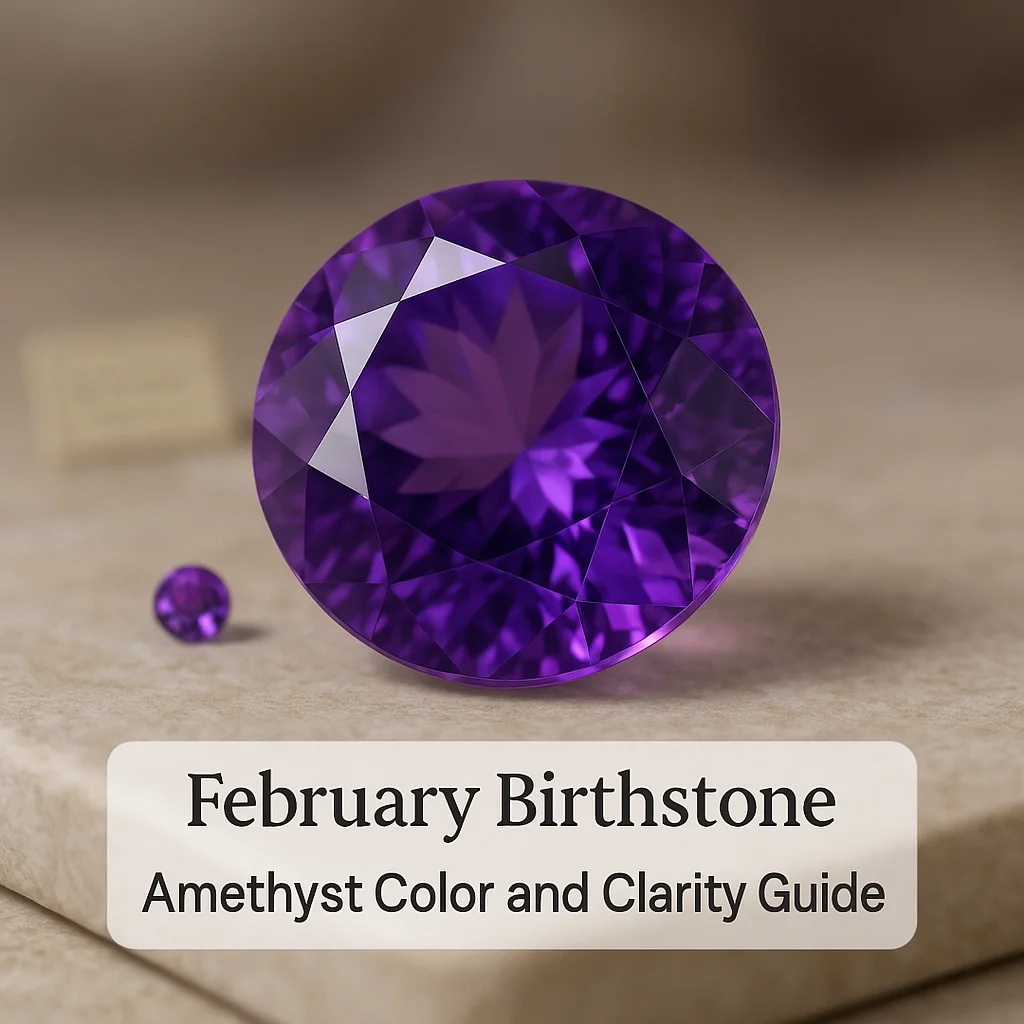
As a variety of quartz, amethyst is both abundant and accessible, making it a favorite among gem enthusiasts and jewelry designers alike. Whether you're selecting a piece for your collection or as a special gift, understanding amethyst's properties will help you make an informed decision.
In this guide, you will learn about amethyst's appearance, properties, origins, value factors, care, and purchasing tips. By comprehending these aspects, you can enjoy the full beauty and potential of this captivating gemstone.
🌍 Where It Comes From
Amethyst forms primarily in igneous and metamorphic rocks, especially within cavities in volcanic rocks called geodes. These geodes can contain stunningly beautiful crystal formations within them. Amethysts are often found in hydrothermal veins where mineral-rich water solutions deposit quartz over time.
Some of the most abundant sources of amethyst are Brazil and Uruguay, although it is also found in Africa, the United States, and Russia. The different locations contribute to variations in the stone's hue, with some regions known for producing particularly deep purple or brightly colored stones.
The origin of an amethyst can sometimes influence its color and clarity, and therefore its market value. Some regions have a reputation for producing amethyst of higher quality or more desirable color, making the origin an essential factor to consider when purchasing.
🔬 How It Forms
Amethyst crystals form over long periods under specific environmental conditions. They begin as silica-rich solutions in volcanic cavities or hydrothermal veins, where substances silicon and oxygen combine to create quartz, with trace elements like iron influencing the color.
The distinct purple color of amethyst is primarily due to the presence of trace amounts of iron within the crystal lattice. This iron undergoes irradiation, contributing to the depth and quality of the purple color. Natural geological processes, such as pressure and temperature changes, play a crucial role in developing these exquisite hues.
Amethyst crystals often form in a characteristic six-sided prism shape, which adds to their visual appeal. These natural forms can later be cut and faceted to enhance their brilliance and display their unique color properties.
🎨 Color and Look
Typical colors of amethyst range from light lilac to deep violet. The color can vary considerably, with some stones exhibiting secondary hues of red or blue. Factors such as lighting conditions, the stone's cut, and clarity also impact its visual appearance.
Amethysts are often cut in a variety of shapes to optimize their visual appeal, including round, oval, and cushion cuts. The cut of an amethyst affects its brilliance and the intensity of its color. It is important for the stone to be well-cut to reflect light perfectly and display its full spectrum of color.
Common treatments applied to amethysts include heat treatment to enhance or alter color. These treatments are standard in the gemstone industry and are generally accepted, but buyers should inquire about any enhancements done to the stone they are considering purchasing.
🧪 Properties That Matter
Amethyst has a Mohs hardness rating of 7, meaning it is relatively resistant to scratches and suitable for most types of jewelry. However, care should be taken with rings and bracelets where the stone might face more wear.
The stone's toughness is good, but it can chip or fracture if struck with enough force or pressure. Amethyst possesses no cleavage, meaning it does not have natural planes of weakness that make it prone to splitting, but it can fracture in a conchoidal (shell-like) manner.
Possessing a vitreous luster, amethyst can range from transparent to translucent in appearance. This clarity can enhance its beauty, especially when the stone is free of inclusions or blemishes. These properties make amethyst ideal for both occasional wear and more regular use.
✨ Meanings, Birthstones, and Culture
Traditionally, amethyst has been associated with qualities such as tranquility and protection. As the birthstone for February, amethyst is said to represent stability, calmness, and clarity of thought.
In addition to its role as a birthstone, amethyst is commonly used in jewelry for significant events, such as anniversaries. It has long been prized not only for its beauty but also for the purported peace it brings to the wearer.
In many cultures, amethyst is thought to have a range of mystical properties, which have become part of its folklore. Its rich history and association with royalty further contribute to its cultural significance.
🧼 Care and Cleaning
Amethyst should be cleaned using warm soapy water and a soft cloth. This gentle approach ensures the stone’s luster is maintained without causing any damage to its surface.
Avoid harsh chemicals or abrasive materials when cleaning the stone, as these can dull its polished finish. Similarly, amethyst should not be exposed to high temperatures or sudden temperature changes that could cause cracking.
When storing amethyst, keep it separate from harder gemstones to prevent scratching. A soft pouch or padded box is ideal for this purpose. For jewelry pieces, ensure they are kept in a protected, dry space.
🛒 Buying Tips and What to Check
Color is a primary driver of amethyst value, with the most highly valued stones exhibiting deep, saturated hues. Equally important is the clarity; look for stones with minimal inclusions for the best clarity and visual appeal.
When purchasing, ask the seller about any treatments the amethyst may have undergone. A lab report may be available for higher-value stones, specifying whether the stone is natural, treated, or synthetic.
If buying online, ensure the seller provides clear images of the stone, a good return policy, and full disclosure of the stone's characteristics. This diligence helps in making a purchase that meets your expectations.
⚠️ Real vs Fake and Common Look-Alikes
Amethyst can be found as both natural and synthetic stones. Synthetic amethysts are lab-grown, possessing the same physical and chemical properties as natural ones but at a lower cost. They are not "fake," but they are not naturally occurring.
Imitations made from glass or plastic can resemble amethyst but are easily identified by professionals due to differences in properties such as refractive index or hardness. Doublets and triplets are composites made to enhance appearance and should be carefully assessed.
For accurate identification, professional gemological testing is recommended. Avoid attempting risky home tests that can damage the gem or provide inaccurate results.
❓ Common Questions and Misconceptions
Is it a mineral or a rock? Amethyst is a mineral, a variety of quartz.
Is it a birthstone? Yes, amethyst is the birthstone for February.
Will it scratch easily? With a hardness of 7, amethyst is relatively scratch-resistant.
Can it go in water? Yes, amethyst can safely be cleaned with water.
Does color fade in sunlight? Prolonged exposure to sunlight may cause fading, so store carefully.
What treatments are common? Heat treatment is common to enhance color.
Is lab-grown "fake"? Lab-grown amethyst is not fake; it's chemically identical to natural amethyst.
How do I store it safely? Store separately, in a soft pouch to prevent scratches.
Do inclusions always lower value? Inclusions can affect clarity and value, but not all inclusions are significant.
How do I pick a good one for jewelry? Look for vibrant color, good clarity, and a well-cut stone.
📌 Summary
- Amethyst is a violet variety of quartz.
- Typical colors range from light lilac to deep purple.
- Forms in igneous and metamorphic rock, primarily in geodes.
- Has a hardness of 7, suitable for most jewelry.
- Commonly heat-treated to enhance color.
- Clean with mild soap and water; store carefully.
- Best uses in jewelry include rings, pendants, and earrings.
- Common look-alikes include glass and synthetic versions.
- Authentication often requires professional gem testing.
- Key buying tips: verify clarity, ask about treatments, check origin.
- A culturally significant birthstone for February.
- Remember, color and clarity dictate beauty and value.