💎 January Birthstone Garnet
🪨 What It Is
Garnet is a group of silicate minerals that have been used as gemstones and abrasives since the Bronze Age. While the name "garnet" refers to a group, it often conjures images of a rich, deep red gemstone. Garnet is known for its vibrant colors, durability, and its status as the birthstone for January.
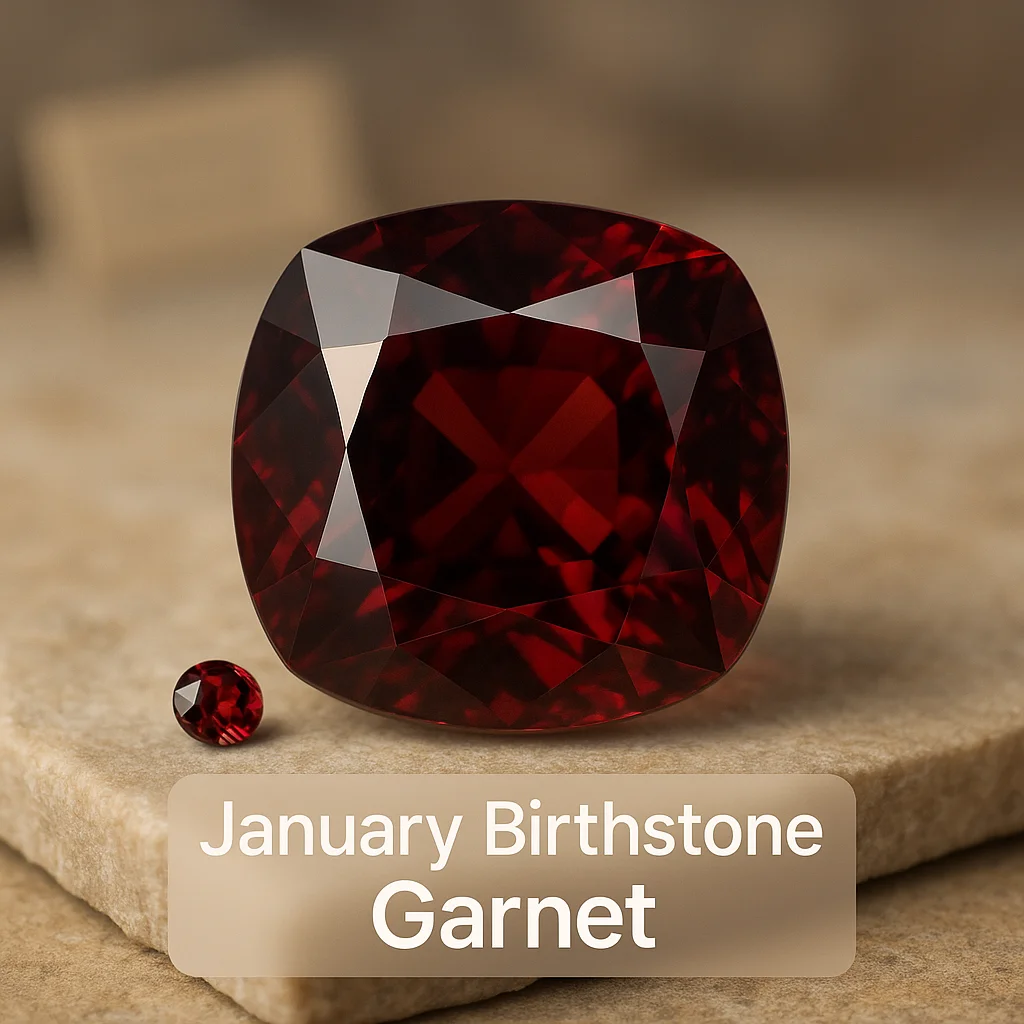
As a birthstone, garnet is both popular and traditional, often associated with strength and protection, among other symbolic meanings discussed later in this article. Those exploring garnets will discover not just red varieties but also stones in nearly every color of the rainbow.
This article will guide you through the essential aspects of garnet, including its appearance, properties, origins, value considerations, care, and buying tips, ensuring you have a comprehensive understanding of this fascinating gem.
🌍 Where It Comes From
Garnets naturally occur in a variety of geologic environments due to their ability to form under different temperature and pressure conditions. They can be found in metamorphic rocks, which are rocks that have been altered by heat and pressure.
Some garnets also form in igneous rocks, which are created from cooled magma or lava. These different formation environments contribute to the wide color range and quality variations found in garnets.
Notable sources of garnets include regions of Africa, India, and Sri Lanka. The specific origin can influence characteristics such as clarity and market reputation, with some regions historically producing garnets with sought-after qualities like deep color saturation or diamond-bright clarity.
🔬 How It Forms
Garnets form under varying conditions of temperature and pressure, which allows them to grow in distinct geological environments. Most frequently, they form in metamorphic rocks through the recrystallization of minerals under heat and pressure over long periods of geological time.
The colors in garnet come from trace elements and crystal defects. For example, the presence of iron and chromium can result in the familiar rich red hue, while other elements might contribute to shades of orange, green, or even blue.
Garnets typically crystallize in the cubic system, which means they often form as dodecahedrons or trapezohedrons, though gem cutters cleverly facet them to enhance their attractiveness as gemstones.
🎨 Color and Look
Garnet is most commonly associated with a deep red color, but it can actually be found in a broad spectrum of colors, including orange, yellow, green, purple, brown, and even colorless. The only hue not naturally available is blue, although color-change garnets can exhibit bluish tones under certain lighting.
The appearance of garnet stones is significantly influenced by factors such as the quality of the cut, the polish applied to the stone, and its clarity. Natural inclusions—small imperfections within the stone—can affect transparency and are often accepted as part of garnet's natural charm.
While garnet is generally untreated, some varieties might be subjected to oiling or dyeing to enhance their color. It is essential for buyers to inquire about any treatments to understand the true nature and value of the stone.
🧪 Properties That Matter
Garnet is valued for its durability, making it suitable for a variety of jewelry pieces. It has a Mohs hardness of 6.5 to 7.5, which means it is scratch-resistant to some degree but should still be treated with care in rings or bracelets that endure daily wear.
The toughness, or resistance to chipping, can vary between garnet types, yet garnet generally does not have perfect cleavage—which is an asset against accidental breakages.
The luster of garnet ranges from vitreous (glass-like) to resinous, adding to its appeal in jewelry applications. Its transparency varies depending on inclusions and the stone's cut, affecting its brilliance and perceived value.
✨ Meanings, Birthstones, and Culture
Traditionally, garnet has been associated with protective qualities, believed to ward off danger and negative energies. As the birthstone for January, it symbolizes constancy and perseverance.
In modern jewelry making, garnet represents some of the first materials used by humans for ornamental purposes, holding a timeless place as both a stylish and classic gem.
Beyond its role as a birthstone, garnet is culturally significant in many societies, often given as gifts to symbolize trust and friendship, contributing to its popularity beyond January-born individuals.
🧼 Care and Cleaning
To maintain your garnet's beauty, clean it gently using warm soapy water and a soft brush. Avoid harsh chemicals and ultrasonic cleaners, especially for stones with many inclusions.
Garnets should be protected from sharp blows and extreme temperature changes as sudden changes can cause fractures. It's safest to remove jewellery before engaging in rigorous physical activities.
Store garnet jewelry in a padded container separately from other gemstones to prevent accidental scratching, preserving their polish and shine.
🛒 Buying Tips and What to Check
When purchasing garnet, consider factors such as color, clarity, cut, and size. Deep reds and vibrant greens tend to be the most cherished and valuable. Clarity should be evaluated based on stone size and application, whether for rings or necklaces.
Always inquire about possible treatments and consider obtaining a laboratory report for higher-value garnets. Such reports can confirm the stone's authenticity but may not reveal all enhancements performed.
For online purchases, ensure the seller has a good reputation, detailed photos, and a clear return policy. These include checking disclosures related to treatments.
⚠️ Real vs Fake and Common Look-Alikes
Natural garnets can be distinguished from synthetic (lab-grown) stones by professional testing. Synthetic varieties have the same chemical composition but may lack imperfections seen in natural stones.
Imitations made of glass or cheaper materials may resemble garnet but can often be distinguished by their lower density and vulnerability to scratches.
Common look-alikes include red spinel and glass imitations, which require professional evaluation for reliable identification, emphasizing the need for proper gemological verification rather than at-home experiments.
❓ Common Questions and Misconceptions
- Is it a mineral or a rock? - Garnet is a mineral.
- Is it a birthstone? - Yes, for January.
- Will it scratch easily? - Not easily, thanks to its hardness of 6.5-7.5.
- Can it go in water? - Yes, but avoid long soaking.
- Does color fade in sunlight? - Not significantly, but care is advisable.
- What treatments are common? - Limited treatments; usually heat or oiling.
- Is lab-grown 'fake'? - No, they're chemically identical to natural stones.
- How do I store it safely? - Use padded boxes and avoid scratches.
- Do inclusions always lower value? - Not always; it depends on visibility.
- How do I pick a good one for jewelry? - Look for rich color, few inclusions, and a good cut.
📌 Summary
- Garnet is a mineral group known for its vibrant colors and durability.
- Typically seen in deep red, but available in many colors.
- Forms in metamorphic and igneous rocks.
- Hardness makes it suitable for jewelry.
- Treatments are rare, but some may have oiling.
- Mild soap and water cleaning is safe.
- Popular for rings, pendants, and earrings.
- Red spinel is a common look-alike.
- Professional testing required for authenticity.
- Buy from reputable sellers with clear return policies.
- Considered a protector and represents January births.
- Garnet's durability and vibrant color make it a timeless choice.