💎 July Birthstone Ruby
🪨 What It Is
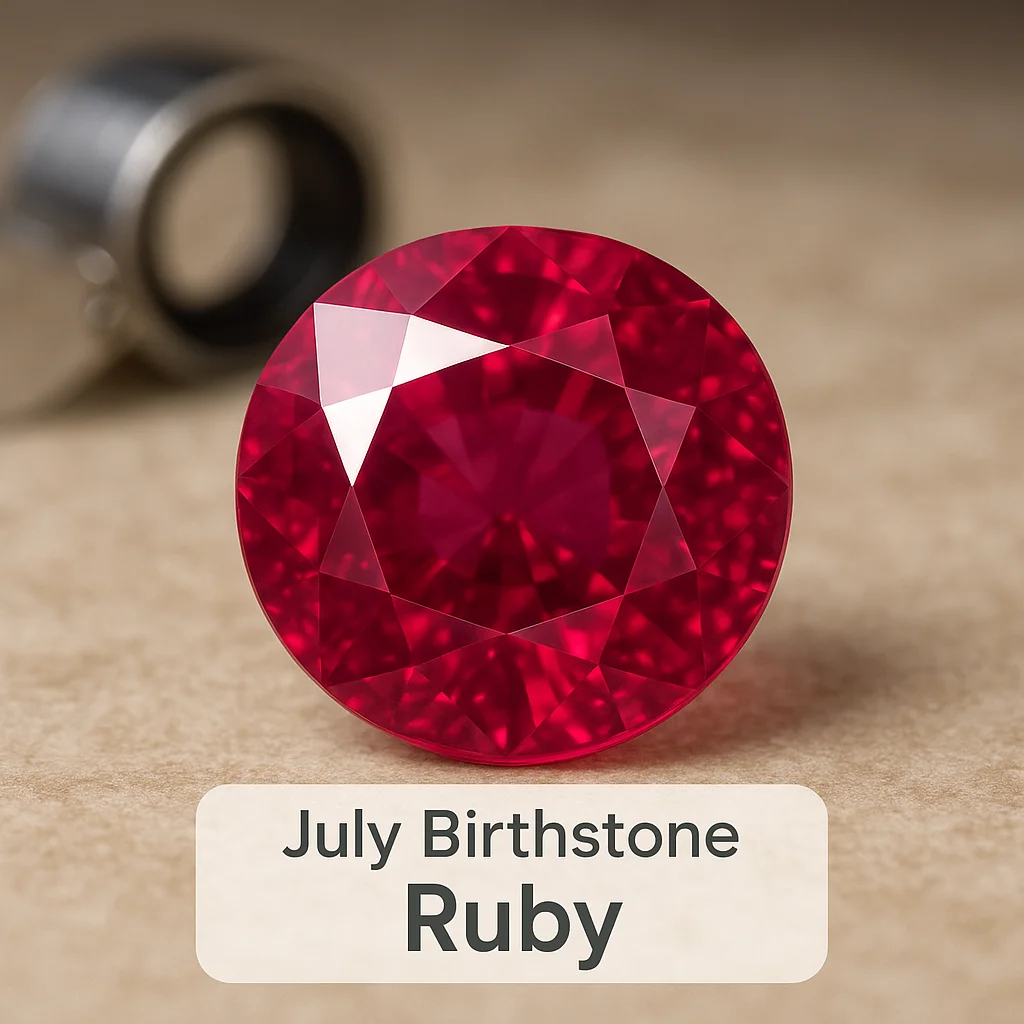
The ruby is a variety of the corundum mineral, known for its striking red color. As the birthstone for July, it is highly cherished, particularly in jewelry. Many people admire rubies for their rich color, symbolic meanings, and durability.
As readers continue through this article, they will learn about the ruby's appearance, origin, properties, value, and how to care for these precious stones. The article will also cover buying tips to help you make informed choices when purchasing rubies.
This uncomplicated guide aims to demystify the ruby for beginners, providing the foundational knowledge needed to appreciate and maintain this beautiful gemstone.
🌍 Where It Comes From
Rubies form naturally in metamorphic rock deposits, occasionally appearing in igneous rocks as well. Certain geological conditions promote the formation of rubies, including high-pressure and high-temperature environments. These conditions facilitate the growth of corundum crystals with trace elements of chromium, which impart the gem its characteristic red color.
The best-known sources of rubies include Myanmar (formerly Burma), which produces the famous "Burmese ruby", renowned for its vivid color and luster. Additionally, rubies are found in parts of Africa, Asia, and even the United States. Each region imparts subtle differences in color and clarity to the stones.
The origin of a ruby can significantly affect its value. Rubies from Myanmar are often considered the most desirable due to their deep red color. However, rubies from different locations also possess their unique charm and can be equally beautiful depending on individual preferences.
🔬 How It Forms
Ruby formation begins with the conditions that allow corundum crystals to grow. These crystals need a combination of elements in the Earth's crust, including aluminum and oxygen. Over time, tectonic processes subject these elements to intense heat and pressure, forming corundum.
The presence of chromium in the corundum is what results in the red coloration we identify as ruby. The chromium acts as a trace element, substituting for aluminum within the crystal lattice of corundum. The intensity of the red hue can vary based on the amount of chromium present.
Rubies typically form as prismatic hexagonal crystals. During their formation process, rubies can develop various inclusions, which are natural imperfections inside the stone. These inclusions give each ruby its unique fingerprint and can affect the stone’s final appearance.
🎨 Color and Look
Rubies are most renowned for their vibrant red color, often described as blood-red or pigeon-blood. The intensity and quality of the red color can vary, influenced by factors like the ruby's origin and chromium concentration.
Properly cutting and polishing a ruby can enhance its color and brilliance. A well-cut ruby allows light to travel through the stone, maximizing its inherent beauty. However, lighting conditions can also impact a ruby's appearance, with natural sunlight often enhancing its red hues.
Heat treatment is a common method used to improve a ruby's color and clarity. While this treatment is accepted within the gem trade, it is essential for buyers to be aware of any treatments, as untreated rubies can hold a higher value.
🧪 Properties That Matter
The ruby's Mohs hardness rating of 9 makes it incredibly hard, second only to diamonds. This hardness equates to excellent scratch resistance, making rubies ideal for jewelry that will be worn frequently.
Rubies are known for their toughness, though they can fracture with hard knocks due to their crystal structure. Unlike some gems, rubies do not have a perfect cleavage, which means they are less likely to crack along specific planes.
The luster of a ruby is typically vitreous, meaning it shines with a glass-like appearance. High-quality rubies can exhibit excellent transparency and brilliance, contributing to their overall aesthetic appeal.
✨ Meanings, Birthstones, and Culture
Historically, rubies have symbolized passion, protection, and prosperity. They are traditionally associated with the month of July and serve as its birthstone. In various cultures, rubies are seen as stones of courage and love.
Rubies continue to be popular in modern jewelry, often featured in rings, necklaces, and bracelets. Their striking color and historical symbolism make them a favored choice for engagement rings and significant anniversary celebrations.
As with many gemstones, the meanings and symbolism of rubies are rooted in tradition rather than scientific evidence. While they are often said to encourage love and success, these associations are cultural rather than factual.
🧼 Care and Cleaning
Rubies are relatively easy to care for due to their significant hardness and durability. For cleaning, a mixture of mild soap and water, along with a soft cloth, is typically sufficient. Avoid using harsh chemicals as they can damage the stone or any metal settings.
While rubies can tolerate some heat, it is best to avoid sudden temperature changes, which could cause thermal shock. Long soaking periods in liquid should also be avoided to preserve the stone’s natural luster.
For storage, keep your ruby jewelry separate from other gems to prevent scratches. Use a soft pouch or lined jewelry box to protect it from everyday wear and tear.
🛒 Buying Tips and What to Check
When purchasing a ruby, consider the "four Cs": color, clarity, cut, and carat size. The most valuable rubies have a vivid, pure red color. Clarity refers to the internal inclusions; while some are expected, fewer inclusions typically raise a ruby's value.
Ask about any treatments a ruby has undergone, as untreated stones are generally more prized. Reputable sellers should provide a gemological report detailing a stone’s authenticity, treatments, and properties.
For online purchases, ensure the seller has a good reputation and offers clear photos and a fair return policy. Being an educated buyer helps ensure the best value and satisfaction with your choice of ruby.
⚠️ Real vs Fake and Common Look-Alikes
Natural rubies can be distinguished from synthetic ones, which are lab-grown and physically identical to their natural counterparts. Both are considered genuine; however, lab-grown rubies are typically less expensive.
Imitation rubies made from glass or composite materials lack the chemical structure of a genuine ruby. Assembled stones such as doublets or triplets can also mimic the appearance of rubies.
Common look-alikes include red spinel and garnet, which may appear similar to rubies. Professional gemologists use specific tests to confirm a ruby's identity, so consult a professional for definite identification.
❓ Common Questions and Misconceptions
Is it a mineral or a rock? Ruby is a mineral, specifically a variety of corundum.
Is it a birthstone? Yes, ruby is the birthstone for July.
Will it scratch easily? No, rubies are quite hard and resistant to scratches.
Can it go in water? Yes, but avoid long periods of soaking.
Does color fade in sunlight? Rubies typically maintain their color well in sunlight.
What treatments are common? Heat treatment is common to enhance color and clarity.
Is lab-grown 'fake'? Lab-grown rubies are genuine but synthetic.
How do I store it safely? Store rubies separately to avoid scratches, in a soft pouch or lined box.
Do inclusions always lower value? Some inclusions are acceptable; fewer inclusions generally mean higher value.
How do I pick a good one for jewelry? Look for desirable color, good clarity, and nice cut. Consider personal preference too.
📌 Summary
- Ruby is a mineral, a variety of the corundum family.
- Typical colors are rich reds, often described as "pigeon blood."
- Forms under heat and pressure with trace amounts of chromium.
- High hardness makes it suitable for rings and other daily-wear jewelry.
- Commonly heat-treated to improve appearance.
- Clean with mild soap and water; store separately to prevent damage.
- Ideal for rings, pendants, and anniversary gifts.
- Look-alikes include red spinel and garnet.
- Authenticity is verified through professional testing.
- Buying tips include checking "four Cs" and treatment disclosures.
- Traditionally linked to July as a birthstone; symbolizes love and courage.
- Rich color and symbolism make it a memorable and desired gem.