💎 November Birthstone Citrine vs Topaz Differences
🪨 What It Is
Citrine and topaz are the two birthstones associated with November. Both are cherished for their beauty and have distinct characteristics that set them apart. Citrine is a variety of the mineral quartz and is known for its warm yellow to reddish-orange hues. It is often used in jewelry and is celebrated for its affordability and sunny appearance.
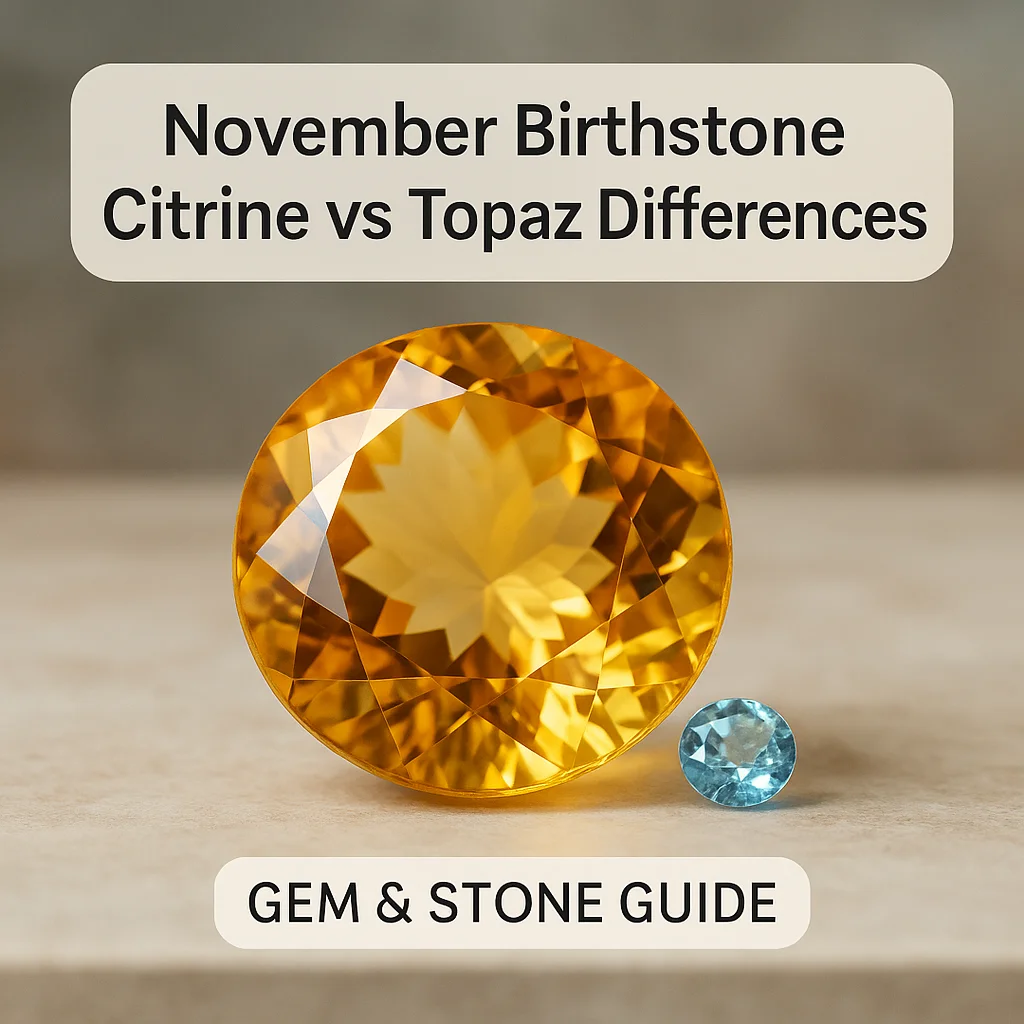
Topaz, on the other hand, is a separate mineral entirely. It can be found in a broader range of colors, including blue, pink, and most commonly, golden yellow, which is the version typically linked with November. Topaz is highly valued and revered for its brilliance and the range of color it can display.
This article will explore the difference in appearance, formation, properties, symbolism, and care between citrine and topaz, equipping you with knowledge to appreciate these November birthstones more profoundly.
🌍 Where It Comes From
Citrine is primarily found in the form of natural deposits within igneous and metamorphic rocks. The most significant sources of citrine are in countries like Brazil, Madagascar, and Russia. Brazil, in particular, is renowned for its vast deposits, providing much of the citrine seen on the market today.
The origin of citrine can influence its color and clarity. Brazilian citrine is often highly transparent and ranges from pale yellow to a vibrant orange, which can affect its value on the market. Meanwhile, topaz is typically mined from regions with significant igneous rock formations.
Topaz can also be found in regions such as Brazil, but some of the most renowned sources include Russia, Pakistan, and parts of Africa. The location from which topaz is sourced can sometimes affect its color and size.
🔬 How It Forms
Citrine forms as quartz crystals exposed to heat within the Earth's crust. The presence of iron impurities, when heated, can turn the quartz into various shades of yellow and orange, leading to the creation of citrine. This heating process can occur naturally or be replicated in laboratories to enhance quartz.
Topaz, in contrast, forms in cavities of volcanic rocks and is often associated with pegmatites. The crystal structure of topaz includes aluminum and fluorine, and its color results from trace impurities or defects within the crystal lattice. For instance, the golden yellow hue can be attributed to the presence of iron.
The occurrence of both citrine and topaz within their geological settings influences their availability, quality, and ultimately, their popularity as gemstones.
🎨 Color and Look
Citrine is known for its vibrant yellow to reddish-orange colors, which are highly appealing for use in jewelry. The stone’s attractiveness is largely influenced by its cut and polish, as these enhance its natural brilliance and luster. Heat treatment is a common process for citrine to boost its warm hues.
Topaz is noted for its wide range of colors, from transparent and colorless to deep blues, pinks, and vibrant yellows. The color can be affected by certain treatments such as irradiation and heat, which are often used to produce the popular blue topaz.
Both stones can be cut into a variety of styles, from traditional round forms to more intricate designs. The appearance of each stone depends significantly on lighting and angle of view, with topaz exhibiting a more pronounced brilliance due to its higher refractive index.
🧪 Properties That Matter
On the Mohs scale of hardness, which measures a mineral’s scratch resistance, citrine ranks at about 7. This makes it quite durable and suitable for everyday wear, including rings and bracelets. However, it may still be susceptible to chips if not cared for properly.
Topaz is harder, rated at 8 on the Mohs scale, making it more resistant to scratches. Despite this, topaz has a perfect cleavage, meaning it can split along defined planes if struck sharply or dropped, so care must be taken, especially with jewelry items.
The luster of citrine is typically vitreous, providing a glass-like finish, while topaz can exhibit a similar luster with the added possibility of slight iridescence in certain lighting.
✨ Meanings, Birthstones, and Culture
Both citrine and topaz have a rich history within cultural symbolism, often linked with wealth and success. Citrine is traditionally associated with the sun and is believed to bring warmth and vitality, earning it nicknames like the “Merchant's Stone” for purported ties to prosperity.
Topaz is traditionally associated with love and affection, and in some cultures, it is said to grant strength and intelligence. These associations, however, are rooted in folklore and should be viewed through a lens of tradition rather than proven fact.
November is a special month as it is one of the few that has two birthstones, offering options depending on style preferences and personal beliefs associated with each stone.
🧼 Care and Cleaning
Caring for citrine involves gentle cleaning using mild soap and lukewarm water. A soft cloth is recommended to dry the stone, and it should be stored away from harder gemstones that could potentially scratch it.
Topaz requires similar care, with additional caution due to its cleavage properties. Sudden temperature changes should be avoided, as well as harsh chemicals which could alter the stone's luster or color.
Both gems should be stored separately in a soft pouch to maintain their finish and avoid accidental damage. Ensure your jewelry has secure settings to protect the integrity of each stone.
🛒 Buying Tips and What to Check
When purchasing citrine or topaz, it is crucial to consider factors such as color intensity, clarity, and cut. More vivid and less included stones typically command higher prices. Origin, though difficult to ascertain, may influence value, especially with topaz.
Always inquire about any treatments the stones may have undergone. For valuable purchases, obtaining a lab certification can provide assurance of a stone's authenticity and characteristics.
For online purchases, ensure the seller has a good reputation, offers clear photographs, and provides a generous return policy. Proper disclosure of any enhancements should be a given, not an assumption.
⚠️ Real vs Fake and Common Look-Alikes
Distinguishing between real and synthetic stones can be challenging without professional testing. Natural citrine and topaz can be synthesized or imitated, often using glass or composite materials.
Common look-alikes for citrine include treated amethyst and synthetic quartz, while topaz can be confused with stones like cubic zirconia or glass imitations.
For assured authenticity, always consult with a qualified gemologist and avoid relying on at-home tests, which can be misleading or damaging.
❓ Common Questions and Misconceptions
Is it a mineral or a rock? Both citrine and topaz are minerals.
Is it a birthstone? Yes, both are recognized as November birthstones.
Will it scratch easily? Citrine is more scratch-resistant than household items but less so than topaz.
Can it go in water? Brief water exposure is typically safe, but avoid prolonged soaking.
Does color fade in sunlight? Citrine can fade over long exposures; topaz is usually more stable.
What treatments are common? Citrine is commonly heat-treated, while topaz may be heat-treated or irradiated.
Is lab-grown 'fake'? Lab-grown stones are real but synthetic versions of natural counterparts.
How do I store it safely? Store separately in soft pouches to avoid scratches and damage.
Do inclusions always lower value? Inclusions can affect value, but some are tolerated if they don't impact beauty.
How do I pick a good one for jewelry? Look for vibrant color, good clarity, and expert cut.
📌 Summary
- Citrine is a yellow quartz variety, and topaz is a separate mineral.
- Citrine ranges from yellow to reddish-orange; topaz can be blue, pink, or yellow.
- Citrine forms with heat and iron; topaz forms in volcanic rocks.
- Citrine is Mohs 7, good toughness; topaz is Mohs 8, prone to cleavage.
- Commonly treated via heat (citrine) and irradiation (topaz).
- Use gentle cleaning; avoid sharp impacts and temperature changes.
- Both stones are great for all jewelry; topaz suits formal items due to brilliance.
- Citrine resembles heated amethyst; topaz can mimic cubic zirconia.
- Authenticity requires professional assessment.
- Check online sellers' policies and honesty in stone treatments.
- November's birthstones culturally link to prosperity (citrine) and love (topaz).
- Citrine and topaz offer practical beauty and tradition, each with unique features.