💎 October Birthstone Opal
The opal is a captivating gemstone celebrated as the birthstone for the month of October. Known for its unique play-of-color, opal is a favorite among gemstone enthusiasts and collectors. Unlike most gemstones, opal is not a crystalline mineral but rather a mineraloid due to its amorphous nature.
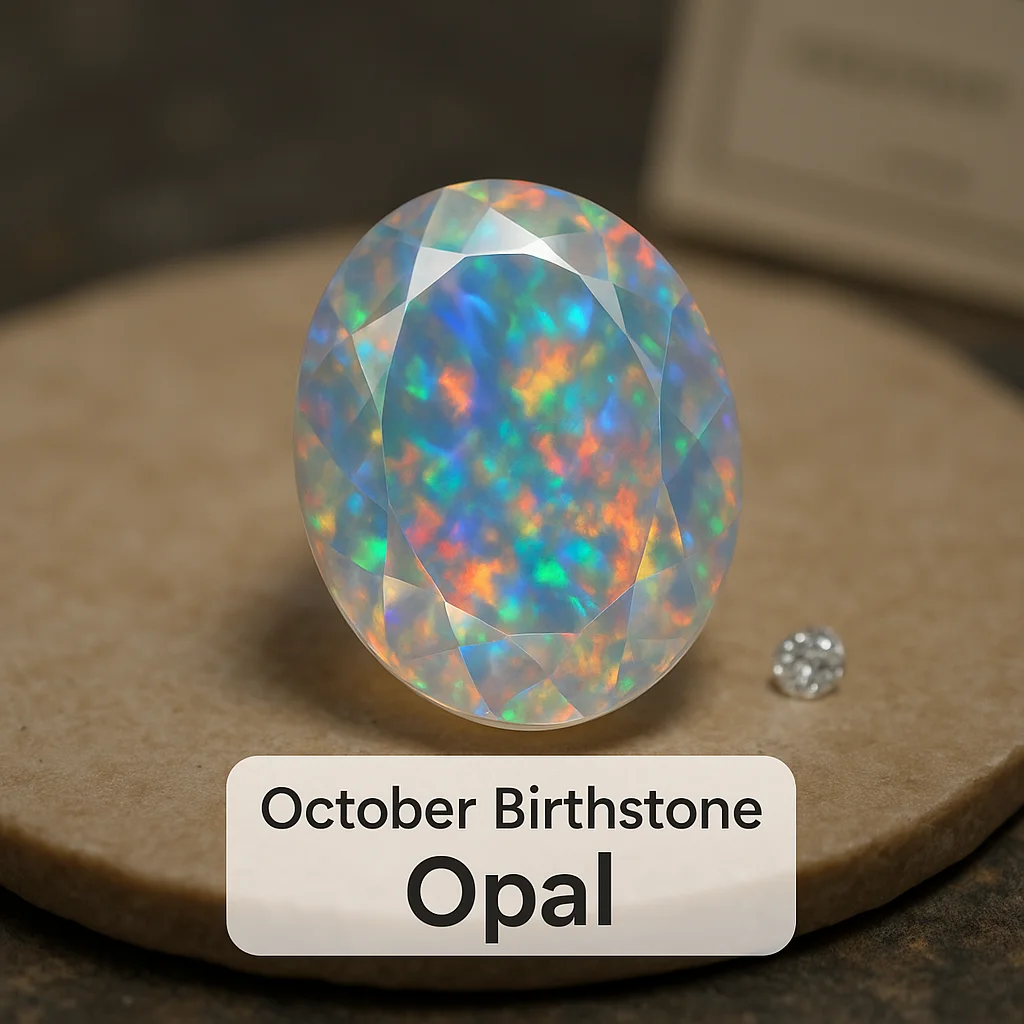
In this article, we will explore the opal, its captivating appearance, how it forms, and provide insights into its value, care, and advice for purchasing opal stones. Whether you are considering opal for your jewelry collection or simply wish to learn more, this guide will offer essential beginner-friendly information.
Opal stands out as a popular jewelry stone due to its vibrant colors and versatile applications. This article aims to educate you on its origins, the science behind its colors, and how to distinguish genuine opals from imitations, ensuring you make informed decisions.
🪨 What It Is
Formed from a hardened silica gel, opal contains water trapped within its structure, giving it unique optical properties. The stone is primarily composed of silica spheres that diffract light, creating a mesmerizing play-of-color effect. This phenomenon distinguishes opal from other gemstones.
Opal is categorically different from crystalline minerals, as it lacks a singular, cohesive crystal structure. Its internal arrangement of silica spheres varies, leading to a diverse range of color displays, from subtle pastels to vivid neon flashes.
As an October birthstone, opal carries cultural and traditional significance, often symbolizing creativity and inspiration. Acknowledged for its unique beauty and rarity, opal in jewelry is cherished for both its aesthetic appeal and its symbolic meanings.
🌍 Where It Comes From
Opals primarily form in sedimentary environments, particularly those rich in silica. They are most commonly found in regions with historical volcanic activity, where silica-rich water can percolate through rock layers, depositing opals as the water evaporates and the silica gels become trapped in void spaces.
Australia is known as the world's largest producer of opal, renowned for its vibrant opal fields such as those in Coober Pedy and Lightning Ridge. Other notable sources include Ethiopia, Mexico, and parts of the United States. Each region yields opals with distinctive traits and market reputations.
The origin of an opal influences its value, as certain regions are famed for producing stones with specific patterns, colors, and qualities. Australian opals are traditionally celebrated for their intense play-of-color, while Ethiopian opals are appreciated for their transparency and fire.
🔬 How It Forms
Opals form through a unique process involving the gradual layering of silica spheres. These spheres form in cavities and spaces within host rocks under conditions where water with high silica content evaporates over time, leaving behind concentrated silica gel.
The size and uniformity of the silica spheres determine the type and quality of color seen in opals. Larger, well-ordered spheres result in brilliant play-of-color, whereas smaller or less ordered spheres lead to subdued colors or milky opals.
Trace elements and impurities, such as iron, can influence the color and patterns within opals. These additions impart hues such as reds, greens, blues, and yellows, contributing to the broad spectrum of possibilities within opal gemstones.
🎨 Color and Look
Opals display a broad array of colors and patterns, making each stone unique. Common opal varieties include the white opal, known for its light body tone, and black opal, prized for its dark body and vibrant color displays. Fire opals carry warm hues such as oranges and reds.
Play-of-color refers to the spectral display of colors caused by the diffraction of light through the opal's microstructure. This effect can appear as flashes, broad patterns, or rolling waves of colors, greatly influencing an opal's desirability.
Opal’s appearance can be enhanced through cutting and polishing techniques. Cabochon cuts, which have a smooth, rounded surface, are popular because they maximize the visible play-of-color. While opals can sometimes be treated to improve these optical effects, such treatments should be disclosed by sellers.
🧪 Properties That Matter
Opals are relatively soft compared to traditional gemstones, with a Mohs hardness of around 5.5 to 6.5. This makes them more susceptible to scratches if worn daily, particularly in high-contact jewelry like rings.
The stone's toughness, or resistance to chipping, is moderate, meaning opals can be fragile and should be handled with care. Without proper protective settings, opals may fracture or chip if dropped or struck sharply.
Opal has no cleavage planes, meaning it breaks with an irregular fracture. It exhibits a vitreous to pearly luster, enhancing its visual appeal, particularly in pieces that emphasize its play-of-color display.
✨ Meanings, Birthstones, and Culture
Traditionally, opals are associated with creativity and inspiration, often considered a symbol of hope and purity. In medieval times, they were thought to possess protective powers and provide foresight.
Opal is firmly established as the birthstone for October, along with pink tourmaline. It is appreciated both as a gift and personal talisman, symbolizing loyalty and faithfulness. In modern jewelry, opal's unique appearance ensures it remains a staple choice for those seeking distinctive accessories.
While folklore and symbolic meanings vary, opals continue to be admired for their mystical appearance and traditional associations with creativity, making them a favored choice for artists and designers.
🧼 Care and Cleaning
Proper care involves gentle cleaning with mild soap and water. Harsh chemicals and ultrasonic cleaners should be avoided to protect the stone's integrity. A soft cloth should be used for drying and polishing opals.
Opals should be stored in a padded box or soft pouch to prevent scratches and minimize exposure to atmospheric humidity changes, which can cause cracking. Abrupt temperature changes should be avoided, as opals are sensitive to thermal shock.
For porous or treated opals, additional caution is necessary to prevent damage from prolonged soaking or exposure to oils and harsh cleaning agents. Routine professional inspections are recommended to ensure settings remain secure and to address any potential wear issues.
🛒 Buying Tips and What to Check
Opal value is influenced by factors such as color brightness, pattern, transparency, and carat size. The most valuable opals display intense play-of-color against a dark background. Buyers should ask about treatments, as these can affect value and care requirements.
Lab reports and certifications from reputable gemological institutions provide assurance of a stone's authenticity and characteristics. These reports can help verify qualities like natural versus synthetic origins and any treatments applied.
When buying opal online, confirm detailed photos, return policies, and seller reputation to ensure a satisfactory purchase. Understanding these factors empowers buyers to make informed decisions and select opals that meet their expectations.
⚠️ Real vs Fake and Common Look-Alikes
Opals can be natural, synthetic (lab-grown), or outright imitations. Synthetic opals are chemically similar to natural ones but created in controlled environments, often boasting uniform qualities and patterns.
Imitation opals, usually made from plastic or glass, attempt to replicate opal's visual effects without sharing its properties. Assembled stones, like doublets and triplets, combine thinner opal layers with backing for durability and cost reduction.
Common look-alikes include moonstone and labradorite, which share visual effects like adularescence but differ in composition and value. Accurate identification requires professional gemological testing rather than solely visual appraisal.
❓ Common Questions and Misconceptions
Is opal a mineral or a rock? Opal is a mineraloid due to its lack of a crystal structure.
As an October birthstone, will opal scratch easily? Opal is softer than most gemstones, so it needs careful wear.
Can opals go in water? Brief exposure is fine, but prolonged soaking can harm some opals.
Does opal color fade in sunlight? Prolonged exposure to harsh light can fade some opals.
Are treatments common in opals? Some opals are treated to enhance color, and disclosure is necessary.
Is lab-grown opal fake? Lab-created opals are real but synthetic, often with more predictable qualities.
How should I store opals safe? Keep them in padded storage away from exposure to humidity changes.
Do inclusions always lower opal value? Not always; in fact, inclusions can sometimes enhance the uniqueness of an opal.
How do I pick a good opal for jewelry? Look for vibrant play-of-color, no visible cracks, and inquire about treatments.
📌 Summary
- Opal is a mineraloid known for its play-of-color.
- Commonly found in Australia and other volcanic regions.
- Forms from silica spheres in sedimentary environments.
- Has moderate hardness; handle with care to avoid scratches.
- Treated opals should be disclosed by sellers.
- Clean gently with soap and water, avoid harsh cleaning methods.
- Best used in occasional-wear jewelry like pendants or earrings.
- Look-alikes include synthetic opals and materials like moonstone.
- Authenticity requires professional gemological testing.
- Ask for lab reports and clear photos when purchasing online.
- Traditionally associated with creativity and October birthstone.
- Opal's unique beauty calls for thoughtful care and informed buying.