💎 How to Read a Gem Lab Report Like a Buyer, Not a Collector
🧭 The 60-Second Take
Imagine browsing online for a stunning gemstone. The pictures look mesmerizing, and there’s a mention of a “certificate” that somehow validates its authenticity. But can you trust it? Lighting tricks and camera quality can do wonders for photos.
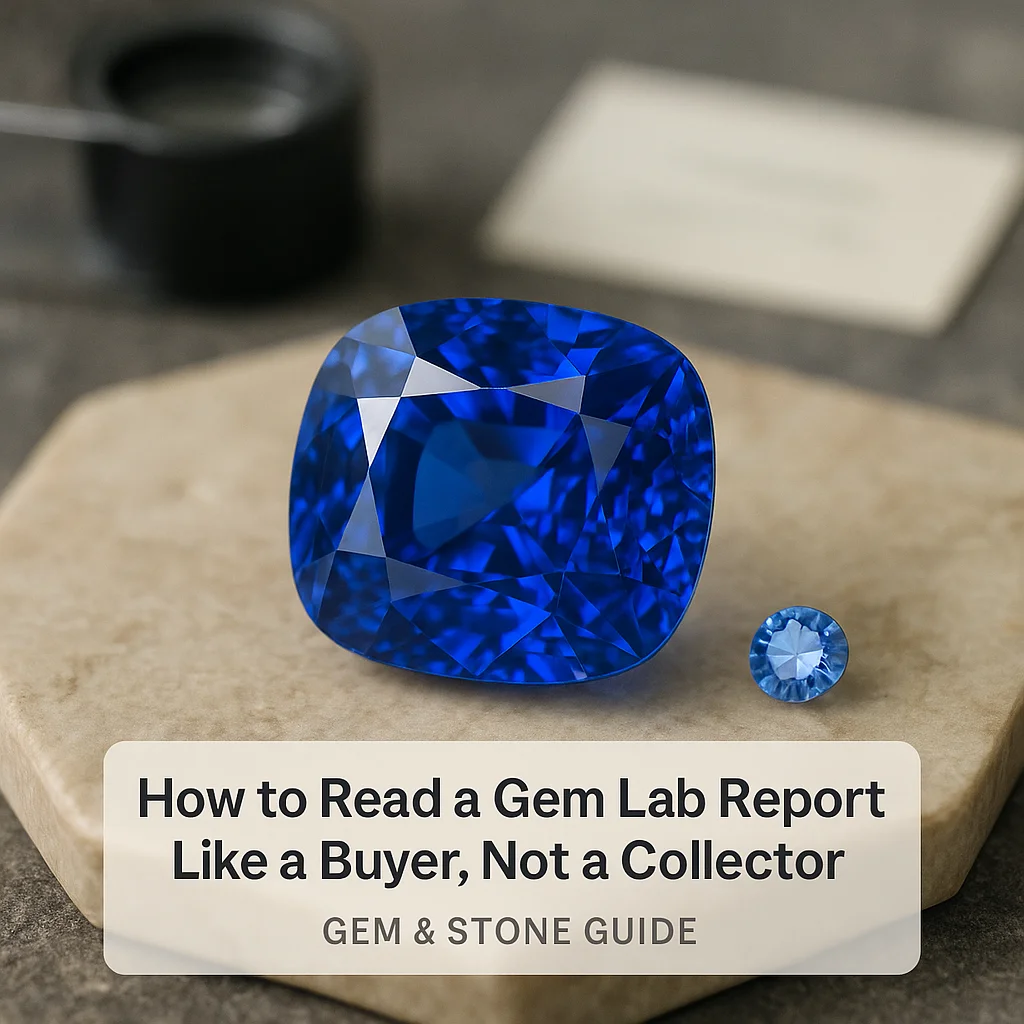
As a buyer, you might feel overwhelmed and anxious, especially when every gem seems to shine perfectly under the spotlight. So how do you read a gem lab report like an informed buyer?
- Check the credibility of the issuing lab.
- Look for details about treatments or enhancements.
- Verify the type of gemstone: natural, lab-grown, or imitation.
- Consider the 4 Cs: carat, cut, color, clarity.
- Assess the gemstone’s origin if it’s specified.
- Understand return policies in case the gem isn’t as expected.
- Seek professional advice if unsure.
- Don’t be swayed by elaborate descriptions alone.
🧪 What Actually Makes It “Real”
The distinction between natural, lab-grown, and imitation stones is crucial. A natural gemstone forms in the Earth over millions of years. Lab-grown stones have the same chemical composition as their natural counterparts but are created in controlled environments.
Imitation stones mimic the appearance of real gems but lack the same properties. Doublets and triplets are assembled stones, using thin layers of genuine gemstones bonded to backing material. A buyer cannot conclude the authenticity from photos and prices alone; paperwork can be tricky too.
🔍 My Buyer Checklist (Step by Step)
- Start by examining the lab name on the report. If unknown, do more research.
- Check for the gemstone type - is it natural, synthetic, or imitation?
- If treatments are listed, research their effects on value and durability.
- Evaluate the 4 Cs described in the report.
- Look for origin details but understand they’re not always available.
- Ask the seller if the images show the gemstone under natural light.
- If the gem appears too perfect, consider an independent appraisal.
- Always check the return policy before purchasing.
- If uncertain, consult a gemologist you trust.
- Consider the price; if it’s too good to be true, be cautious.
Using this checklist helps streamline your buying process. While it’s essential to be thorough, try not to overreact at first glance. Each step is a piece of the larger puzzle.
⚠️ Mistakes People Make (And the Fix)
- Trusting unverified lab names - Always verify lab credibility.
- Ignoring treatments - Acknowledge treatments impact value.
- Judging by price alone - Consider all report details.
- Falling for perfect photos - Request natural light images.
- Skipping the return policy - Always check it first.
- Assuming origin - It’s not always precise.
- Focusing on carat weight alone - Balance with cut and clarity.
- Choosing without professional advice - Consult experts if unsure.
- Not planning storage - Understand proper gem care.
- Reacting hastily - Take time to understand the report.
🎨 Look & Red Flags That Matter
The real-life appearance of a gemstone can be influenced by its cut, polish, and any inclusions it may possess. Surface coatings and dyes can enhance or alter a gem's look significantly. Lighting is another important factor; gems often look different under various lighting conditions.
Be cautious with stones that are commonly treated. For instance, sapphires might be heat-treated, and some emeralds undergo oiling. As a buyer, it’s critical to understand these nuances without assumptions.
🧼 Care & Storage (Safe Defaults)
- Do use mild soap and water for cleaning.
- Don’t use ultrasonic cleaners on treated or porous gems.
- Do store gems separately to avoid scratches.
- Don’t expose gems to strong chemicals or sudden temperature changes.
- Be careful with porous stones like opals and pearls; they need extra care.
- Do occasionally inspect for any loosening in settings.
- Don’t wear porous gemstones while bathing or swimming.
- Keep gems away from direct sunlight for prolonged periods.
- Secure valuable gems in a safe place when not worn.
🧾 What Certificates Can (and Can’t) Prove
Certificates from reputable labs usually include details about the type of gemstone, its origin if known, any treatments it has undergone, and specifics about the 4 Cs. However, sellers might exaggerate the value implications of some attributes listed in these reports.
Gem certificates are worth it when buying high-value stones as they provide a level of assurance. Nevertheless, reports can't always capture every enhancement and may not reflect the gem's appearance in real life.
It’s advisable to use certificates as a guide rather than a conclusive verdict. Always integrate them with your visual assessments and expert consultations.
❓ Quick Questions Buyers Ask
Q: What should I do if a gem report seems too vague?
A: Seek clarification from the seller or a trusted gemologist.
Q: How can I verify a lab's credibility?
A: Research the lab’s reputation and check for industry recognition.
Q: Why does the gem look different in person?
A: Lighting, camera settings, and editing can alter appearance in photos.
Q: Can lab reports guarantee gemstone authenticity?
A: Reports indicate authenticity as assessed, but consult experts if in doubt.
Q: Do natural gems increase in value over time?
A: It depends on rarity, market demand, and condition.
Q: Is it safe to buy gems online?
A: It can be, but ensure sellers are reputable and offer return policies.
Q: Are treatments bad for gems?
A: Not necessarily; some are standard, but it affects value perception.
Q: Can I clean my gem with alcohol?
A: Avoid alcohol; use mild soap and water for most gems.
📌 If You Only Remember 5 Things
- Always verify the lab issuing the gem report.
- Understand that appearance can differ in various lighting conditions.
- Check treatment disclosures and impacts on the gem.
- Never rush into buying without reviewing the return policy.
- Consult professionals when in doubt.