💎 The Truth About “Rare” Gems on Marketplaces: Red Flags to Watch
🧭 The 60-Second Take
Imagine browsing an online marketplace, your eyes caught by a dazzling gem labeled as “rare.” The price seems too good to be true, and the certificate provided looks impressive. However, it’s crucial to scrutinize these elements critically.
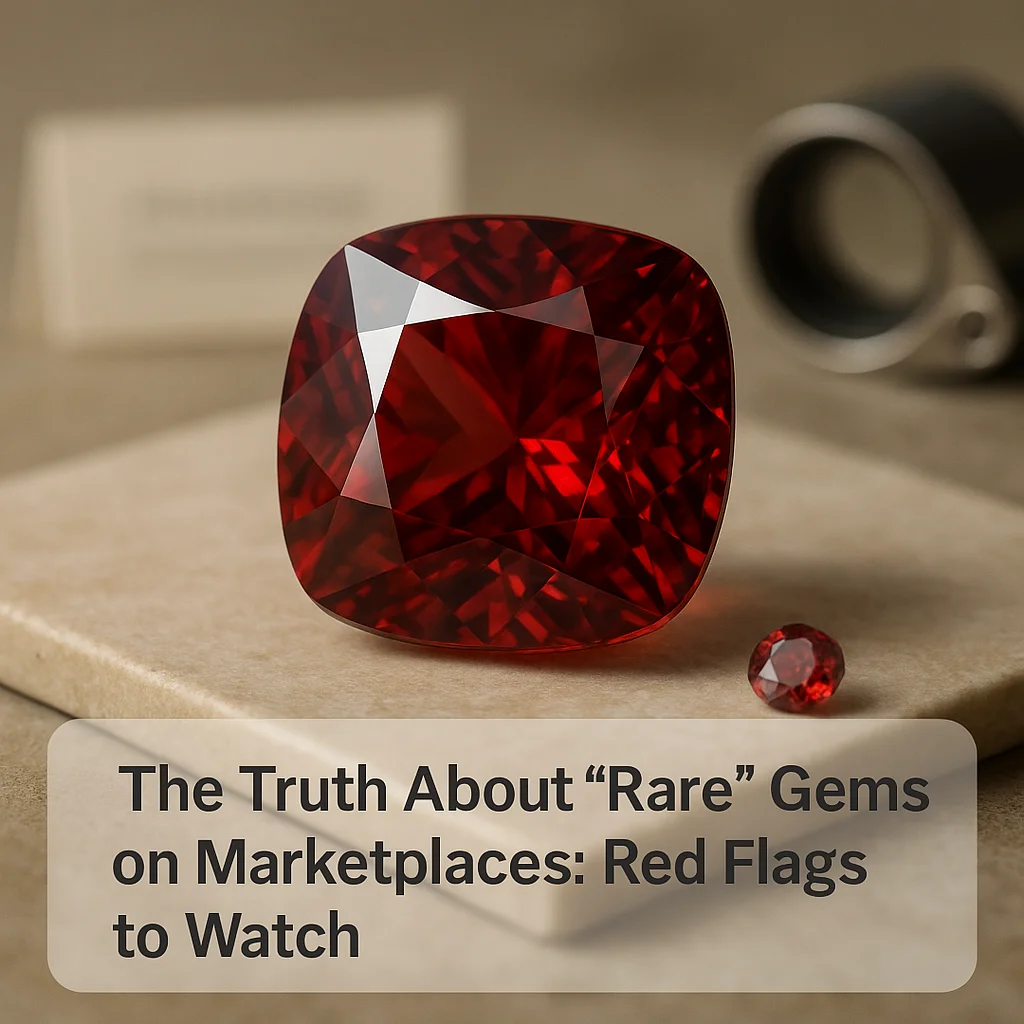
The photos are often taken under enhanced lighting to accentuate the stone’s appearance. The “certificate” might be issued by a non-reputable source. Here are some essential actions you can take to protect yourself as a buyer:
- Cross-reference the seller’s reputation through reviews and ratings.
- Verify the certificate with an independent, reputed gemological laboratory.
- Examine photos critically—look for artificial lighting enhancement.
- Check the return policy thoroughly before purchasing.
- Research the average market price for the gem type.
- Ask for additional certifications or paperwork if needed.
- Seek professional advice from a trusted jeweler.
🧪 What Actually Makes It “Real”
Understanding the distinctions between natural, lab-grown, imitation, and assembled gems is essential. Natural gems are mined from the earth, while lab-grown gems possess the same physical properties but are cultivated in a controlled environment.
Imitation gems might look similar but lack the chemical properties of the real thing. Assembled gems, such as doublets or triplets, combine different materials to enhance appearance. Photos and prices alone cannot reveal these distinctions; a “certificate” might help, but only if it’s from a reputable source.
🔍 My Buyer Checklist (Step by Step)
- Check the seller’s reputation and reviews. If uncertain, look for alternatives.
- Request high-resolution images of the gem. If unavailable, reconsider the purchase.
- Read any provided certificates closely. If not from a reputable lab, be cautious.
- Research the typical characteristics and prices of the gem. If inconsistent, investigate further.
- Ask about the return policy. If it’s restrictive, think twice.
- Inquire about treatments and enhancements. If secretive, this is a red flag.
- Seek out multiple listings to compare offerings. If an item stands out as unusually cheap, be wary.
- Reach out to gemologists for advice. If unavailable, more caution is advised.
- Trust your instincts. If something feels off, walk away.
Use this checklist as a guide, but remember: not every red flag is a deal-breaker on its own. Consider the context and use your best judgment.
⚠️ Mistakes People Make (And the Fix)
- Assuming new or unknown sellers are reputable. ➔ Always verify their history.
- Trusting any certificate. ➔ Ensure it’s from a recognized lab.
- Overvaluing overly perfect stones. ➔ Real stones often have unique inclusions.
- Ignoring return policies. ➔ Check these policies thoroughly.
- Relying solely on online photos. ➔ Request in-person views or detailed video demonstrations.
- Overlooking lighting and white balance tricks. ➔ Question any unusual vibrancy.
- Neglecting due diligence on price comparisons. ➔ Know the market benchmarks.
- Forgetting to ask about enhancements. ➔ Always clarify if treatments are present or not.
- Purchasing without professional advice. ➔ Consult a gemologist if in doubt.
🎨 Look & Red Flags That Matter
The appearance of a gemstone can be heavily influenced by numerous factors such as lighting, cut, polish, and any treatments applied. A poorly cut stone might look lackluster, while a surface-coated one can wear and fade.
Inclusions, which are natural imperfections within a gem, should be expected to some degree, and their presence can confirm authenticity. Be cautious with gems claimed to be “perfect” or those unusually vibrant, likely enhanced by dyes or coatings.
Common treatments in the market include heat or chemical treatments to improve appearance. Always inquire and verify these aspects before purchase.
🧼 Care & Storage (Safe Defaults)
- Do clean your gems with mild soap and water using a soft cloth.
- Don’t expose gems to harsh chemicals or cleaners.
- Do store gems separately to prevent scratches.
- Don’t store pearls, opals, or similar porous gems loosely; use a soft pouch.
- Do check for any damage regularly.
- Don’t leave gems in direct sunlight; they might fade.
- Do seek professional cleaning for high-value items occasionally.
- Don’t wear soft stones like turquoise or amber during heavy activities.
- Do be gentle with treated or surface-coated gems.
- Don’t ignore special care requirements for your specific gems.
🧾 What Certificates Can (and Can’t) Prove
Gemological certificates typically provide vital information about a gem’s type, origin, and whether it has been treated. However, sellers might exaggerate the importance or comprehensiveness of a certificate.
Certificates from reputable labs are valuable for peace of mind, especially for high-value stones. Yet, they cannot capture every nuance, like exact origin locality or the quality of a gem's cut.
A report is worth its weight in contexts where provenance or treatment verification can significantly impact value. Consider obtaining one for significant investments.
❓ Quick Questions Buyers Ask
Q: How can I tell if a gemstone is natural?
A: Natural gems usually have some inclusions. Verification by a professional is best.
Q: Are lab-grown gems valued the same as natural?
A: No, lab-grown gems often have lower market values than natural ones.
Q: Can I trust online marketplace ratings?
A: Ratings can help but investigate any recent complaints or concerns.
Q: What does a perfect gemstone look like?
A: Perfect-looking stones might be treated or synthetic; genuine ones often have minor inclusions.
Q: Should I always get a certification for purchases?
A: Certificates are recommended for significant investments or rare stones.
Q: How should I store my gems?
A: Store them separately in soft pouches to avoid scratching.
Q: Can gemstone treatments wear off?
A: Yes, treatments like surface coatings can degrade over time.
Q: Does more clarity mean a gemstone is real?
A: Not necessarily; even real gems have inclusions. Clarity varies by type.
📌 If You Only Remember 5 Things
- Always authenticate with a certificate from a recognized lab.
- Natural gems have unique inclusions; perfection can be a red flag.
- Scrutinize return policies carefully—know your safety nets.
- Price discrepancies often signal further investigation is needed.
- Professional verification can distinguish between gem types definitively.