💎 What “Clarity” Actually Means When You’re Not Buying Diamonds
🧭 The 60-Second Take
Picture this: you’re scrolling through an online gemstone marketplace, enchanted by the vibrant colors and apparent perfection of what you see. Every stone shines brilliantly, enticing you with promises of unblemished clarity. But are they as perfect as they seem?
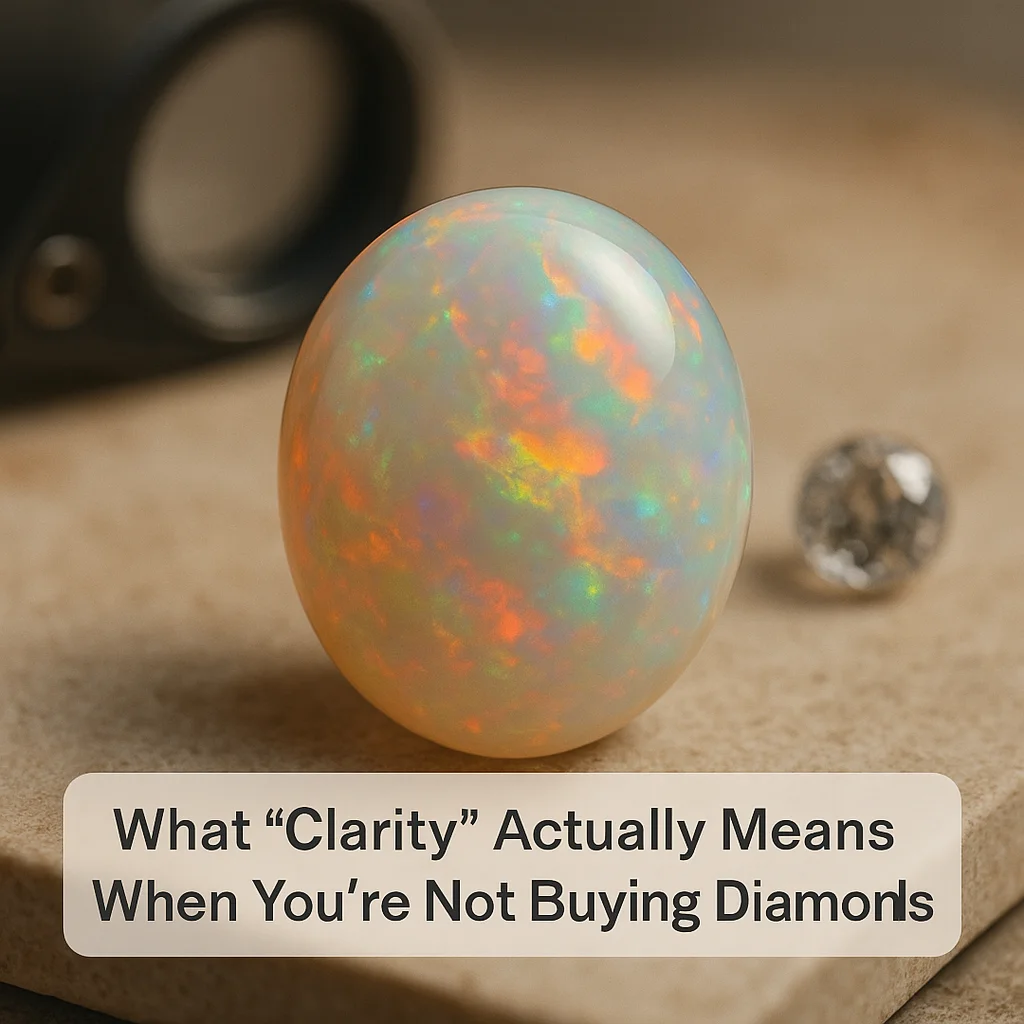
Many listings boast certificates of authenticity and glamour shots under deceptively favorable lighting. What you see may not be what you get. Understanding clarity in non-diamond gems is a nuanced art, as lighting and photography can mask imperfections.
Here are some quick actions you can take today to become a more informed buyer:
- Check seller reviews for credibility.
- Ask for photos in different lighting conditions.
- Request close-ups of inclusions if any are noted.
- Seek professional appraisals for high-value purchases.
- Be clear on the return policy.
- Compare prices with similar listings.
- Consider lab reports but remain skeptical of their completeness.
- Research common treatments specific to the gemstone.
🧪 What Actually Makes It “Real”
Gemstones can be natural, lab-grown, imitation, or assembled, each varying significantly in value. Natural stones are formed by geological processes, while lab-grown ones offer similar properties without the environmental impact.
Imitations mimic the appearance but not the substance of the gem, often created from less valuable materials. Assembled stones like doublets or triplets consist of multiple layers, sometimes with non-gem components.
Photos alone don't clarify these distinctions. A low price could suggest imitation or treatment. Certificates can give clues, but their accuracy depends on the lab. Buyer caution is always advised.
🔍 My Buyer Checklist (Step by Step)
- Research the gemstone type and common treatments.
- Evaluate seller feedback and reputation.
- Ask for multiple photos, including natural light ones.
- Check for visible inclusions and ask questions.
- Verify return policy before purchase.
- If it’s expensive, request a lab report.
- Compare market prices for similar items.
- Consult a gemologist if unsure about authenticity.
- If the stone seems too perfect, inquire about treatments.
- Request an in-person viewing if possible.
Use this list to keep your purchase stress-free. Remember not every detail has equal weight; focus on what matters to you.
⚠️ Mistakes People Make (And the Fix)
- Trusting photos: Ask for additional images.
- Ignoring return policies: Confirm return options before buying.
- Assuming synthetic means fake: Understand synthetic stones can be valuable.
- Overlooking white balance: Request photos in natural light.
- Not comparing prices: Shop around to understand market value.
- Ignoring “too perfect” stones: They may be treated or synthetic.
- Relying solely on certificates: Use them alongside expert advice.
- Neglecting professional evaluations: Speak with a gemologist for reassurance.
- Assuming all inclusions are bad: Some are natural and acceptable.
- Skipping thorough research: Knowledge reduces risks.
🎨 Look & Red Flags That Matter
The beauty and value of a gemstone depend on various factors. Clarity can be influenced by lighting, which affects how inclusions are perceived. The cut and polish also play critical roles in maximizing appearance.
Surface coatings can enhance color but may wear over time. Dyes are sometimes used to improve or alter color, typically indicating lower value.
Many gems undergo treatments to improve clarity, like fracture-filling in emeralds. Understand that these are common and not necessarily negatives, but they should be disclosed.
🧼 Care & Storage (Safe Defaults)
- Use mild soap and water for cleaning.
- Avoid harsh chemicals and abrasives.
- Store separate from other jewelry to prevent scratching.
- Use a soft cloth for drying and polishing.
- Keep away from direct sunlight for prolonged periods.
- For porous gems like opals, avoid long exposure to water.
- Do not subject gemstones to sudden temperature changes.
- Store gems in cool, dry places away from humidity.
- Check for loose settings periodically.
- For treated stones, follow specific care instructions.
🧾 What Certificates Can (and Can’t) Prove
Certificates from reputable labs can confirm a stone's identity, origin, and whether it has been treated. However, they often lack detailed inclusion maps and the full context a professional appraisal provides.
Sellers might exaggerate the impact of a certificate, so see it as one of many tools in your verification process. Certificates are valuable when precise provenance or treatment history could impact the price or resale value.
Consider a lab report for high-value purchases, but remember that reports are a snapshot, not a full biography, of your gemstone.
❓ Quick Questions Buyers Ask
Q: Can I trust photos when buying gems?
A: Not entirely. Request more images to verify.
Q: Do all stones need certificates?
A: Not all, but they're valuable for high-priced gems.
Q: What are inclusions?
A: Natural inner features that can affect clarity.
Q: How do I spot treated gems?
A: Ask for disclosure from sellers; look for unusual uniformity.
Q: Are lab-grown gems worth less?
A: Often, yes, but they have their market.
Q: What if a stone is too perfect?
A: It might be synthetic or heavily treated.
Q: When is a lab report necessary?
A: For expensive or collectible gems.
Q: Can I return gems if they aren't what I expected?
A: Check the seller’s return policy carefully.
📌 If You Only Remember 5 Things
- Verify clarity through multiple photos and questions.
- Research sellers and their reputation thoroughly.
- Understand what a certificate can and cannot tell you.
- Always check the return policy before buying.
- Avoid assuming perfection equates to authenticity.
- Professional evaluation can be invaluable for assurance.
- Clarity often involves invisible details; trust but verify.