💎 Carat Weight vs Dimensions Shopping Tip
🪨 What It Is
Carat weight and dimensions are two key factors to consider when shopping for gemstones. Understanding the difference between them can help buyers make informed decisions, particularly when assessing the value and appearance of a gemstone.
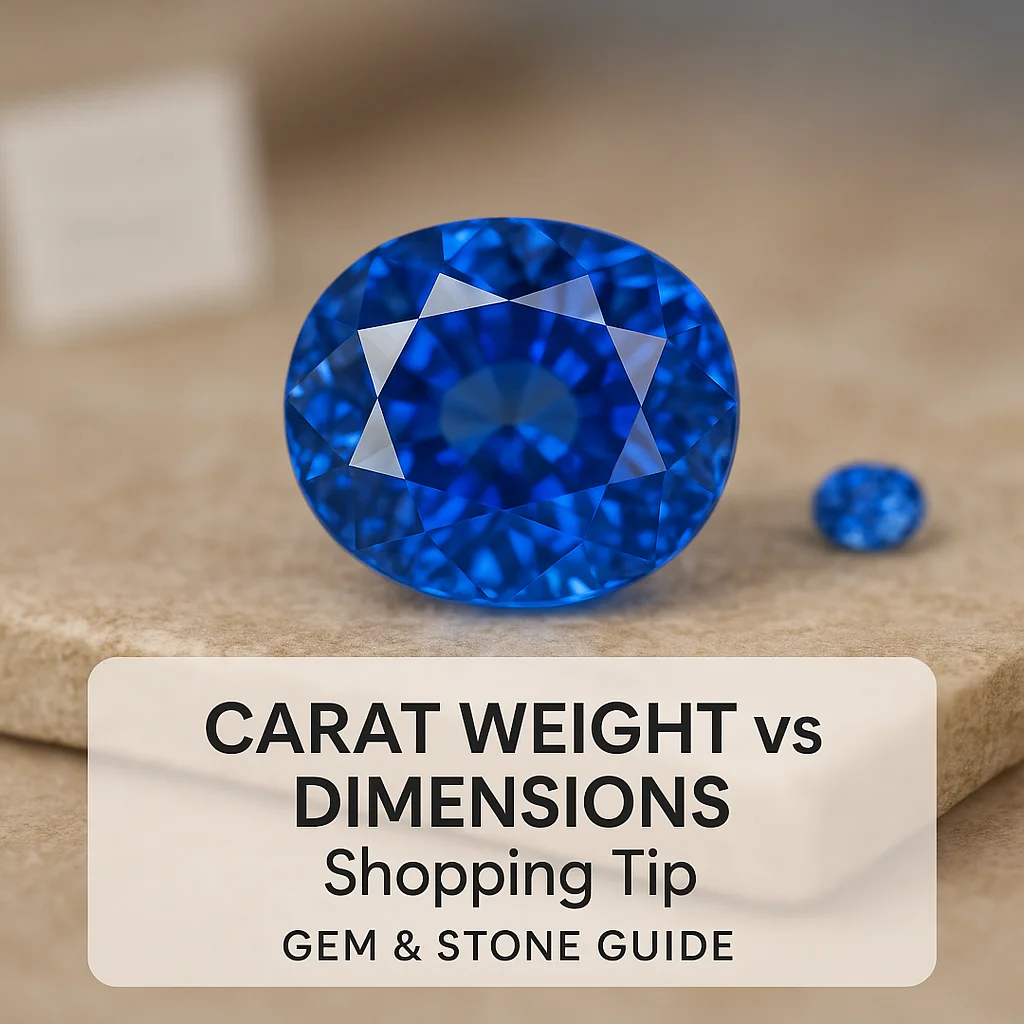
Carat weight measures how much a gemstone weighs. One carat is equivalent to 200 milligrams. This unit is often used in the gemstone trade to discuss larger and more valuable stones.
Dimensions, on the other hand, refer to the physical size of a gemstone. This could include measurements of length, width, and depth, which contribute to the appearance of the stone when set in jewelry.
🌍 Where It Comes From
Gemstones are found in various geological settings around the world. They can be discovered in igneous, metamorphic, and sedimentary rocks, each of which forms under different environmental conditions.
For example, sapphire and ruby, both varieties of the mineral corundum, are typically found in metamorphic rock formations. Meanwhile, diamonds are often sourced from igneous rock known as kimberlite, which forms deep within the Earth's mantle.
The origin of a gemstone can influence its color, clarity, and market reputation. Some regions are renowned for producing high-quality stones, such as Burmese rubies or Colombian emeralds, which often command higher prices due to their esteemed provenance.
🔬 How It Forms
Gemstones form through natural processes involving heat, pressure, and mineral-rich fluids over millions of years. The crystallization process is influenced by several factors including the presence of trace elements that can affect color.
For example, the color of a sapphire can vary depending on the trace elements present; iron and titanium give blue sapphires their distinctive hue. Similarly, chromium is responsible for the red color of rubies.
Some gemstones form in specific crystal habits or shapes, such as geodes, which are hollow, rounded rock formations lined with crystals inside. Quartz, often found in geodes, forms under these conditions.
🎨 Color and Look
The appearance of gemstones is influenced by their color, cut, clarity, and polish. Gemologists assess these factors to determine the quality and value of a gemstone.
Colors can be affected by natural properties or treatments like heat or dyeing. For instance, aquamarines are often heat-treated to improve their blue color, while some opals are dyed to enhance their play-of-color.
Optical effects such as chatoyancy (a cat's eye effect) or asterism (star-like patterns) can add uniqueness to gemstones, although they may require specific cutting techniques to be visible.
🧪 Properties That Matter
When selecting gemstones for jewelry or collection, properties like hardness and toughness are critical. Hardness refers to a gemstone's ability to resist scratches, measured on the Mohs scale. Diamonds, the hardest known mineral, score a 10.
Toughness refers to a gemstone’s ability to resist chipping and cracking. While diamond is hard, it has a poor cleavage, meaning it can fracture easily if struck.
Luster describes how light reflects from a gemstone’s surface. The transparency, ranging from opaque to transparent, influences a gemstone’s overall appearance and desirability for various jewelry types.
✨ Meanings, Birthstones, and Culture
Gemstones have been traditionally associated with various cultural meanings and symbolism. These are often linked to birth months or zodiac signs, contributing to their popularity in jewelry.
For example, the diamond is the birthstone for April, traditionally associated with strength and purity. Although these associations add sentimental value, they are based on cultural tradition rather than scientific evidence.
Many gemstones are celebrated in modern jewelry traditions, often chosen for their symbolic meanings or as personal talismans due to historical beliefs.
🧼 Care and Cleaning
Proper care and cleaning are vital to maintaining the beauty and longevity of gemstones. Generally, gently cleaning jewelry with mild soap and warm water is recommended.
Use a soft cloth to avoid scratches and avoid exposure to harsh chemicals. Certain stones like opals and pearls are sensitive to heat and should not be subjected to sudden temperature changes or prolonged soaking.
Storing gemstones separately is crucial to avoid scratching, especially softer stones like turquoise. Consider using a lined jewelry box or separate pouches for protection.
🛒 Buying Tips and What to Check
When purchasing gemstones, factors like color, clarity, cut, and carat weight influence the price and quality. Buyers should inquire about any treatments the stone may have undergone, as these can affect value.
Requesting a certificate or report, especially for high-value stones, can provide confirmation of a stone’s authenticity and characteristics. Understand that lab reports give details about the stone but cannot authenticate untreated gemstones.
For online purchases, look for clear photos, confirm the seller’s reputation, and check the return policy. It's crucial to have this information for ensuring a safe and informed purchase.
⚠️ Real vs Fake and Common Look-Alikes
Understanding the differences between natural, synthetic, and imitation stones is key to making wise purchasing decisions. Synthetic stones are lab-grown but chemically identical to natural ones, while imitations might look similar but differ materially.
Assembled stones, like doublets or triplets, consist of multiple bonded layers. These can simulate the look of natural stones at a lower price point but should be identified clearly.
Reliable gemstone identification typically requires professional analysis by a trained gemologist instead of at-home tests that could damage the stone or provide misleading results.
❓ Common Questions and Misconceptions
Is it a mineral or a rock? Gemstones can be both; a mineral when they are a single crystal, and a rock if composed of multiple minerals.
Is it a birthstone? Many gemstones are traditional birthstones, linked to specific months of the year.
Will it scratch easily? Hardness affects scratch resistance; softer stones will scratch more easily than those like diamonds.
Can it go in water? Generally yes, but avoid prolonged exposure, particularly for porous stones like opals.
Does color fade in sunlight? Certain stones may fade; prolonged exposure to strong light should be avoided for some gemstones.
What treatments are common? Heat, dyeing, and irradiation are common treatments to enhance color or clarity.
Is lab-grown "fake"? Lab-grown stones are not fake; they have the same properties as natural gems.
How do I store it safely? Store each gemstone separately in a soft-lined box or pouch to prevent scratches.
Do inclusions always lower value? Not always; some inclusions, like in emeralds, are accepted and expected.
How do I pick a good one for jewelry? Consider color, clarity, cut, and carat weight balanced against your budget and intended use.
📌 Summary
- Gemstones vary in carat weight and dimensions impacting their value.
- Commonly found in diverse geological settings worldwide.
- Form via natural processes over millions of years.
- Factors like color, cut, and clarity affect appearance.
- Hardness and toughness determine suitability for jewelry.
- Traditionally associated with meanings or birthstones.
- Gentle cleaning preserves gemstone beauty and durability.
- Quality determined by color, clarity, cut, carat, and origin.
- Natural stones distinguished from synthetic and assembled.
- Use professional testing for trusted gemstone identification.
- Birthstone traditions add cultural value to certain stones.
- Recognize differences for an informed purchasing decision.