💎 Certificate Types GIA IGI SSEF AGL
🪨 What It Is
When purchasing a valuable gemstone, understanding the certificate types is essential. Certificates from organizations like GIA, IGI, SSEF, and AGL provide assurance about a gemstone's authenticity, characteristics, and value. These certificates are critical for buyers and sellers alike.
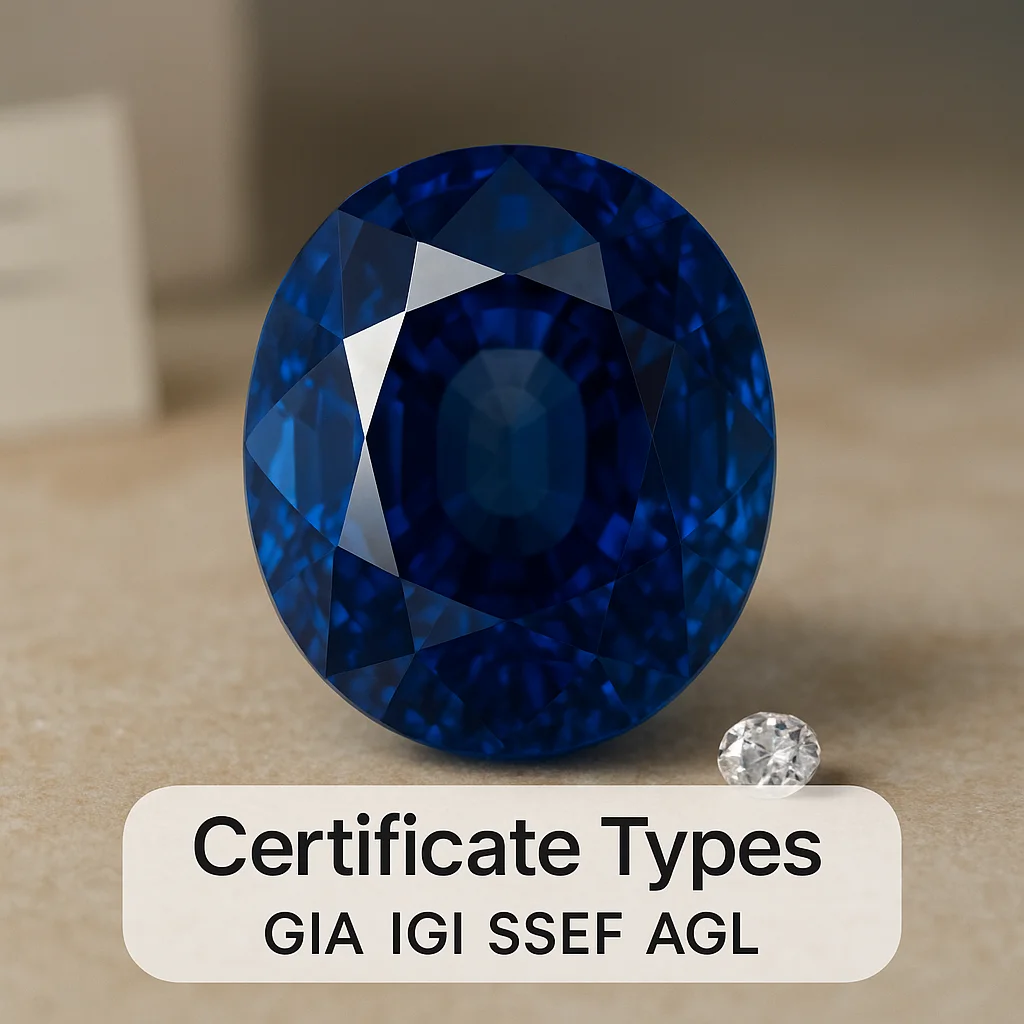
Each certificate type is an evaluation of a gemstone's qualities, conducted by different gemological laboratories. They assess factors such as color, clarity, carat weight, and cut, known as the "4 Cs" of gemstones. These certifications are crucial for confirming that a stone is natural and helps distinguish it from synthetic or heavily-treated counterparts.
In this article, we will delve into the significance of these certificates, explaining their different aspects and how they affect the value and authenticity of gemstones. You will also learn what to look for in a certification, especially as a beginner navigating the gemstone market.
🌍 Where It Comes From
The origins of a gemstone play a significant role in its perception and value. Gemstones can be formed in various geologic environments, including igneous rocks, metamorphic processes, sedimentary deposits, and hydrothermal veins. For example, diamonds are typically found in kimberlite pipes, an igneous environment.
Some regions are renowned for producing gemstones with unique qualities. For instance, Burmese rubies are famous for their vivid red color, while Colombian emeralds are prized for their deep green hue. Origin can influence a gemstone's market reputation and price, as certain areas are known to produce higher-quality stones.
The laboratory that certifies a gemstone may also consider its origin, as certain locations are known for yielding stones with particular characteristics. This can be an essential point for gemologists when analyzing a stone's value and rarity.
🔬 How It Forms
The formation of gemstones involves a combination of natural geological processes. Over time, minerals crystallize under conditions of intense heat and pressure. Different trace elements and environmental factors contribute to the creation of distinct types of gemstones.
For instance, the presence of chromium gives rubies their red color, while trace amounts of iron can produce the distinctive blue in sapphires. These elements integrate into the crystal lattice during formation, influencing a gemstone's appearance and value.
Gemstones can manifest in various crystal habits, such as well-formed crystals, nodules, or clusters. The manner in which they form shapes their ultimate appearance and dictates their suitability for specific types of jewelry.
🎨 Color and Look
The color and appearance of a gemstone are key factors influencing its value and desirability. Colors can range from the deep blues of sapphires to the striking reds of garnets. Optical effects such as chatoyancy (cat's eye effect), asterism (star effect), and play-of-color in opals can make gemstones exceptionally unique.
The appearance of a gemstone is affected by its cut and polish, determining how well it reflects light and displays color. Clarity also plays a role; fewer inclusions often mean a clearer and more valuable stone. Lighting can further enhance or diminish a stone's natural color and sparkle.
Treatments are sometimes used to improve a gemstone's appearance. Common methods include heat treatment to enhance color or clarity, and dyeing or irradiation. It's important to understand how these treatments affect a stone's durability, care, and value.
🧪 Properties That Matter
Understanding the properties of a gemstone helps determine its suitability for different types of jewelry. One critical property is Mohs hardness, a measure of scratch resistance. Diamonds, scoring a 10, are exceptionally durable, making them ideal for rings that endure daily wear.
Toughness is another consideration, indicating a stone’s resistance to chipping or breaking. Unlike diamonds, which are hard but can fracture with a hard blow, jade is prized for its toughness.
Cleavage describes how a stone can break along flat planes, while luster refers to the reflection of light off the surface, contributing to the stone's shine. These properties are essential when choosing a stone for frequent wear versus occasional use.
✨ Meanings, Birthstones, and Culture
Cultural beliefs and traditions often attribute meanings to gemstones. Certain stones are linked with specific months as birthstones, like the enduring popularity of sapphire for September. Historically, gemstones were thought to possess particular powers or convey certain messages.
While traditional beliefs about stones' metaphysical properties are widespread, modern science does not support these claims. Instead, gemstones’ beauty and cultural associations make them treasured gifts and symbols in jewelry.
Certificates from organizations like GIA, IGI, SSEF, and AGL do not assess cultural values or metaphysical properties; they focus on grading the scientific and gemological attributes of a stone.
🧼 Care and Cleaning
Proper care extends the life and luster of a gemstone. It's generally safe to clean them with mild soap and water, avoiding harsh chemicals that can damage stones or settings. A soft cloth is typically recommended for drying and polishing.
Some stones, like opals and pearls, are porous and should be kept away from oils and chemicals. Sudden temperature changes can cause certain stones like emeralds to crack.
Storing gemstones individually in soft pouches or lined boxes prevents scratching and other damage from occurring. This ensures they maintain their beauty for years to come.
🛒 Buying Tips and What to Check
Several factors influence a gemstone's price and quality, including its color, clarity, cut, and carat weight. Origin can add value, with certain locations carrying premium reputations.
Always inquire about any treatments a gemstone has undergone and ask for a lab report for high-value pieces. This report provides detailed insights into the stone's characteristics and confirms authenticity.
When buying online, review photos carefully, understand the return policy, and check the seller's reputation. Ensure all disclosures about treatments and any enhancements are clear and fully understood before purchase.
⚠️ Real vs Fake and Common Look-Alikes
Knowing the difference between natural, synthetic, and imitation gemstones is crucial. Natural stones are mined from the earth, while synthetic versions are lab-created but possess the same chemical properties.
Imitations involve different materials, like glass or plastic, made to resemble authentic stones. Assembled stones, such as doublets or triplets, contain multiple components bonded together.
Correct identification often requires expert testing. Avoid home experiments and seek professional evaluations to confirm a gemstone’s authenticity reliably.
❓ Common Questions and Misconceptions
"Is it a mineral or a rock?" - Gemstones can be minerals like diamonds or rocks like lapis lazuli.
"Is it a birthstone?" - Many gemstones are traditionally associated with birth months.
"Will it scratch easily?" - Check its Mohs hardness; softer stones scratch more easily.
"Can it go in water?" - Most can, but porous stones like opal should avoid prolonged exposure.
"Does color fade in sunlight?" - Some stones suffer color changes from prolonged exposure to sunlight.
"What treatments are common?" - Heat treatments and dyeing are frequent but vary by stone.
"Is lab-grown 'fake'?" - Lab-grown stones are real but synthetic, offering identical chemical properties.
"How do I store it safely?" - Store separately using soft pouches to prevent scratches.
"Do inclusions always lower value?" - Not always; some inclusions are acceptable depending on the stone.
"How do I pick a good one for jewelry?" - Consider its wearability, style preferences, and certification.
📌 Summary
- Gemstone certificates provide verification of a stone's characteristics.
- GIA, IGI, SSEF, and AGL are notable organizations offering certifications.
- Formation involves natural processes under heat and pressure.
- Color, clarity, and optical effects influence a gemstone's appearance.
- Mohs hardness helps determine a stone's use in different jewelry.
- Proper care involves gentle cleaning and correct storage techniques.
- Buying tips include checking treatments and certification reports.
- Common look-alikes need professional testing for accurate identification.
- Certificates aid in confirming a gemstone's authenticity and value.
- Traditions and meanings are culturally significant but not scientifically proven.
- Valuable stones often have stories linked to their origins and reputations.
- Informed purchasing decisions lead to satisfying gemstone ownership.