💎 Common Scams in Online Gem Buying
🪨 What It Is
Buying gemstones online can be an exciting venture, especially for those new to collecting or purchasing jewelry. However, it's essential to understand what you are buying. Namely, whether the material is a mineral, a gem variety, an organic gem, or simply a rock. Knowing this helps set clear expectations about its appearance, properties, origin, value, care, and the possible challenges you might face when buying online.
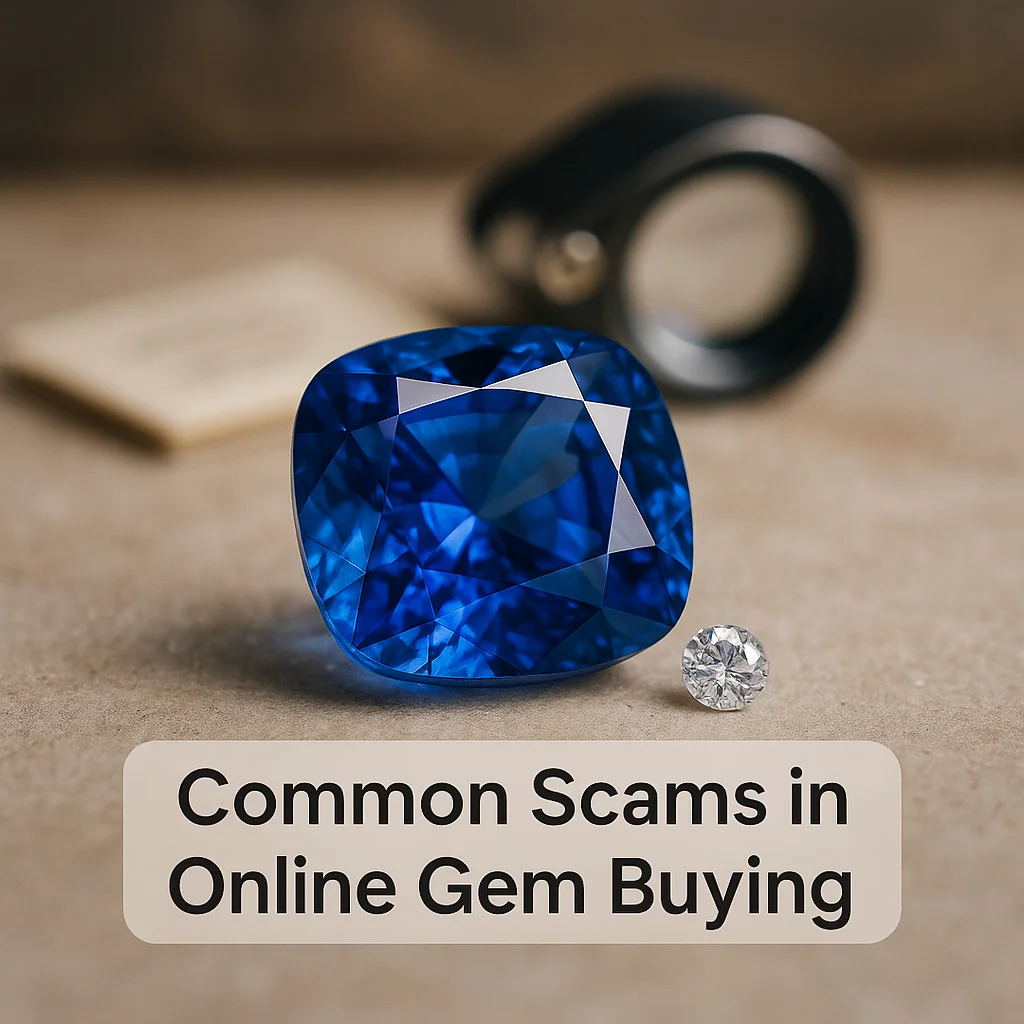
Many popular gems in jewelry, such as diamonds, rubies, sapphires, and emeralds, are highly sought after not only for their beauty but also for their rarity and durability. For example, diamonds are celebrated for their exceptional hardness, rated at 10 on the Mohs hardness scale. Likewise, sapphires and rubies, both varieties of the mineral corundum, rank at 9, making them excellent choices for everyday jewelry like rings.
This article will guide you through the different aspects of buying gems online, helping you recognize their inherent properties, cultural significance, and tips to ensure you're getting the real deal without falling prey to scams. Beginners will learn how to spot common scams, verify authenticity, and make informed purchasing decisions.
🌍 Where It Comes From
Gemstones form through various geological processes, each producing different types of gems. For instance, igneous processes can lead to the creation of diamonds deep within the Earth's mantle. Sedimentary processes can lead to the formation of opals, while metamorphic processes often result in emeralds.
Well-known gemstone-producing regions can add to a gem's appeal and market value. For example, Colombian emeralds are renowned for their vibrant green color, while Burmese rubies are famous for their deep red hue. Such origins are highly regarded, primarily because these areas often yield stones with characteristics that are attractive to buyers and collectors.
However, the origin is not the only factor to consider. Often, the location can indicate potential quality and, in some cases, ethical concerns. Some regions have strict regulations ensuring fair-trade and eco-friendly mining practices, while others may not. Understanding the origin can provide insights into a gemstone's market reputation, affecting both value and decision-making in buying.
🔬 How It Forms
Gemstones form under specific conditions over millions or even billions of years. The primary factors contributing to their formation include heat, pressure, presence of mineral-rich fluids, and, importantly, time. For example, diamonds require both immense pressure and heat deep within the Earth.
Color variations in gemstones usually owe their existence to trace elements. Sapphires and rubies, both corundum varieties, differ in color due to such elements. Chromium gives rubies their red hue, while iron and titanium impart the blue in saphires.
The typical crystal habit, or common form a gemstone takes, can vary widely. Quartz, for example, can form in long, multicrystalline structures, while garnets may develop as dodecahedral crystals. Understanding these forms can enrich one's appreciation of a gemstone's natural beauty.
🎨 Color and Look
Gemstones are admired for their broad range of colors and dazzling appearances. The intensity and hue of a gem can be significantly affected by its cut and polish, which influence how light reflects from its surface. Gem clarity, or absence of inclusions or surface features, also influences how a gem is valued and perceived.
Common treatments applied to enhance a gemstone’s color and clarity include heat treatment for rubies and sapphires, and oiling for emeralds. These processes can improve a gem’s appearance but should always be fully disclosed by the seller to maintain transparency.
Certain gemstones exhibit optical effects that captivate collectors. The cat’s eye effect, known as chatoyancy, occurs in certain chrysoberyl, while the star-like asterism seen in some sapphires adds to their desirability. A careful understanding of these aspects helps in appreciating a gemstone’s full allure.
🧪 Properties That Matter
Several properties make gemstones suitable for different types of jewelry and collecting. Understanding these can guide appropriate use and care. The Mohs hardness scale classifies minerals by their ability to resist scratching; for instance, talc is rated at 1, while diamond is rated at 10. Harder gems like diamonds are ideal for daily wear, while softer stones, such as opals at 5.5–6.5, require more mindful use.
Toughness measures a gem’s ability to resist chipping or breaking. Jadeite, known for its toughness, is often used for intricate carvings. Cleavage describes how a gem breaks; while diamonds have perfect cleavage making them susceptible to chipping even though they rank highly in hardness.
Luster and transparency refer to how a gem reflects light and how much light passes through it, respectively. These contribute to a gem’s beauty and practicality, determining whether it is best suited for ring settings or as an accent in more protective pendant and earring styles.
✨ Meanings, Birthstones, and Culture
Gemstones have long held cultural significance, often imbued with symbolic meanings and associations. Different gems represent different months for birthstones, a tradition widely embraced today. For instance, garnet is January’s birthstone, and amethyst is associated with February. These associations provide layers of personal meaning to jewelry pieces.
Incorporating gemstones in modern jewelry is not just about their scientific beauty but also their cultural symbolism. For example, emeralds are associated with renewal and growth, often linked to spring in cultural traditions. It is important to understand these cultural connections as they add emotional value to gems.
While these associations are rich with tradition, they should be appreciated as cultural symbols rather than scientifically proven effects. Discussing such beliefs can offer a more profound connection to the jewelry pieces one chooses to wear or gift.
🧼 Care and Cleaning
Proper care and cleaning of gemstones are crucial for maintaining their beauty and longevity. Most gems respond well to gentle cleaning using warm soapy water and a soft cloth. Avoid harsh chemicals that can damage soft gems or those with treatments.
Certain gemstones require specific care. For instance, opals and pearls should not be exposed to prolonged soaking or high temperatures as they are porous and soft. Emeralds, often oiled to improve their appearance, should be cleaned gently to avoid removing enhancements.
Storing gemstones safely is another vital aspect. They should be kept in soft, separate enclosures to avoid scratches. This is especially applicable to jewelry with mixed hardness that can scratch each other with contact.
🛒 Buying Tips and What to Check
When purchasing gemstones online, several factors can affect price and quality, including color, clarity, cut, carat size, origin, and rarity. A gem with vivid color and high clarity will typically command higher prices. Furthermore, stones from reputable origins often have premium value.
Inquiring about treatments is necessary, as these enhancements impact the gem's value and care needs. Requesting a lab report for high-value stones can confirm authenticity and provide details on any treatments.
For online purchases, having a beginner checklist can prevent pitfalls. Review clear photos, verify seller reputation, ensure transparent disclosure of treatments, and understand the return policy. These steps are critical for a safe and satisfactory purchase.
⚠️ Real vs Fake and Common Look-Alikes
Distinguishing between natural and fake gemstones can be complicated without professional analysis. Natural stones are mined, while synthetic ones, possessing identical physical properties, are lab-grown. Imitations, like glass or plastic, mimic the appearance but lack genuine properties.
Doublets and triplets are examples of assembled stones. These composite stones can deceive unwary buyers unless disclosed. Understanding common look-alikes can prevent confusion, such as differentiating between diamonds and moissanite, both visually similar yet differing significantly in brilliance.
Professional testing is advisable for reliable gemstone identification. Avoid home testing methods which can be risky and damage the gems. Use reputable gemologists or labs for verification.
❓ Common Questions and Misconceptions
Is it a mineral or a rock? Most gemstones are minerals, defined by a consistent structure and composition. Some, like lapis lazuli, are rocks, combinations of multiple minerals.
Is it a birthstone? Birthstones change by month; each has traditional associations, and these are cultural rather than scientific.
Will it scratch easily? Hardness affects this. For example, diamonds are hard and resistant to scratches, while softer stones like fluorite are not.
Can it go in water? Most stones can be rinsed gently in water, but porous and delicate ones like amber should avoid prolonged exposure.
Does color fade in sunlight? Some stones may fade in direct sunlight, such as amethyst. It is best to store them in shaded areas to maintain color.
What treatments are common? Heat treatment for sapphires/rubies and oiling for emeralds are prevalent and accepted if disclosed properly.
Is lab-grown 'fake'? Lab-grown gems have the same properties as natural ones. They are not imitations, but the origin remains artificial.
How do I store it safely? Use soft pouches or individual compartments to prevent contact damage. Avoid storing mixed hardness together.
Do inclusions always lower value? Inclusions lower clarity but offer uniqueness. Some, like silk in star sapphires, create popular optical effects.
How do I pick a good one for jewelry? Consider wearability; harder stones suit rings, softer ones like opals fit pendants where they're protected.
📌 Summary
- Gemstones range from minerals to rocks with varied appeal.
- Typical colors and appearances reflected by cuts and clarity.
- Form through heat, pressure, and geological processes over time.
- Key properties: hardness, toughness, cleavage affecting wear.
- Common treatments like heating and oiling require disclosure.
- Gems need gentle cleaning and mindful storage.
- Rings benefit from hard stones, while pendants suit delicate ones.
- Common look-alikes include synthetics and imitations.
- Authenticity confirmed through professional testing and reports.
- Buying checklist: photos, reputation, disclosure, and policies.
- Cultural notes on birthstones enrich appeal (tradition-based).
- Memorable advice: informed buying prevents scams and enhances enjoyment.