💎 Custom Jewelry Commission Checklist
🪨 What It Is
Custom jewelry commissions involve creating unique, personalized pieces based on a client's specific desires. When it comes to gemstones, these pieces can be made using a variety of mineral gemstones, which are naturally occurring crystalline forms of specific chemical compositions. Some materials may also be organic in nature, such as pearls or amber.
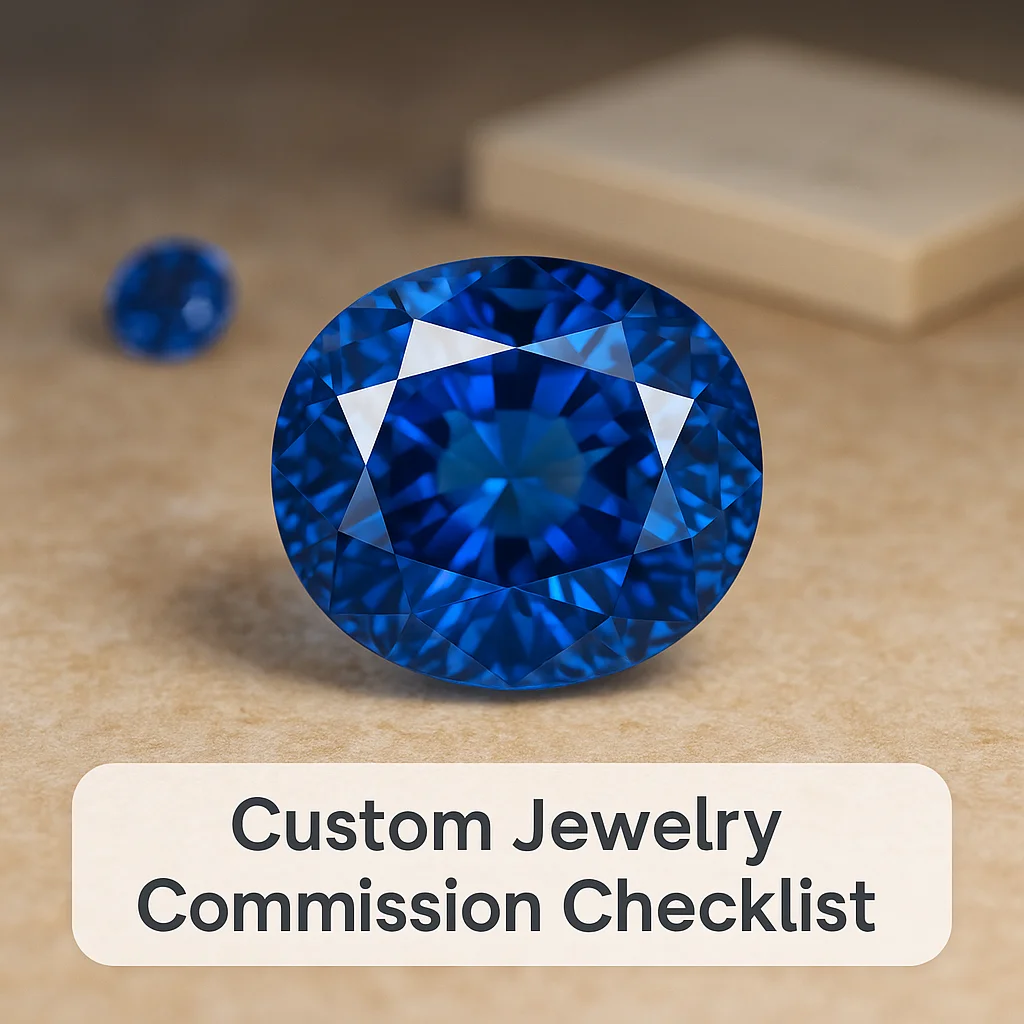
Popular stones in custom jewelry include diamonds, sapphires, rubies, and even birthstones, which are gems traditionally associated with each month of birth. In this section, you'll learn about the appearances, properties, origins, values, care tips, and buying considerations of these gemstones.
Understanding these elements will not only enhance your appreciation of gemstones but also guide you in making informed decisions when commissioning a piece of custom jewelry. You'll discover what to look for, how to care for these treasures, and what questions to ask when dealing with jewelers or vendors.
🌍 Where It Comes From
Gemstones form in various geological settings, including igneous rocks, which solidify from molten magma, and metamorphic rocks, which are altered by heat and pressure. Sedimentary rocks, formed by accumulated sediments, also provide environments for certain types of gemstones.
Some gemstones occur in hydrothermal veins, where hot fluids deposit minerals into cracks in rocks. Pearls, an organic gemstone, form in marine environments within oysters, while amber is fossilized tree resin found in sedimentary deposits.
The origin of a gemstone can influence its characteristics and market value. For instance, sapphires from Kashmir are renowned for their stunning blue hues. However, origins can sometimes be challenging to verify, so understanding how it might affect color and clarity is essential.
🔬 How It Forms
The formation of gemstones involves a combination of heat, pressure, and time. For instance, diamonds form under extreme heat and pressure deep within the Earth, while opals form from silica-bearing water in sedimentary environments.
The color of gemstones is often attributed to trace elements. For example, the presence of chromium results in the red color of rubies, while iron can add a blue hue to sapphires. Fluorite appears in a variety of colors due to defects in its crystal structure.
Gemstones can present in various common forms, such as crystals, nodules, or even geodes, where crystals form within cavities. Recognizing these typical forms helps in identifying and understanding different gemstones.
🎨 Color and Look
Gemstones are celebrated for their captivating colors and patterns. Some stones, like opals, exhibit optical effects such as play-of-color, where the stone exhibits a shifting spectrum of colors. Others, like star sapphires, may show asterism, a star-like pattern when cut properly.
The appearance of a gemstone can be influenced by its cut, which impacts how light interacts with it, and its clarity, which considers inclusions or imperfections within the stone. Lighting also plays a significant role in how we perceive a gemstone's color and brilliance.
Common treatments that affect gemstones include heat treatment to enhance color, dyeing to add or change colors, and oiling, often used to improve the clarity of emeralds. Being aware of these treatments is essential when purchasing gemstones.
🧪 Properties That Matter
Gemstones possess unique properties that influence their use in jewelry. Mohs hardness, which measures scratch resistance, is crucial for daily wear pieces. Diamonds, rated 10 on the scale, are excellent for rings, while softer stones like pearls (2.5 to 4.5) should be worn with care.
Toughness refers to a stone's resistance to chipping, while cleavage describes how a gemstone breaks along specific planes. Luster, the way a surface reflects light, and transparency, how much light passes through, also affect a stone's visual appeal.
Each property carries practical implications. Understanding them helps you select suitable gemstones based on their use, such as a hard sapphire for a ring versus a more delicate opal for a pendant.
✨ Meanings, Birthstones, and Culture
Throughout history, gemstones have been associated with cultural symbolism and meanings. For example, amethyst is traditionally associated with protection against intoxication. These meanings stem from folklore and cultural traditions rather than scientific evidence.
Each month is linked to a specific birthstone, like garnet for January and aquamarine for March. These associations form part of modern jewelry traditions and make for a personalized element in custom jewelry pieces.
It's important to note that these meanings are perceived traditions and not proven effects. However, they can add sentimental value to your custom jewelry piece.
🧼 Care and Cleaning
Proper care is crucial for maintaining your gemstone jewelry's luster and value. Generally, it's safe to clean gemstones with mild soap and water, using a soft cloth to polish. Avoid harsh chemicals that could damage the stone.
Some stones are more delicate. Opals and pearls, which are porous, should not be soaked in water. Heat and sudden temperature changes can lead to damage, especially for treated or composite stones.
It is advisable to store gemstones separately to prevent scratches. Wrapping in a soft cloth and keeping them in a cushioned jewelry box can help preserve their beauty.
🛒 Buying Tips and What to Check
Several factors influence the price and quality of gemstones: color, clarity, cut, carat size, and origin reputation. Asking about treatments is crucial, as some alterations may affect the stone's value and care needs.
Consider requesting a lab report for high-value purchases. Such reports can verify whether a stone is natural or treated but cannot guarantee a stone’s durability.
When buying online, examine photos closely, check the return policy, assess seller reputation, and ensure full disclosure of any treatments to make an informed purchase.
⚠️ Real vs Fake and Common Look-Alikes
Understanding the difference between natural and synthetic gemstones is vital. Synthetic stones have the same chemical properties as natural ones but are created in laboratories.
Imitation stones, made from materials like glass or plastic, mimic the appearance of gemstones without possessing their properties. Assembled stones, such as doublets and triplets, combine materials to enhance appearance.
Common look-alikes can cause confusion, such as cubic zirconia for diamonds. Reliable testing by a professional is the only safe way to confirm a gemstone's authenticity.
❓ Common Questions and Misconceptions
Is it a mineral or a rock? Most gemstones are minerals, but some can be rocks (e.g., lapis lazuli) or organic materials (e.g., pearl).
Is it a birthstone? This depends on cultural traditions. Each month traditionally has one or more associated birthstones.
Will it scratch easily? This depends on its Mohs hardness. Softer stones scratch more easily than harder ones.
Can it go in water? Generally yes, but not for extended periods or porous stones like opals.
Does color fade in sunlight? Some stones, like amethyst, may fade with prolonged exposure to sunlight.
What treatments are common? Treatments include heat, dye, irradiation, and oiling to enhance appearance.
Is lab-grown 'fake'? No, lab-grown stones have the same properties as natural stones but are created synthetically.
How do I store it safely? Wrap in soft cloths and keep in separate compartments to avoid scratches.
Do inclusions always lower value? Not necessarily; they can affect clarity but also add uniqueness.
How do I pick a good one for jewelry? Assess quality factors like color, clarity, and cut. Match the stone to the intended jewelry use.
📌 Summary
- Custom jewelry commissions offer personalized gemstone pieces.
- Typical gemstone colors range widely, influenced by trace elements and structure.
- Gemstones form through heat, pressure, and mineral deposition.
- Key wear properties include hardness, toughness, and luster.
- Common treatments like heat and dye enhance appearance.
- Gentle soap and water clean most gemstones safely.
- Rings require harder stones; pendants suit softer options.
- Look-alikes can cause confusion; professional testing is essential.
- Authenticity confirmed via reliable gemological assessment.
- Buying tips: inquire about treatments, obtain lab reports if needed.
- Birthstones offer cultural significance and personalization value.
- Remember, gemstone care and knowledge ensure lasting beauty and enjoyment.