💎 Emerald Oil Treatment What It Means
🪨 What It Is
Emerald is a green gemstone variety of the mineral beryl. It has long been treasured for its rich color and luster, making it a popular choice for jewelry. Emeralds are primarily composed of beryllium, aluminum, and silica, and their vibrant green hue is mostly due to traces of chromium and vanadium.
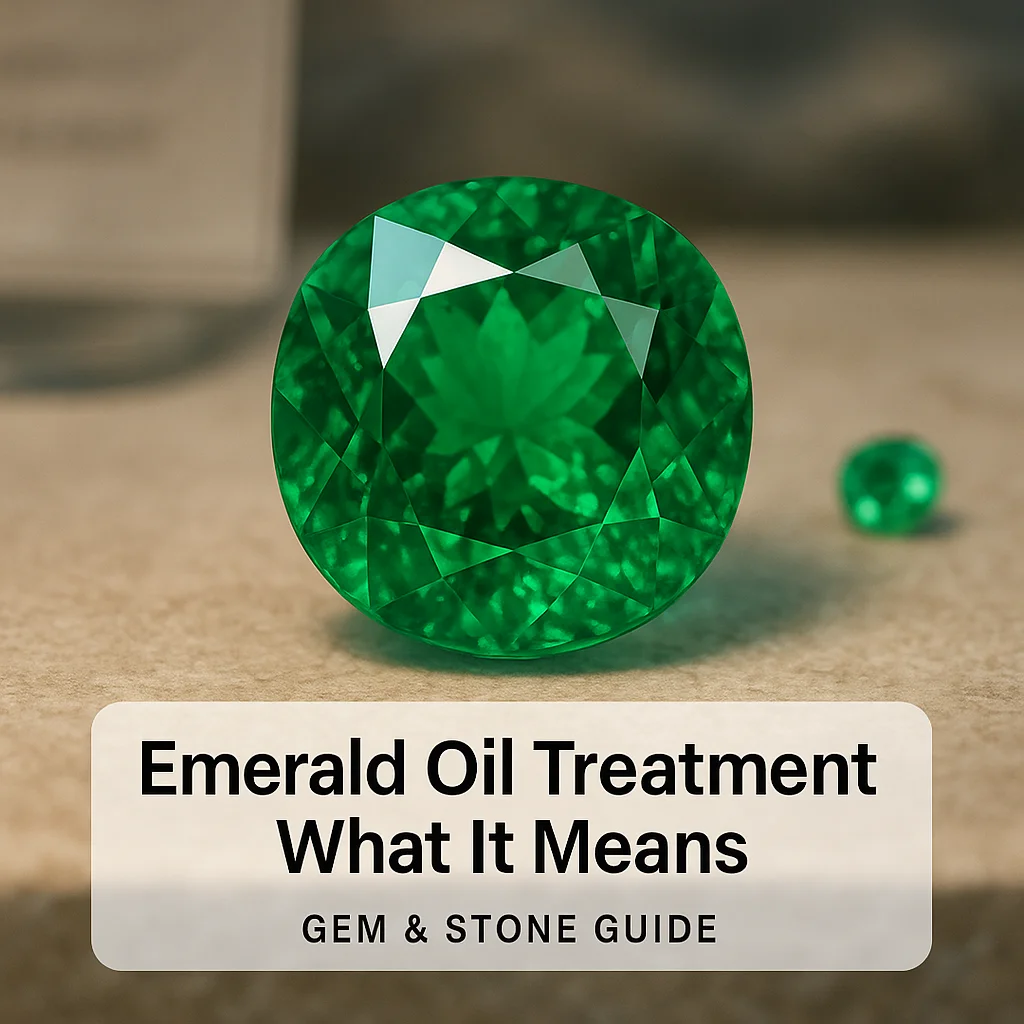
As one of the four precious gemstones—alongside diamonds, rubies, and sapphires—emeralds are highly valued in jewelry. They are traditionally associated with the month of May as a birthstone, symbolizing rebirth and renewal.
In this article, we will explore emerald oil treatment, covering aspects like its appearance, formation, properties, origins, and important tips for care, buying, and authenticity checks.
🌍 Where It Comes From
Emeralds occur naturally in specific geologic settings, primarily forming in metamorphic and igneous rocks. These environments produce the formations necessary for emeralds to develop over millions of years, often in relatively narrow veins within larger rock structures.
Well-known sources of emeralds include Colombia, Zambia, Brazil, and Zimbabwe. Each of these regions is known for producing emeralds with distinct characteristics. For example, Colombian emeralds are renowned for their deep green color and exceptional clarity.
The origin of an emerald can significantly affect its value and desirability. Stones from certain locations may command higher prices due to their reputation for superior quality. It is important for buyers to understand that while origin can hint at certain qualities, it does not guarantee them.
🔬 How It Forms
Emeralds form under specific conditions of heat, pressure, and time, often involving the interaction of hot, mineral-rich fluids with surrounding rocks. When these conditions are right, beryllium combines with aluminum and silica to form beryl, which becomes emerald with the addition of trace elements like chromium or vanadium.
The crystal habit of emeralds is usually hexagonal, although their formation in narrow veins can lead to irregular, tabular crystals. The precise conditions under which emeralds form can lead to inclusions—tiny imperfections within the stone—which are quite common in natural gemstones.
🎨 Color and Look
Emeralds are renowned for their deep green color, which varies from an intense dark green to a lighter, more translucent hue. This green color is typically enhanced by the presence of chromium and vanadium. The saturation and tone of an emerald's color can greatly influence its value and appeal.
The cut and polish of an emerald can impact its appearance. Emeralds are often cut in a rectangular step-cut, known as the "emerald cut", which helps emphasize their color while minimizing the visibility of inclusions. Their clarity can also be enhanced by the oil treatment, which fills surface-reaching fractures to improve transparency.
Treatments like oiling are common in the emerald industry. These processes help reduce the visibility of fractures and improve overall appearance, though they do require careful handling to maintain.
🧪 Properties That Matter
On the Mohs hardness scale, emeralds typically score 7.5 to 8, meaning they are relatively scratch-resistant but not as hard as diamonds or sapphires. This makes them suitable for most types of jewelry, although care should be taken with rings, which can be subjected to more wear.
Emeralds have moderate toughness and may chip if struck sharply. They exhibit conchoidal fracturing, meaning they can break in a smooth, curved surface, so handling needs to be gentle.
Their luster is typically vitreous, giving them a bright, glassy appearance that is prized in jewelry. For daily wear, emeralds are often better suited to pendants and earrings, rather than rings, to minimize potential damage.
✨ Meanings, Birthstones, and Culture
Emeralds have held symbolic meanings across different cultures and are traditionally associated with clarity and truth. Their vibrant green color is often linked to fertility and prosperity, and many consider them a talisman for maintaining love and protecting against infidelity.
As the birthstone for May, emeralds are often gifted as birthday jewelry during this month, representing growth and new beginnings. In certain cultural traditions, they are also linked to the astrological sign of Taurus.
While these associations are significant in historical and cultural contexts, it's important to understand they are based in tradition rather than scientific fact.
🧼 Care and Cleaning
Caring for emeralds requires gentle handling. The safest cleaning method is using lukewarm water mixed with mild soap and a soft cloth. Avoid using harsh chemicals or ultrasonic cleaners, as these can damage the stone and displace any oil treatments.
Emeralds should be stored separately from other jewelry to prevent scratches. It is advisable to place them in a soft pouch or lined jewelry box. Avoid exposing emeralds to sudden temperature changes or soaking them in water, as extended moisture can affect the stone’s oil treatments.
🛒 Buying Tips and What to Check
When purchasing an emerald, factors such as color, clarity, cut, and carat weight will influence price and quality. Vivid, evenly distributed green emeralds without visible inclusions are typically more valuable.
Always ask about treatments and request a gemologist’s report if buying a high-value emerald. These reports provide clarity on treatments and origins but may not disclose all enhancements, so buying from reputable dealers is crucial.
For online purchases, ensure the seller provides clear photos, a reasonable return policy, and full disclosure of any enhancements. It’s wise to familiarize yourself with key buying principles to make an informed decision.
⚠️ Real vs Fake and Common Look-Alikes
Understanding the differences between natural, synthetic, and imitation emeralds is crucial. Natural emeralds form over millions of years and are mined from the earth. Synthetic emeralds have the same chemical properties but are created in a lab within a shorter timeframe. While synthetic emeralds are real in the sense of composition, they do lack natural origins.
Imitations can be made from glass or plastic and bear surface similarities but differ chemically and structurally. Assembled stones, such as doublets or triplets, may combine layers to mimic a whole emerald.
Common look-alikes include green gemstones like peridot or green tourmaline. Professional gemological testing is often required to confirm authenticity, as visual inspection alone can be misleading.
❓ Common Questions and Misconceptions
Is it a mineral or a rock? Emerald is a gemstone, a variety of the mineral beryl.
Is it a birthstone? Yes, emerald is the birthstone for May.
Will it scratch easily? With a Mohs hardness of 7.5 to 8, it resists scratches but requires careful handling.
Can it go in water? Briefly, yes, but avoid long exposure due to potential impact on oil treatments.
Does color fade in sunlight? Prolonged exposure to strong sunlight can fade emeralds, so it’s best to avoid these conditions.
What treatments are common? Emeralds are often oiled to enhance clarity.
Is lab-grown 'fake'? Lab-grown emeralds are chemically the same as natural ones, though they lack natural origins.
How do I store it safely? Store separately in a soft-lined box to prevent scratches.
Do inclusions always lower value? Inclusions can lower value, but some are expected and don't significantly impact overall beauty.
How do I pick a good one for jewelry? Look for vivid color, good clarity, and appropriate size for its intended use.
📌 Summary
- Emerald is a gemstone variety of beryl.
- Emeralds are typically deep green due to trace elements.
- They form in metamorphic and igneous environments.
- Key properties include moderate hardness and vitreous luster.
- Oil treatments enhance clarity.
- Clean gently with soap and water, and store carefully.
- Best suited for earrings and pendants.
- Common look-alikes include peridot and green tourmaline.
- Authenticity confirmed through professional testing.
- Buy with attention to color, clarity, and cut.
- Traditionally associated with the month of May and Taurus.
- Emeralds are cherished for their beauty and historical significance.