💎 Lab Grown Diamond vs Natural Diamond
🪨 What It Is
Diamonds, whether natural or lab-grown, are a captivating subject in the world of gemstones. Known for their unparalleled hardness and brilliance, diamonds are comprised of carbon atoms arranged in a crystal lattice.
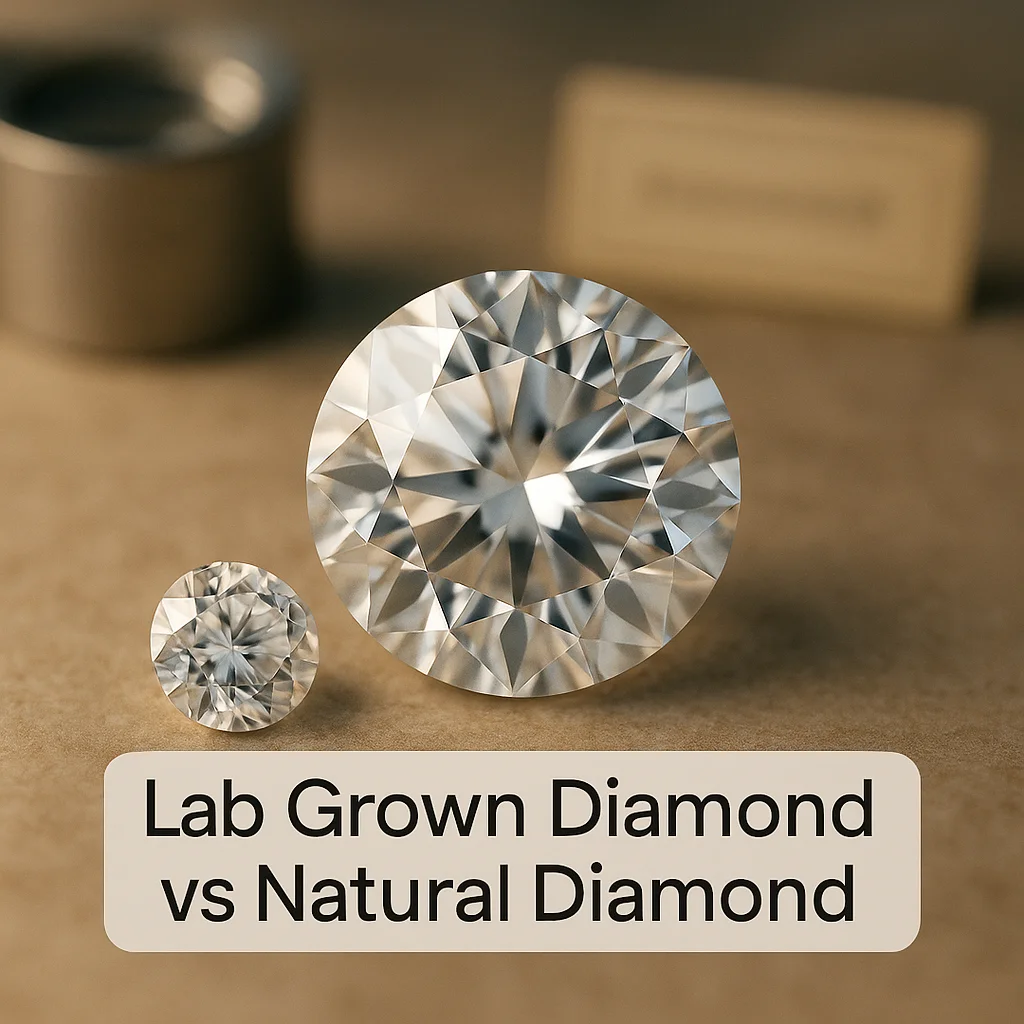
Diamonds are one of the most popular choices for jewelry, particularly for engagement rings. They also serve as the birthstone for the month of April, making them a significant gemstone culturally and symbolically.
In this article, we will explore the differences and similarities between natural diamonds and lab-grown diamonds, including their appearance, properties, origins, and tips for purchase and care.
🌍 Where It Comes From
Natural diamonds are formed deep within the Earth under high pressure and temperature conditions. They are typically found in igneous rock formations known as kimberlites. These geological environments provide the right setting for carbon atoms to crystallize over millions of years.
Significant sources of natural diamonds include parts of Africa, Russia, Canada, and Australia. While the origin does not affect the chemical composition of the diamond, it can influence consumer perceptions of clarity, color, and ethical considerations.
In contrast, lab-grown diamonds are produced using advanced technological processes replicating the natural environment in which diamonds form. These processes occur in laboratories around the world, enabling more sustainable and ethical sourcing.
🔬 How It Forms
Natural diamonds form at depths of about 100 miles beneath the Earth's surface, where temperatures exceed 2000°F. Over millions of years, carbon atoms bond to create the robust diamond structure, which is eventually brought to the surface through volcanic activity.
Lab-grown diamonds, meanwhile, can be created in weeks using either High-Pressure High-Temperature (HPHT) or Chemical Vapor Deposition (CVD) methods. These techniques mimic the natural conditions but in a controlled environment, resulting in identical physical and chemical properties.
Both natural and synthetic diamonds often occur in octahedral crystal habit, though other unique shapes can also be found.
🎨 Color and Look
Diamonds typically appear in shades ranging from colorless to shades of yellow and brown. The presence of trace elements like nitrogen can influence their color, often imparting a yellowish hue.
The cut of the diamond drastically affects its appearance by enhancing its brilliance and fire, elements that refer to light reflection and dispersion, respectively. Clarity, determined by the presence of internal inclusions, also impacts a diamond's look.
Color treatments and clarity enhancements are sometimes applied to diamonds, including irradiation, annealing, and laser drilling, though these should always be disclosed to buyers.
🧪 Properties That Matter
One of the most important properties of diamonds is their Mohs hardness of 10, making them the hardest known natural material. This hardness translates to outstanding scratch resistance, ideal for daily wear items like rings.
However, despite their hardness, diamonds have perfect cleavage, which means they can chip or fracture along certain planes if struck hard enough.
Diamonds exhibit an adamantine luster, contributing to their iconic sparkle. This makes them extraordinarily popular in various types of jewelry, from pendants to earrings.
✨ Meanings, Birthstones, and Culture
Culturally, diamonds are traditionally associated with strength and eternal love, given their unparalleled durability and timeless appearance. They are the birthstone for April, often symbolizing invincibility.
Many modern jewelry traditions feature diamonds as a centerpiece, particularly in commitment and wedding rings. Although some cultures attribute spiritual or healing properties to diamonds, such associations should be viewed as folkloric rather than scientific.
🧼 Care and Cleaning
To preserve the appearance and structural integrity of a diamond, cleaning with gentle soap and water is recommended. A soft cloth can be used to polish the surface, avoiding harsh chemicals that may damage jewelry settings.
Diamonds, given their hardness, are less susceptible to scratching but should still be stored separately from other stones to avoid unwanted contact. It's advised to avoid exposure to sudden temperature changes and long soaking that might compromise metal settings.
🛒 Buying Tips and What to Check
When purchasing diamonds, consider the "Four Cs": color, clarity, cut, and carat weight. These factors significantly influence both the quality and price of the stone.
Always inquire about any treatments or enhancements your diamond may have undergone and request a grading report from a reputable gemological lab. This provides a transparent view of the diamond's characteristics.
For online buying, ensure the seller’s credibility, review detailed photographs, and understand the return policy to alleviate potential risks.
⚠️ Real vs Fake and Common Look-Alikes
The primary distinction between natural and lab-grown diamonds is in their origin, with lab-grown being a synthetic yet genuine option rather than a 'fake' diamond.
Common imitation stones such as cubic zirconia and moissanite may be confused with diamonds but differ in properties like luster and hardness. Doublets or triplets are assembled stones imitating more valuable gems.
Professional testing is essential for accurate identification, as certain simulants can be challenging to distinguish with the naked eye.
❓ Common Questions and Misconceptions
Q: Is it a mineral or a rock? A: Diamonds are a mineral.
Q: Is it a birthstone? A: Yes, it's the birthstone for April.
Q: Will it scratch easily? A: No, it's the hardest known mineral.
Q: Can it go in water? A: Yes, but avoid long soaks to protect settings.
Q: Does color fade in sunlight? A: No, genuine diamonds do not fade.
Q: What treatments are common? A: Heat, irradiation, and laser drilling for color and clarity.
Q: Is lab-grown 'fake'? A: No, lab-grown refers to synthetic diamonds, not fake.
Q: How do I store it safely? A: Store separately to prevent scratching other gems.
Q: Do inclusions always lower value? A: Not always, but they can affect overall clarity.
Q: How do I pick a good one for jewelry? A: Look for balance in the "Four Cs" and ensure a satisfactory grading report.
📌 Summary
- Diamonds are a mineral, famous in jewelry as the April birthstone.
- Typical colors range from colorless to yellow, with offerings from vibrant to muted hues.
- Natural diamonds form over millions of years underground; lab-grown diamonds form in weeks in labs.
- Key properties include unmatched hardness and potential cleavage.
- Common treatments include clarity enhancements and some color treatments.
- Care involves gentle cleaning and cautious storage.
- Ideal for high-wear items like rings; suitable for occasional pieces like pendants.
- Common look-alikes include moissanite and cubic zirconia.
- Authenticity is confirmed through professional testing and detailed lab reports.
- Buying tips emphasize the "Four Cs," disclosure, and reputable reports.
- Birthstone and cultural meanings are rooted in tradition and symbolism.
- Diamonds, whether natural or lab-grown, offer enduring beauty and intrigue.