💎 Amethyst Care Sunlight Fading Explained
🪨 What It Is
Amethyst is a popular gemstone that belongs to the quartz family. It is known for its stunning purple color, which can range from light lavender to deep violet. As a variety of quartz, amethyst is a mineral with a crystalline structure. It is commonly used in jewelry and decorative pieces due to its beauty and relative affordability.
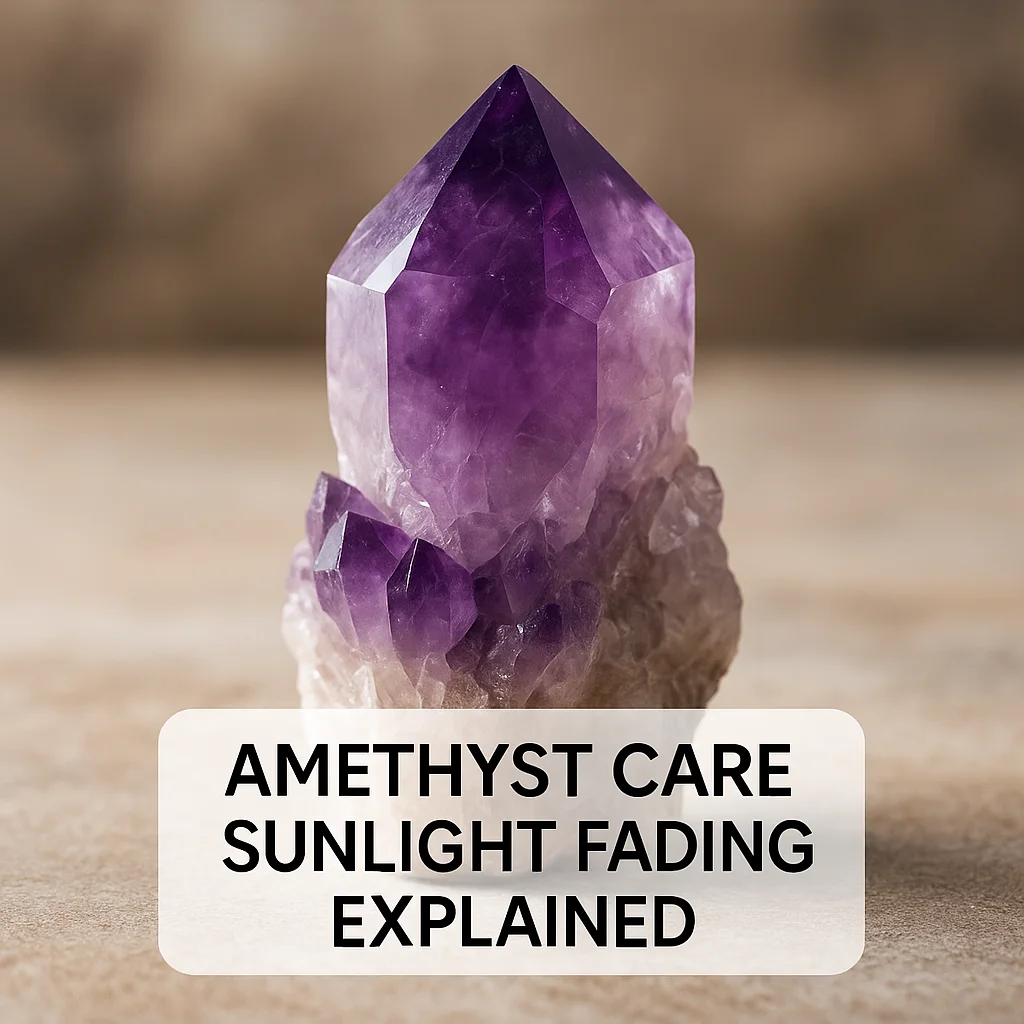
This captivating gemstone is also recognized as a birthstone for February, making it a cherished choice for birthday jewelry and gifts. In this article, we will explore the characteristics, formation, care, and buying tips for amethyst.
The main topics covered will include the appearance of amethyst, its natural origin, how it forms, and care tips to prevent issues like sunlight fading. We'll also touch on cultural significance and tips for distinguishing real amethyst from imitations.
🌍 Where It Comes From
Amethyst occurs in various geologic settings, most notably within igneous and metamorphic rocks. It often forms in hydrothermal veins where mineral-rich water interacts with surrounding rocks over long periods. This process results in the growth of large, impressive crystals.
Notable sources of amethyst include regions in Africa and South America. Brazil, in particular, is renowned for producing high-quality amethyst crystals that display stunning color and clarity. Some amethysts from Uruguay are prized for their deep purple hue.
The origin of an amethyst can influence its desirability and market value. Some collectors seek stones from specific localities due to their distinctive appearance and rarity. However, broadly speaking, quality and color often have more impact on value than origin alone.
🔬 How It Forms
Amethyst forms when silica-rich solutions enter rock cavities and slowly deposit layers of quartz over time. The purple color of amethyst is mostly attributed to trace amounts of iron that get incorporated into the quartz structure during crystal formation. These iron impurities create the violet hues when exposed to natural radiation from surrounding rocks.
This gem typically develops in a crystal habit, forming as well-pronounced crystals, clusters, or within geodes—hollow rocks lined with crystal points. Geodes with amethyst crystals can be found in large quantities in volcanic regions where the right conditions for hydrothermal activity exist.
🎨 Color and Look
The signature color of amethyst ranges from pale lilac to rich purple, occasionally with blue or red undertones. The depth of color is an important factor in its appeal and value, with deeper colors generally being more desirable. Some amethysts exhibit a color zoning effect, with lighter and darker bands visible within the same stone.
The appearance of amethyst can be enhanced or altered through common treatments like heat and irradiation. Heat treatment can lighten or deepen the color, while irradiation is used to restore color that may have faded over time. These practices should be disclosed by sellers to ensure transparency.
🧪 Properties That Matter
Amethyst has a Mohs hardness of 7, which provides reasonable scratch resistance for everyday wear in jewelry. While it is durable, amethyst is not invulnerable to chipping or breaking from hard impacts, as its toughness can vary. The stone displays conchoidal fracture, meaning it breaks with smooth, curved surfaces.
Amethyst has a vitreous luster, giving it a glassy appearance when polished. Its transparency can range from transparent to translucent, affecting the quality and price. These properties make it ideal for various jewelry applications, such as pendants, earrings, and rings.
✨ Meanings, Birthstones, and Culture
Traditionally, amethyst is associated with qualities like calmness and clarity, often symbolizing peace and serenity in various cultures. It is considered the birthstone for February, linking it with those born in that month. In folklore, amethyst is said to possess protective charms and has been used historically in religious and royal jewelry.
Modern jewelry traditions value amethyst for its vibrant color and variety. Although not scientifically proven, the cultural and symbolic meanings attributed to amethyst add to its appeal as a thoughtful gift and a talisman for different life events.
🧼 Care and Cleaning
The best way to clean amethyst is with mild soap and water. Use a soft brush or cloth to gently remove dirt from the surface, and then rinse well to ensure no soap residue remains. Harsh chemicals should be avoided as they can damage the stone.
Amethyst can be sensitive to extreme temperature changes, so it is wise to avoid exposing it to direct heat sources or leaving it in the sun for extended periods to prevent color fading. When not in use, store amethyst pieces in a soft cloth or lined box to protect them from scratches and other stones.
🛒 Buying Tips and What to Check
When purchasing an amethyst, consider factors like color, clarity, cut, and carat size—often referred to as the four C's of gemstone buying. A vivid, uniform color with minimal inclusions and a well-executed cut can enhance its value.
Inquire about any treatments the stone may have undergone and request an identification report from a reputable gemological laboratory for higher-value purchases. This can confirm the authenticity and provide details on its origin and any treatments.
When buying online, make sure the seller provides clear images, has a solid return policy, and a good reputation. Ensure all disclosures about the stone are upfront and verified before making a purchase.
⚠️ Real vs Fake and Common Look-Alikes
Natural amethyst can be distinguished from synthetic versions and imitations like colored glass or plastic through expert examination and gemological testing. Synthetic amethyst is lab-grown and shares similar chemical and physical properties with natural amethyst but lacks natural inclusions.
Doublets and triplets are assembled stones that may imitate amethyst's appearance with less valuable materials. Reliable identification should always be performed by a professional gemologist using specialized equipment.
❓ Common Questions and Misconceptions
Is it a mineral or a rock? Amethyst is a mineral, a type of quartz.
Is it a birthstone? Yes, amethyst is the birthstone for February.
Will it scratch easily? It has a Mohs hardness of 7, so it's scratch-resistant but not scratch-proof.
Can it go in water? Yes, brief exposure to water is fine, but avoid prolonged soaking.
Does color fade in sunlight? Yes, prolonged sun exposure can cause some amethyst to fade.
What treatments are common? Heat and irradiation treatments are common to alter or restore color.
Is lab-grown 'fake'? Lab-grown amethyst is not fake, but synthetic; it has the same properties as natural amethyst.
How do I store it safely? Use a soft cloth or a lined box to prevent scratches when storing.
Do inclusions always lower value? Not always. Minor inclusions are accepted, but too many can lower the value.
How do I pick a good one for jewelry? Look for rich, uniform color and good clarity, suitable for the intended jewelry piece.
📌 Summary
- Amethyst is a purple quartz mineral popular in jewelry.
- Found naturally with a range of pale to deep violet hues.
- Forms in igneous and metamorphic rocks via hydrothermal processes.
- Mohs hardness of 7, suitable for various jewelry types.
- Treatments like heat and irradiation may alter or restore colors.
- Gentle cleaning with soap and water is advised; avoid prolonged sun exposure.
- Suited for rings, earrings, and pendants, appreciating its durability.
- Common look-alikes include various imitations, requiring expert testing for sure identification.
- Lab reports confirm authenticity but should be from reputable sources.
- Check color, clarity, cut, and treatments when buying.
- Birthstone for February, traditionally symbolizing peace and clarity.
- Remember: protect from harsh conditions to maintain beauty.