💎 Emerald Care Oil Treatments and Cautions
🪨 What It Is
Emerald is a variety of the mineral beryl, characterized by its green color, which is due to trace amounts of chromium and sometimes vanadium. This gemstone is one of the most popular and highly valued stones in the world, often associated with beauty and wealth.
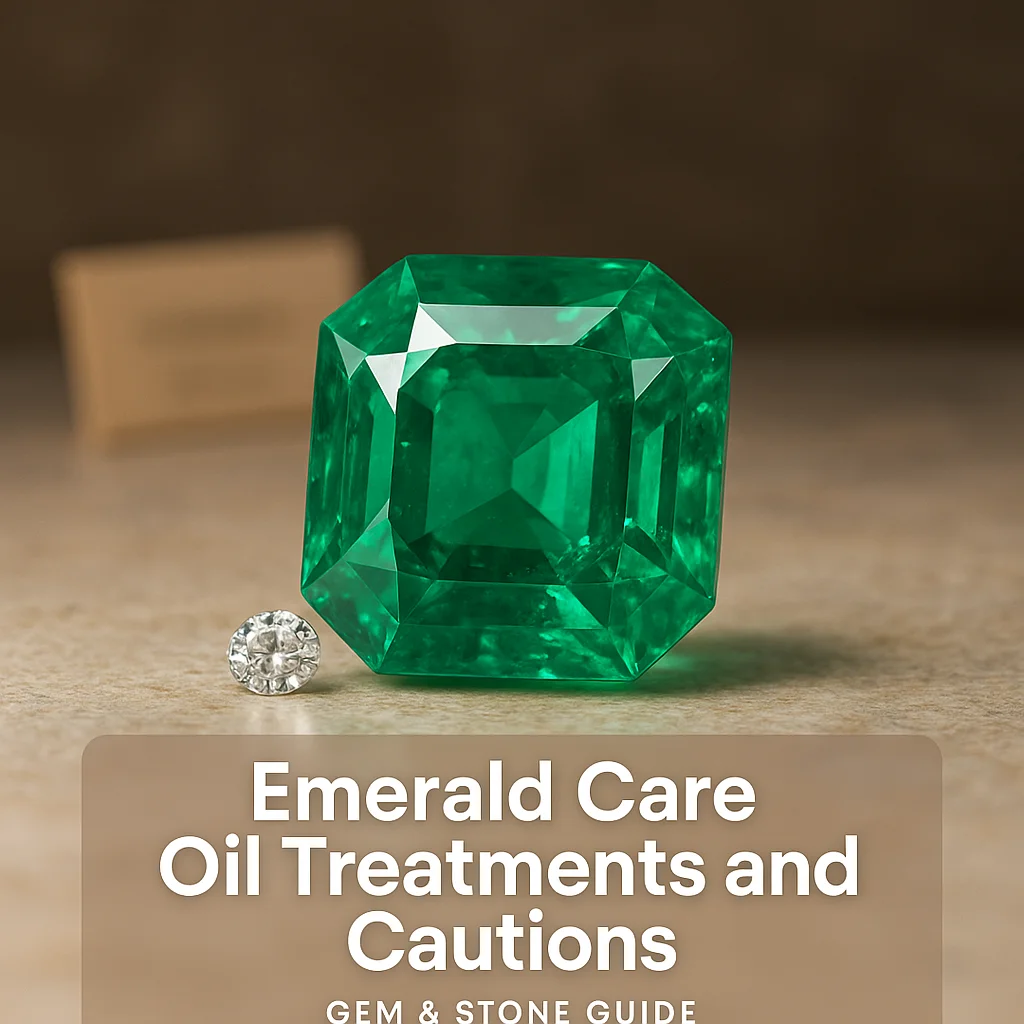
As a birthstone, emerald is assigned to the month of May, making it a sought-after gift for those born in that month. Known for its striking color and enchanting appearance, emeralds are a timeless choice for various jewelry types, from rings to necklaces.
This article aims to provide a comprehensive guide to emerald care, with an emphasis on oil treatments and precautions. Readers will learn the basics of emerald's appearance, properties, origin, value, and care, along with tips for buying and maintaining this precious stone.
🌍 Where It Comes From
Emeralds are typically formed in hydrothermal veins and metamorphic rocks, which are geological settings that facilitate the combination of beryl with chromium-rich environments. These gemstones can be found in some igneous rock deposits as well. Their formation is intricately tied to specific geological conditions which make high-quality emeralds relatively rare.
Notable emerald-producing regions include Colombia, Brazil, and Zambia. Colombia is especially famous for its high-quality emeralds, known for their deep green color and high transparency. Brazilian emeralds, while often lighter, have gained popularity for their distinct beauty and affordability.
The origin of an emerald can significantly affect its value. For example, Colombian emeralds may command higher prices due to their rich color and market reputation. Understanding the origin can also help in appreciating the characteristics particular to emeralds from different regions.
🔬 How It Forms
Emeralds form under conditions of intense heat and pressure, typically through the interaction of beryllium-rich minerals with chromium-rich fluids. This process occurs over millions of years, resulting in the growth of emerald crystals with varying sizes and qualities.
The defining green color of emeralds arises from trace elements like chromium or vanadium that replace aluminum in the mineral's crystal structure. The presence and ratio of these elements can vary, leading to the diverse range of green hues seen in emeralds across different regions.
Emerald crystals are usually hexagonal in shape, often forming as slender prisms. These natural formations are highly sought after for gem cutting, where skilled artisans enhance the gem's natural beauty by shaping it into faceted pieces for jewelry.
🎨 Color and Look
Emeralds are primarily valued for their deep green color, which may range from bluish-green to yellowish-green. Their color is one of the most important factors in their quality and value. Well-cut emeralds typically exhibit a vibrant and even color distribution, allowing them to capture light beautifully.
The appearance of an emerald can be influenced by several factors, including its cut, which impacts how it interacts with light. Additionally, the clarity of the stone plays a role, as many emeralds contain inclusions or internal features that can affect transparency.
Oil treatments are commonly used to enhance the clarity and luster of emeralds. This involves filling tiny fractures and fissures with colorless oil, often cedarwood oil, to improve the stone's appearance temporarily. While such treatments are accepted in the market, it's essential for consumers to be aware of these enhancements.
🧪 Properties That Matter
The Mohs hardness of emerald is 7.5 to 8, which means it is relatively hard but still softer than diamonds and sapphires. This makes emeralds suitable for use in jewelry, though care must be taken to avoid scratching.
Emeralds have fair toughness, which refers to their resistance to chipping and breaking. Given their natural inclusions, they require gentle handling to prevent damage.
The cleavage of emerald can be described as imperfect, meaning it may fracture along certain planes when subjected to force. Their luster, which is the way a mineral reflects light, is typically vitreous or glass-like, contributing to their alluring appearance.
✨ Meanings, Birthstones, and Culture
Emeralds have long been traditionally associated with rebirth and love. They are believed to bring good fortune and are linked to the heart chakra in various cultural beliefs. Though these associations are traditional rather than scientific, they add to the stone's allure and appeal.
As the birthstone for May, emeralds are often presented as gifts to those born in this month. Celebrated in modern jewelry designs, emeralds remain a favorite for special occasions, particularly in pieces that seek to capture an aura of elegance and history.
Folklore often depicts emeralds as stones of prosperity, enabling their wearer to gain wisdom and insight. While these beliefs enhance the stone's narrative, they remain cultural interpretations rather than factual assertions.
🧼 Care and Cleaning
To clean an emerald, use mild soap and water, gently scrubbing the stone with a soft cloth. Avoid harsh chemicals and ultrasonic cleaners, as these can damage treated stones and potentially impact their clarity.
Emeralds should not be exposed to sudden temperature changes or prolonged soaking, which may affect their structural integrity. Keeping emerald jewelry away from hard impacts and storing them individually will help prevent scratches and chips.
It is recommended to re-oil treated emeralds periodically to maintain their appearance. Consulting a professional jeweler for this process ensures safe and effective care for these precious gems.
🛒 Buying Tips and What to Check
Several factors influence the price and quality of emeralds, including color, clarity, cut, and carat size. Deep, vivid green emeralds with minimal inclusions are generally more valued than lighter or heavily included stones.
When buying emeralds, inquire about treatments and request a gemological report to verify the stone's origin and enhancements. Professional lab reports can provide valuable information about the stone but may not cover every aspect.
For online purchases, examine photos closely, check the return policy, and research the seller's reputation and disclosure practices. Understanding these aspects will help make informed decisions when purchasing emeralds.
⚠️ Real vs Fake and Common Look-Alikes
Natural emeralds can be distinguished from synthetic, lab-grown, or imitation emeralds. Synthetic emeralds are created in a laboratory but share similar chemical and physical properties with natural emeralds.
Imitation emeralds may consist of glass, plastic, or composite materials that mimic the appearance of natural emeralds. Doublets or triplets are assembled stones featuring an emerald layer fused with other materials to create an emerald appearance.
Professional gemological testing is necessary for reliable identification of emeralds. Using basic tests at home can be risky and may not yield accurate results.
❓ Common Questions and Misconceptions
Is it a mineral or a rock? Emerald is a mineral, specifically a green variety of beryl.
Is it a birthstone? Yes, emerald is the birthstone for May.
Will it scratch easily? Emeralds have a Mohs hardness of 7.5 to 8, making them relatively resistant to scratches but softer than diamonds.
Can it go in water? Brief exposure to water is generally safe, but avoid prolonged soaking, especially for treated stones.
Does color fade in sunlight? Prolonged exposure to strong sunlight may cause fading, so it's best to store emeralds out of direct sunlight.
What treatments are common? Emeralds are often treated with oil to enhance clarity and appearance.
Is lab-grown 'fake'? Lab-grown emeralds are not fake; they are chemically and physically similar to natural emeralds but created in controlled conditions.
How do I store it safely? Store emeralds separately from other jewelry to avoid scratches, preferably in a soft pouch or lined jewelry box.
Do inclusions always lower value? Inclusions can affect value, but some inclusions are accepted in emeralds due to their natural formation process.
How do I pick a good one for jewelry? Look for a vivid green color with minimal inclusions and a pleasing cut that enhances its natural beauty.
📌 Summary
- Emerald is a green variety of beryl, valued as a gemstone.
- Typical colors range from bluish-green to yellowish-green.
- Forms in hydrothermal and metamorphic settings with trace chromium.
- Mohs hardness of 7.5 to 8, suitable for jewelry with care.
- Commonly treated with oil to enhance clarity.
- Use gentle cleaning methods; soft cloth, avoid chemicals.
- Ideal for rings, pendants, and other jewelry forms.
- Frequently imitated by synthetic and glass composites.
- Professional testing confirms authenticity and treatment.
- Inquire about lab reports, color, clarity, and cut when buying.
- Traditional May birthstone, culturally associated with rebirth.
- Memorable takeaway: Emeralds are prized for their beauty and require careful maintenance to preserve their allure.