💎 Heat and Sunlight Which Gems Fade
🪨 What It Is
Gems and gemstones are revered for their beauty, rarity, and significance in various cultures. However, not all gems maintain their vivid colors and luster when exposed to heat and sunlight. A fundamental aspect of gemstones that beginners should understand is how these elements can affect appearance over time.
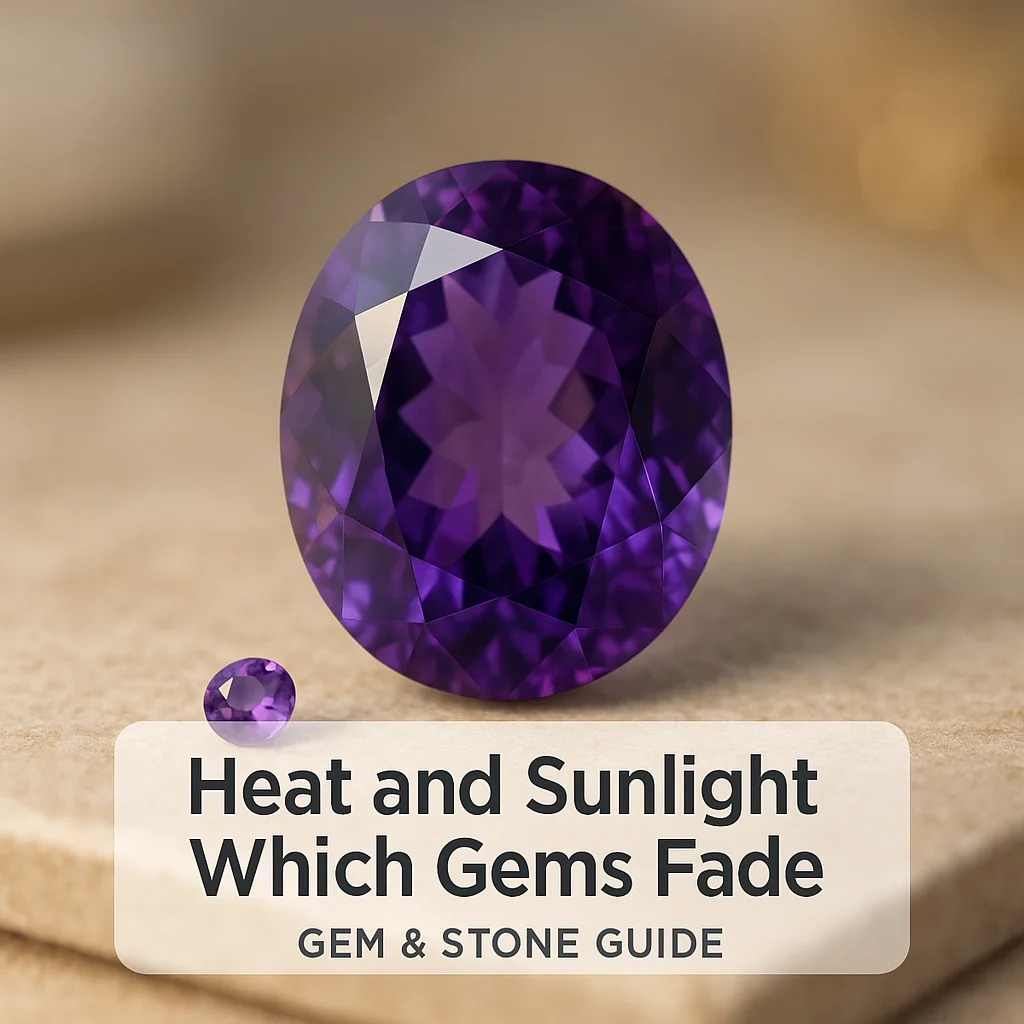
Certain gemstones can exhibit fading when subjected to prolonged exposure to sunlight or high temperatures. This occurrence is due to their chemical makeup and physical structure, which can lead to color change or loss of brilliance. Protecting these gems requires understanding their properties and how environmental factors can alter them.
In this article, we will explore what causes these changes, focusing on common gemstones that are known to fade, and provide guidelines on how to care for them properly, in addition to discussing their origins, properties, and cultural significance.
🌍 Where It Comes From
Gems can be found in a variety of geological settings. Some, like quartz, can form in igneous rocks such as granite, while others like turquoise form in sedimentary environments through chemical reactions with groundwater. The natural conditions and mineral composition of these environments determine the gem's characteristics and potential sensitivity to light and heat.
While gems like aquamarines and amethysts are primarily associated with Brazil, it's important to note that different regions can significantly influence a gem's color and clarity. For instance, African amethysts are often darker, while Brazilian ones are lighter. This variance can affect their market value and desirability.
The origin of gemstones can also impact their reputation in the market. For example, Burmese rubies and Kashmir sapphires are highly sought after due to their superior color quality and rarity, despite their sensitivity to environmental factors like heat.
🔬 How It Forms
Gems form over millions of years under extreme conditions of heat and pressure within the Earth's crust. The natural processes involved can include the cooling of magma, precipitation of minerals from solution, and transformation under pressure in the metamorphic rock environment.
Different trace elements can influence the color of gems. For instance, iron present in beryl gives us blue aquamarine, while chromium gives the green color of emeralds. These trace elements not only give gems their unique colors but can also make them more susceptible to fading.
Gems typically form in crystalline structures but can appear as nodules or geodes. The crystal habit, or growth pattern, can affect how they react to heat and sunlight, influencing their durability and appearance over time.
🎨 Color and Look
Gems can display a wide array of colors due to their innate chemical structure and the presence of impurities. Amethyst tends to showcase a purple hue due to trace amounts of iron, whereas topaz can range from clear or pale blue to vibrant orange.
The cut and polish of a gemstone can significantly enhance its beauty, showcasing its color and hiding or revealing inclusions – small imperfections or impurities within the gem that can affect both appearance and durability.
Treatments such as heat treatment or irradiation can aid in enhancing or changing a gem's color. For example, treating sapphires with heat can intensify their blue color, whereas light exposure might induce fading in gems like kunzite.
🧪 Properties That Matter
The Mohs hardness scale, ranging from 1 (talc) to 10 (diamond), measures a gemstone's resistance to scratching, an essential factor for everyday jewelry wear. A gemstone's toughness, which is its ability to resist breaking or chipping, also plays a significant role in its durability.
For example, while topaz scores an 8 on the Mohs scale, it is susceptible to cleavage, meaning it can split easily. Quartz, like amethyst, has a hardness of 7 and is more resistant to scratches but may still fade under extensive heat or sunlight.
Luster and transparency are also crucial. Luster refers to the way a gem's surface reflects light, while transparency affects how light passes through it. These qualities contribute to how brilliant or dull a gem appears to the naked eye.
✨ Meanings, Birthstones, and Culture
Throughout history, gemstones have been attributed with unique meanings and cultural significance, often used in rituals or as talismans. For example, rubies have historically symbolized passion and protection, while sapphires are linked with wisdom and loyalty.
In the context of birthstones, certain gems are associated with months of the year, such as amethyst for February and peridot for August. These associations are based on tradition, rather than scientific evidence, and can vary between different cultures.
While many people enjoy the cultural folklore surrounding gems, it's important to remember that these associations are not grounded in scientific fact but serve more as part of personal and cultural significance.
🧼 Care and Cleaning
To maintain the beauty and longevity of gemstones, proper care and cleaning practices are essential. Gently using soap and water, followed by drying with a soft cloth, is generally safe for most gemstones. Avoid using harsh chemicals or abrasives that can damage the surface.
Certain gems, like opals and pearls, are porous and should be handled with particular care. Avoid long exposure to heat, sudden temperature changes, or prolonged submersion in water as these can cause damage or fading.
Storing gemstones in separate soft pouches or lined jewelry boxes can prevent scratches and damage from contact with other items, ensuring they maintain their appearance over time.
🛒 Buying Tips and What to Check
When purchasing gemstones, factors like color, clarity, cut, and carat weight play critical roles in determining value. Rich, even coloring often commands higher prices, and flawless gems are particularly prized.
Being aware of treatments, such as heat or irradiation, and requesting reports for higher-value stones can help ensure authenticity. Lab reports can provide information about a gem's certified qualities but cannot guarantee future performance.
When buying online, consider a checklist: look for clear photos, check the return policy, assess the seller's reputation, and ensure any enhancements are disclosed to make an informed purchase.
⚠️ Real vs Fake and Common Look-Alikes
Understanding the differences between natural and synthetic (lab-grown) gemstones is crucial. Lab-grown gems are real but not formed naturally and usually cost less. Imitation or fake gems, such as colored glass or plastic, mimic real gem appearances but do not replicate their properties.
Assembled stones, such as doublets and triplets, combine pieces of genuine and artificial materials to resemble a whole gemstone. Recognizing common look-alikes like glass imitating quartz or plastic mimicking amber can prevent misconceptions.
Professional testing by certified gemologists is necessary to confirm authenticity and provide accurate identification, ensuring you get a genuine piece rather than a deceptive look-alike.
❓ Common Questions and Misconceptions
Is it a mineral or a rock? Most gems are minerals; few like amber are organic.
Is it a birthstone? Many gems are linked to specific months; refer to lists for details.
Will it scratch easily? Hardness varies; gems like quartz (Mohs 7) are scratch-resistant.
Can it go in water? Generally yes, but avoid soaking porous stones like turquoise.
Does color fade in sunlight? Some fade, like kunzite and amethyst; store away from light.
What treatments are common? Heat and irradiation are frequent to enhance color/clarity.
Is lab-grown 'fake'? No, lab-grown gems are real but more affordable than natural ones.
How do I store it safely? Use separate pouches to avoid scratches and damage.
Do inclusions always lower value? Not always; they can add uniqueness to the gem.
How do I pick a good one for jewelry? Balance color, clarity, cut for durability and beauty.
📌 Summary
- Gems can fade with heat and sunlight exposure due to chemical composition.
- Light-sensitive examples include amethyst, kunzite, and topaz.
- Gems come from diverse geological settings affecting features.
- Formed under pressure, heat, varying crystal habits influence behavior.
- Mohs hardness, toughness, cleavage affect wearability.
- Heat treatments alter color; full disclosure essential in buying.
- Cleaning: use mild soap, safeguard porous stones like opal.
- Popular in rings, pendants; match use with durability.
- Synthetic gems genuine but lab-made; fakes are glass/plastic.
- Lab certification confirms, does not guarantee longevity.
- Birthstones share symbolic traditional connections.
- Takeaway: Proper care and knowledge keep gems vibrant.