💎 Tanzanite Care Avoid Impact and Heat
🪨 What It Is
Tanzanite is a striking blue-violet variety of the mineral zoisite. It gets its unique color from trace amounts of vanadium. Discovered in the late 1960s, Tanzanite quickly became a favorite gemstone for jewelry due to its vibrant color and brilliance.
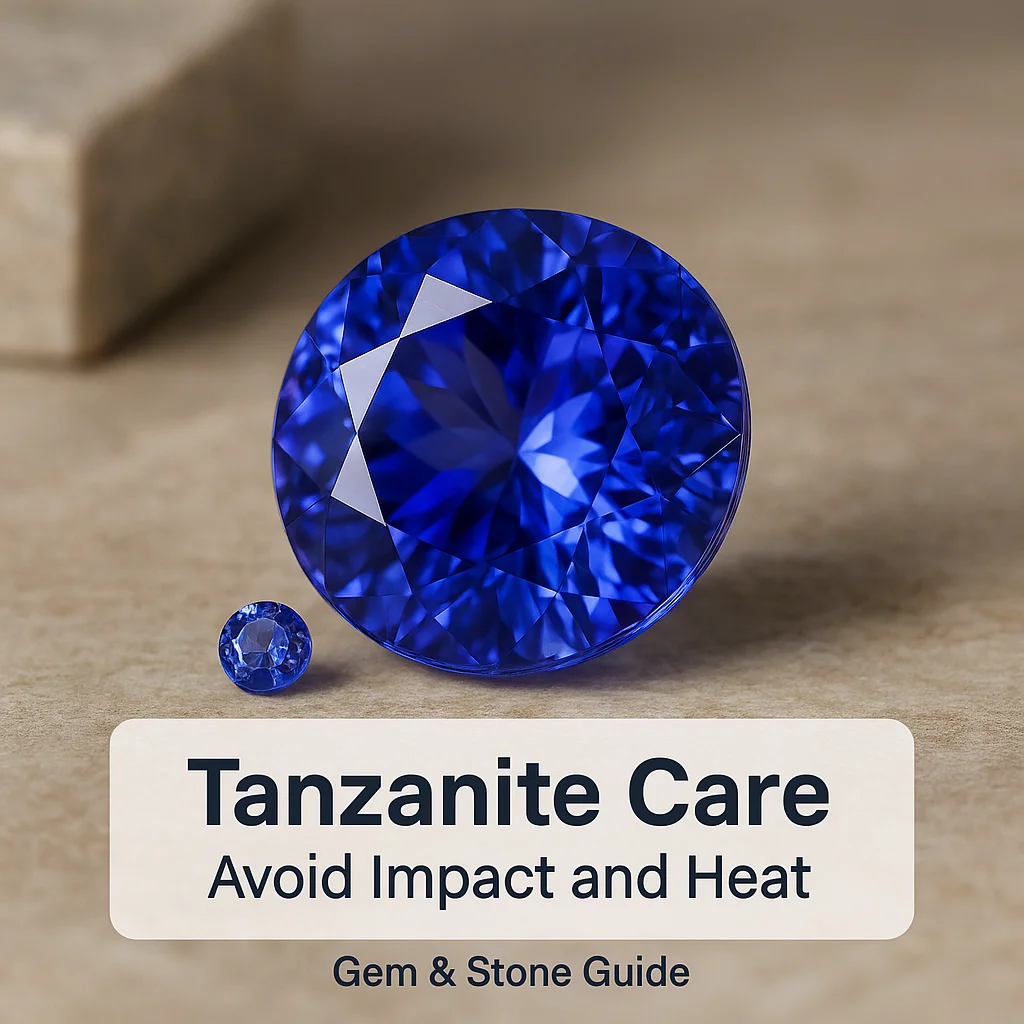
The gemstone is known for its pleochroism, which means it can display different colors when viewed from different angles. This characteristic is a major attraction for jewelry designers and collectors alike.
Beginner enthusiasts will learn how to identify Tanzanite, understand its properties, and appreciate the care necessary to maintain this beautiful gem’s condition. Tanzanite has been December's birthstone since 2002, often paired with Turquoise.
🌍 Where It Comes From
Tanzanite is found exclusively in the Mererani Hills near the base of Mount Kilimanjaro in Tanzania, East Africa. This makes it one of the rarest gemstones in the world. Deposits were formed around 585 million years ago, contributing to its unique properties.
The geological conditions in Tanzania — a precise combination of tectonic activity, heat, and pressure — created the right environment for Tanzanite to form. This limited geographical origin contributes to the gem’s allure and value.
Tanzanite from different parts of the Mererani Hills can vary in color and quality, influenced by the exact conditions under which it formed. This can affect its market reputation and desirability among collectors and jewelers.
🔬 How It Forms
Tanzanite forms in the presence of significant heat and pressure deep within the Earth. It starts as a relatively common mineral, zoisite, which undergoes significant geological processes to transform into the mesmerizing blue-violet gem.
The characteristic blue color of Tanzanite is largely due to the presence of trace vanadium, which, under the intense geological processes, changes the mineral's inherent colors.
When the rough gem is extracted from the earth, it often shows a reddish-brown tone. Heated carefully in a controlled environment, it transforms into the rich blue-purple hues that jewelers and collectors prize.
🎨 Color and Look
Tanzanite is typically prized for its stunning, deep shades of blue and violet. The finest specimens display a rich blue with violet tones, which can appear to change slightly in different lighting conditions.
This gemstone's luster is described as vitreous, meaning it has a glass-like reflection that enhances its color when properly cut and polished. Its pleochroic nature allows for hints of red, purple, and blue to show when viewed from different angles.
Heat treatment is a common practice for Tanzanite, as it enhances the vibrant blue hues. This is an accepted industry standard and does not detract from the gem's value.
🧪 Properties That Matter
Tanzanite has a Mohs hardness rating of about 6 to 7, indicating that scratches can occur if appropriate care is not taken. While it is reasonably durable for earrings and pendants, it is relatively softer than stones like sapphires and diamonds.
The gem's cleavage is perfect, meaning it has a tendency to break cleanly along specific planes. This makes it more prone to damage from sharp impacts, so caution is advised if using in rings.
Its transparency can range from transparent to translucent, and its toughness is considered fair. These characteristics suggest Tanzanite should be worn with care to avoid chipping or cracking.
✨ Meanings, Birthstones, and Culture
Traditionally, Tanzanite is associated with transformation and awakening. It is December's birthstone, symbolizing new beginnings and renewal, making it an ideal gift for new ventures or celebrations.
While some cultures attribute mystical properties to Tanzanite, such as enhancing spiritual insight, these claims are culturally based and not scientifically proven.
Modern jewelry designs often incorporate Tanzanite for its aesthetic appeal and its symbolic representation of the Tanzanian landscape, where it is exclusively found.
🧼 Care and Cleaning
When cleaning Tanzanite jewelry, it is best to use mild soap and lukewarm water. Gently scrub with a soft cloth or a soft toothbrush to avoid scratching the surface.
Avoid exposing Tanzanite to heat and sudden temperature changes, as these conditions can cause damage. Harsh chemicals and ultrasonic cleaners should also be avoided to preserve the gem's integrity.
Store Tanzanite pieces separately from harder gemstones to prevent scratches, ideally in a soft fabric pouch or lined jewelry box.
🛒 Buying Tips and What to Check
When purchasing Tanzanite, color is a critical factor — deep, vivid blues and purples are most valuable. Clarity is also important, though slight inclusions are common and can affect the stone's appearance.
Inquire about any heat treatment, as it is typically accepted but should be disclosed. For high-value stones, request a gemological report to verify authenticity and quality.
When buying online, check for clear photos, a strong return policy, and positive seller reviews. Transparency about any treatments and the gem's origin is also important.
⚠️ Real vs Fake and Common Look-Alikes
Natural Tanzanite is distinct from synthetic or imitation stones. Although lab-grown Tanzanite shares physical properties with natural tanzanite, it lacks natural origin.
Imitation stones, like colored glass or synthetic spinel, might mimic Tanzanite's appearance but do not share its unique attributes. Assembled stones, or doublets, might also mimic Tanzanite’s coloration but are composite forms.
Professional gemological tests, often involving equipment to assess refractive indices (light-bending properties), are necessary to confirm a Tanzanite's authenticity.
❓ Common Questions and Misconceptions
Is it a mineral or a rock? Tanzanite is a mineral, specifically a variety of zoisite.
Is it a birthstone? Yes, it's recognized as a birthstone for December.
Will it scratch easily? It can scratch more easily than harder stones like diamonds; care is needed.
Can it go in water? Yes, briefly for cleaning, but avoid soaking it for too long.
Does color fade in sunlight? Prolonged exposure may affect color; store away from direct sunlight.
What treatments are common? Heat treatment is common to enhance its color.
Is lab-grown 'fake'? Lab-grown is not fake but lacks natural origin.
How do I pick a good one for jewelry? Look for vibrant color, good clarity, and suitable setting for wear.
📌 Summary
- Tanzanite is a blue-violet variety of the mineral zoisite.
- Typically displays pleochroism, appearing in different colors from various angles.
- Forms under heat and pressure with trace elements of vanadium causing color.
- Has moderate Mohs hardness; care needed for frequent wear.
- Heat treatment enhances color, accepted practice.
- Use mild soap and water for cleaning; store separately to avoid scratches.
- Ideal for earrings and pendants, caution advised in rings.
- Common look-alikes include colored glass, synthetic stones.
- Authenticity confirmed through professional testing.
- Checklist for buying: color, clarity, treatment disclosure.
- December birthstone, linked with transformation and renewal.
- One memorable fact: Tanzanite is found only in a single location worldwide, enhancing its allure and rarity.