💎 Topaz Care Hardness and Chipping Risks
🪨 What It Is
Topaz is a silicate mineral that ranks highly among gemstones for its beauty and brilliance. It is commonly found in a variety of colors, though the most recognized shades are blue, yellow, and the highly prized "imperial" topaz which exhibits a vibrant orange hue. Topaz is not only admired for its aesthetic qualities but is also one of the birthstones for November, making it a popular choice for jewelry.
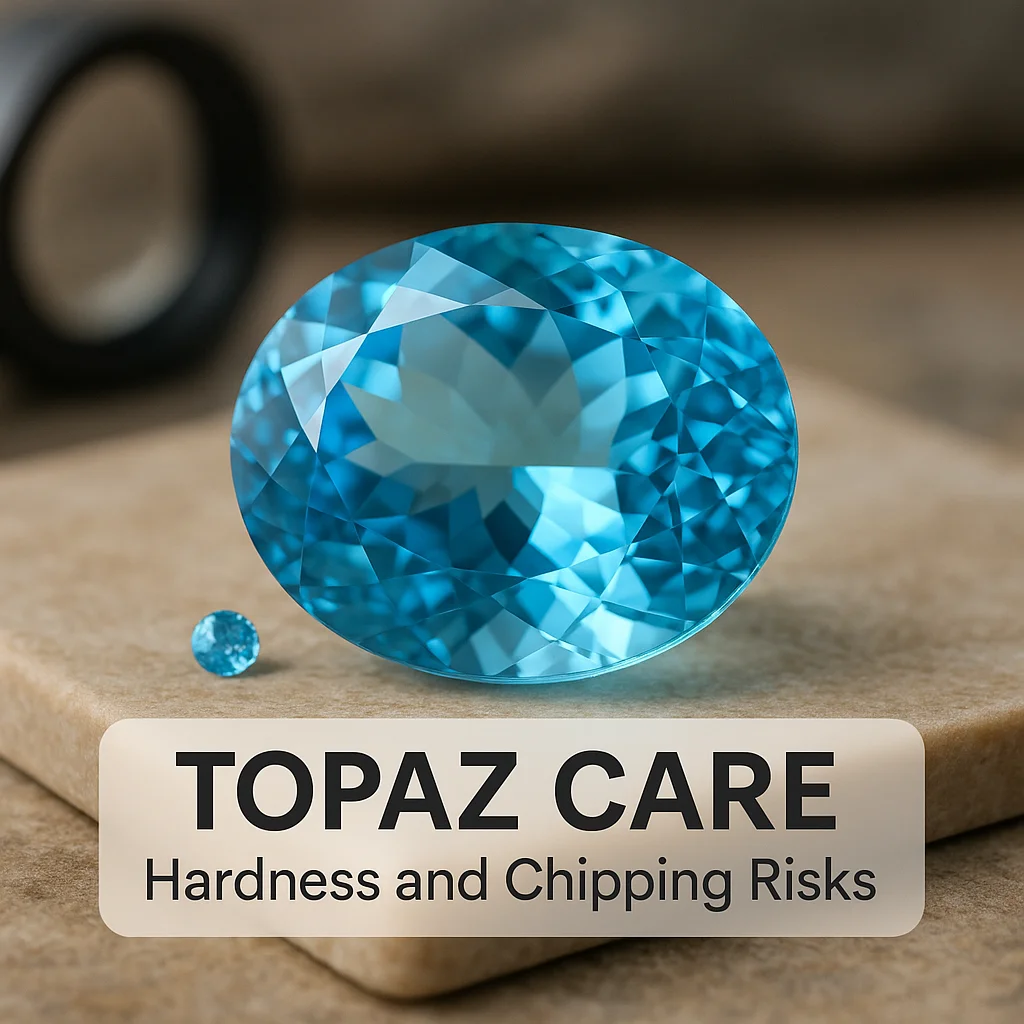
Throughout this article, you will learn about topaz's properties, its natural origins, how it forms, and practical care tips. We will explore its appearance, delve into the meaning it holds in various cultures, and provide guidance on purchasing genuine topaz while avoiding common look-alikes.
One of the key features that distinguishes topaz is its hardness, making it an ideal choice for jewelry that can withstand daily wear. However, it's also important to highlight the risks associated with topaz, particularly its susceptibility to chipping.
🌍 Where It Comes From
Topaz is primarily found in igneous rock formations, particularly in granitic pegmatites and rhyolites. These geological settings provide the high levels of silica typically required for topaz's growth. Over time, as these igneous rocks erode, topaz crystals can also be found in alluvial deposits.
Brazil is one of the most renowned sources of topaz, particularly famous for its imperial topaz. Other significant sources include Sri Lanka, Pakistan, Russia, and parts of the United States. The origin of a topaz can influence its color, clarity, and market value. Brazilian topaz, for example, is highly sought after in the gem trade for its exceptional quality and vivid colors.
While the origin can give buyers insight into potential quality, it's important to remember that each stone should be evaluated on its individual merits. Knowing where topaz originates can help in understanding its characteristics and potential treatments it may have undergone.
🔬 How It Forms
The formation of topaz is a process that requires specific geological conditions combining high temperatures and high-pressure environments, often occurring in the cavities of igneous rocks. The slow cooling of these rocks allows the silicate mineral to crystallize over time.
Topaz can be colorless or take on various hues due to trace elements. For instance, the presence of chromium can produce the distinct orange to pinkish colors found in imperial topaz, while iron impurities can give the stone a blue or yellow tint.
The crystals commonly form as prismatic structures that display a vitreous luster, making them appealing for polished gemstones. This crystalline habit lends a durability that is ideal for cutting and shaping into various jewelry pieces.
🎨 Color and Look
Topaz is celebrated for its wide range of colors, which include blue, pink, yellow, orange, and even colorless varieties. The presence of colors is largely due to natural impurities or common treatments like heat and irradiation, especially for blue topaz which is generally treated to achieve its striking hue.
The cut and polish of topaz significantly affect its visual appeal. A well-cut topaz will exhibit a sharp luster and brilliance, enhancing its colorful display under various lighting conditions. Clarity also plays a role in determining the stone's beauty, with clearer stones fetching higher prices.
While treatments can enhance a stone's color or clarity, it's important for buyers to be aware of these enhancements and how they might affect maintenance and value. Reputable sellers should disclose any treatments applied to their gems.
🧪 Properties That Matter
Topaz ranks at 8 on the Mohs scale, which measures a mineral's hardness based on its scratch resistance. While this makes topaz highly scratch-resistant, its structural cleavage, a tendency to split along defined planes, can pose a chipping risk.
The stone's toughness, or resistance to breaking, is rated as fair, so care should be taken to avoid hard knocks which may cause chips or fractures. Understanding these properties will help you decide whether a topaz is more suited for a ring, which experiences more wear, or an occasional pendant.
Topaz's vitreous luster adds to its visual charm, maintaining a fine gloss that's pleasing to the eye. Its transparency ranges from transparent to translucent, depending on inclusions within the stone.
✨ Meanings, Birthstones, and Culture
Topaz has been traditionally associated with wealth and healing across various cultures. Historically, it's been believed to have protective qualities. However, these are cultural traditions and not scientifically proven effects.
As a recognized birthstone for November, topaz is often gifted for birthdays celebrated during this month. Modern jewelry traditions embrace its versatile colors for all kinds of celebratory jewelry pieces.
In folklore, topaz is said to promote creativity and bring joy, further enhancing its appeal in both cultural symbolism and modern fashion trends.
🧼 Care and Cleaning
Proper care is crucial for maintaining topaz's beauty. The safest cleaning method involves using lukewarm water combined with a mild soap. A soft cloth can gently wipe away any dirt or grime accumulated on the stone.
To prevent damage, avoid exposing topaz to harsh chemicals or sudden temperature changes, which can exacerbate existing fractures. Extended soaking time is discouraged for treated stones to prevent compromised integrity.
Store topaz jewelry separately from other harder gemstones like diamonds to avoid scratches. Fabric-lined boxes or pouches are recommended for storing these stones securely.
🛒 Buying Tips and What to Check
When purchasing topaz, factors such as color intensity, clarity, cut quality, carat size, and origin reputation play crucial roles in evaluating value. Discuss potential treatments with the seller and consider obtaining a lab report for high-value stones to confirm authenticity.
Lab reports provide essential information like treatment details but may not certify the complete history of a gemstone. Therefore, use them alongside trusted seller reputations for online buying.
Beginners should create a buying checklist that includes clear photos, a seller's return policy, and a review of the seller's background and disclosure practices to ensure a confident purchase.
⚠️ Real vs Fake and Common Look-Alikes
Many gemstones attempt to mimic topaz, including synthetic versions grown in laboratories. These synthetic stones are not ‘fake’ but possess chemical properties similar to natural topaz.
Imitation stones, usually crafted from glass or plastic, only mimic the appearance of topaz without its intrinsic qualities. Assembled stones like doublets and triplets further complicate identification.
For reliable identification, professional testing conducted by gemological labs is recommended to avoid potentially incorrect conclusions from home experiments.
❓ Common Questions and Misconceptions
Is it a mineral or a rock? Topaz is a mineral, not a rock. It’s a specific chemical composition (Al2SiO4(F,OH)2).
Is it a birthstone? Yes, topaz is a birthstone for November.
Will it scratch easily? Topaz is quite resistant to scratching, with a Mohs hardness of 8.
Can it go in water? Topaz can be briefly cleaned in water, but long soaks are not recommended.
Does color fade in sunlight? Some topaz varieties may fade after prolonged exposure to sunlight.
What treatments are common? Heat and irradiation are common for achieving desired colors.
Is lab-grown 'fake'? Lab-grown topaz is not fake, but a chemically similar alternative.
How do I store it safely? Store in fabric-lined boxes separate from harder stones.
Do inclusions always lower value? Not always; minor inclusions might not significantly affect the value.
How do I pick a good one for jewelry? Look for vibrant color, good clarity, and appropriate cut for the intended use.
📌 Summary
- Topaz is a silicate mineral often used in jewelry and associated as a November birthstone.
- Colors range widely, with blue and imperial topaz being particularly popular.
- Forms under high-temperature and pressure conditions typically in granitic settings.
- Has a Mohs hardness of 8, good for wear but with fair toughness to prevent chipping.
- Common treatments include heating and irradiation to enhance color.
- Care involves gentle cleaning with soap and water; avoid harsh chemicals.
- Suitable for various jewelry purposes, from rings to pendants and earrings.
- Look-alikes include synthetic, glass, plastic, and assembled stones.
- Professional gemology testing needed for accurate authenticity confirmation.
- Buyers should prioritize reputable sellers, verify treatments, and use lab reports.
- Cultural associations highlight creativity and protection traditions.
- Topaz offers beauty, a range of colors, and durability; handle with care to preserve its value and appeal.