💎 10 Gemstones That Scratch Easily (Even If Sellers Say They Won’t)
🧭 The 60-Second Take
You're browsing through an online marketplace, excited about a new gemstone purchase. The images look stunning, and the certificate attached seems legitimate. However, the reality of what you receive can sometimes be a disappointment. Various lighting setups and retouched photos might obscure potential imperfections.
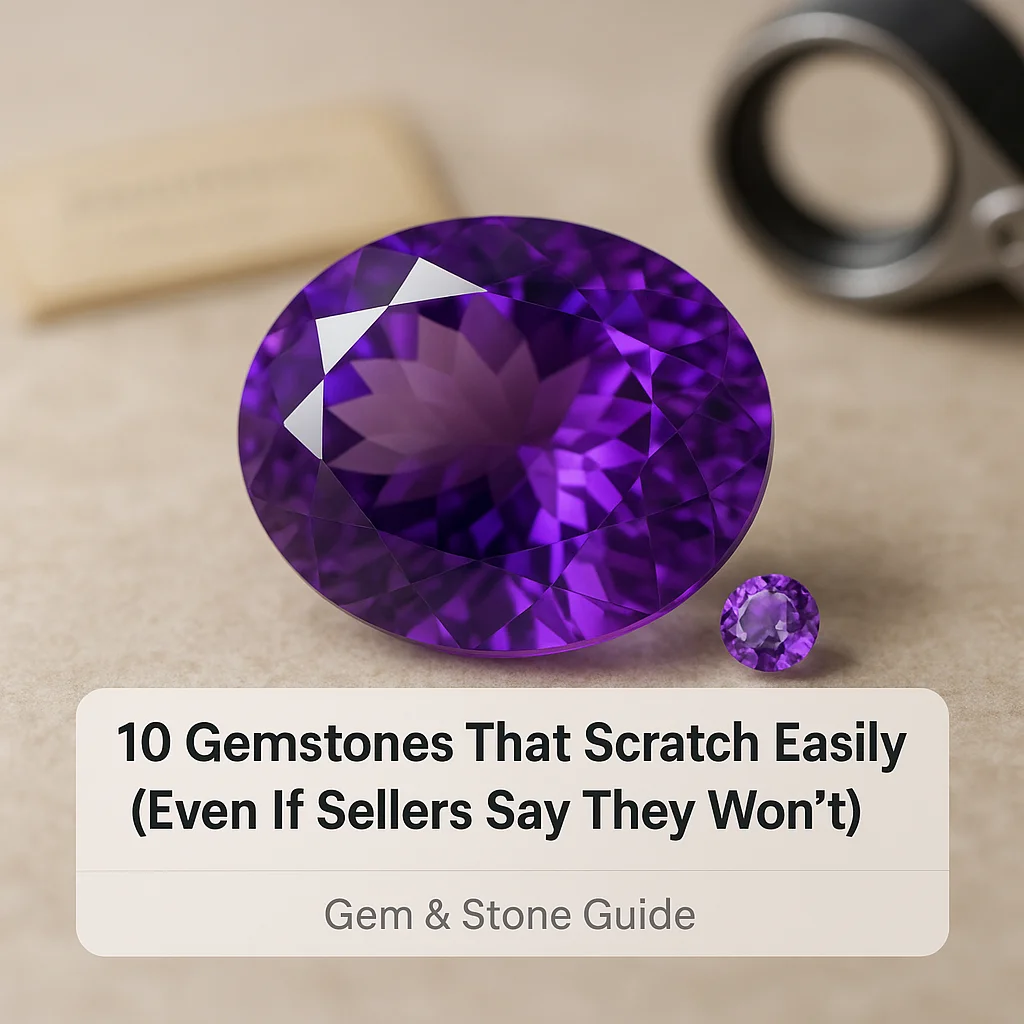
Many sellers will assure you that the stone is durable, but some gemstones scratch more easily than you might expect. Protecting your investment requires more than a glance at the price tag or a fancy document.
Here’s a quick list of actions to take when evaluating a gemstone:
- Evaluate multiple photos from different angles.
- Read reviews of sellers and their return policies.
- Understand the gemstone’s Mohs hardness rating.
- Ask for detailed descriptions of treatments or enhancements.
- Seek verification from reputable labs if in doubt.
- Check for visible inclusions under proper lighting.
- Compare prices with local jewelers for better context.
- Trust your instincts if something feels off.
🧪 What Actually Makes It “Real”
The gemstone market can be a complex mix of natural, lab-grown, imitation, and assembled stones. Natural gemstones are mined from the earth, while lab-grown stones share the same physical and chemical properties but are created in controlled environments.
Imitations look similar but lack the composition, and assembled stones, such as doublets or triplets, join different materials together. Price alone doesn't confirm authenticity, and photos might miss details that only trained eyes can catch in person.
Certificates can offer important insights, yet they vary in quality. They may not detail treatments or identify imitations, making further verification crucial.
🔍 My Buyer Checklist (Step by Step)
- Look for stones with a detailed description. If it's too vague, request more information.
- If the price is significantly lower than expected, investigate further.
- Ask the seller if the gemstone is natural, lab-grown, or treated.
- Request a return policy in writing. Without one, reconsider buying.
- Seek documentation or a certificate, and confirm the lab issuing it.
- If marks or inclusions are visible, ask whether they affect durability.
- Compare the stone's color in different lighting if possible.
- Find out if special care is recommended due to softness.
- If unsure, get a gemologist's opinion before committing.
- If X feels wrong, do more research. If not, proceed with caution.
This checklist is a guide, not a rigid rule. Use it to inform but not overrule your final judgment. Each gemstone and seller is unique, so trust your insights.
⚠️ Mistakes People Make (And the Fix)
- Believing all certificates are equal. Check the certifying body.
- Overlooking small print about treatments. Always inquire further.
- Trusting poor-quality photos. Ask for additional images.
- Judging by price alone. Learn the market standards first.
- Ignoring a seller’s reputation. Read reviews and look for patterns.
- Overemphasizing flawless appearance. Embrace natural imperfections.
- Assuming scratches aren't a concern. Ask about expected wear.
- Relying solely on online returns. Know physical store policies too.
- Being swayed by perfect lighting. Real life often looks different.
- Forgetting that online is not in hand. Always try to inspect directly.
🎨 Look & Red Flags That Matter
The appearance of a gemstone can alter dramatically with cut, polish, and inclusions. Sometimes, surface coatings are applied to enhance the gem's appearance, but they may alter under everyday wear.
In real life, lighting plays a crucial role. Poor white balance or overly dramatic lighting can mislead you about the true color and clarity. Treatments such as dyes and heat treatments are common but can affect durability.
For gemstones prone to scratching, be alert for overly smooth or perfect surfaces, which might signal a treatment rather than a natural finish.
🧼 Care & Storage (Safe Defaults)
- Do use mild soap and lukewarm water for cleaning.
- Don’t use harsh chemicals or ultrasonic cleaners.
- Do gently pat dry with a soft, lint-free cloth.
- Don’t wear while doing household chores.
- Do store separately in soft pouches or lined boxes.
- Don’t expose to extreme temperatures or direct sunlight.
- Do inspect settings regularly for signs of wear.
- Don’t assume water resistance; check specifics.
- Do seek professional cleaning for valuable stones.
- Don’t neglect regular maintenance and inspection.
- Do be cautious with porous stones like opal and turquoise.
- Don’t immerse pearls or amber in water for extended periods.
- Do use caution with lotions, perfumes, and hairsprays.
- Don’t overlook regular rotation among pieces to minimize wear.
🧾 What Certificates Can (and Can’t) Prove
Certificates issued by reputable labs typically document a gemstone's type, origin, and any detectable treatments. They offer a baseline assurance of authenticity, especially when coming from a renowned institution.
Sellers might exaggerate the implications of these certificates, however, leaving out essential information about care or non-disclosure of certain treatments. Therefore, certifications should be part of a broader assessment process.
For high-value gems, obtaining a report is usually worthwhile, though it can't replace a comprehensive evaluation involving professional expertise and hands-on inspection.
❓ Quick Questions Buyers Ask
Q: How can I tell if a gemstone is real from a photo?
A: Photos alone aren't reliable; request a certificate and confirm authenticity.
Q: Do all gemstones need certification?
A: Not necessarily, but for high-value or rare stones, it's advisable.
Q: What is the Mohs scale?
A: It’s a scale of mineral hardness where higher numbers indicate greater scratch resistance.
Q: Can lab-grown stones scratch as easily?
A: Often, they have similar properties to natural stones, but it depends on the type.
Q: Are treated gemstones worth less?
A: It depends on the treatment; some enhance longevity, others not as much value.
Q: How important is a return policy?
A: Very important, especially for high-value transactions and online purchases.
Q: Can I clean all my gems the same way?
A: No, soft or porous stones need gentler care; check specifics.
Q: Is buying online riskier?
A: It can be; research and reputable sources mitigate risk.
📌 If You Only Remember 5 Things
- Treat all online images with skepticism; request varied views.
- Never buy high-value gems without a solid return policy.
- Use certificates but understand their limitations and context.
- Recognize that surface perfection may indicate treatment.
- Consistency in information across multiple sources builds trust.
- Consider regular professional checkups alongside home care.
- Authenticity and durability are confirmed with research, not just price.