💎 Why Opals Crack: The Humidity Rule Nobody Told You
🧭 The 60-Second Take
Imagine browsing online for a dazzling opal ring. The photos glisten, and the price seems fair. You quickly hit "buy" and wait eagerly for your gem to arrive. But, not long after wearing it, you notice a slight crack developing.
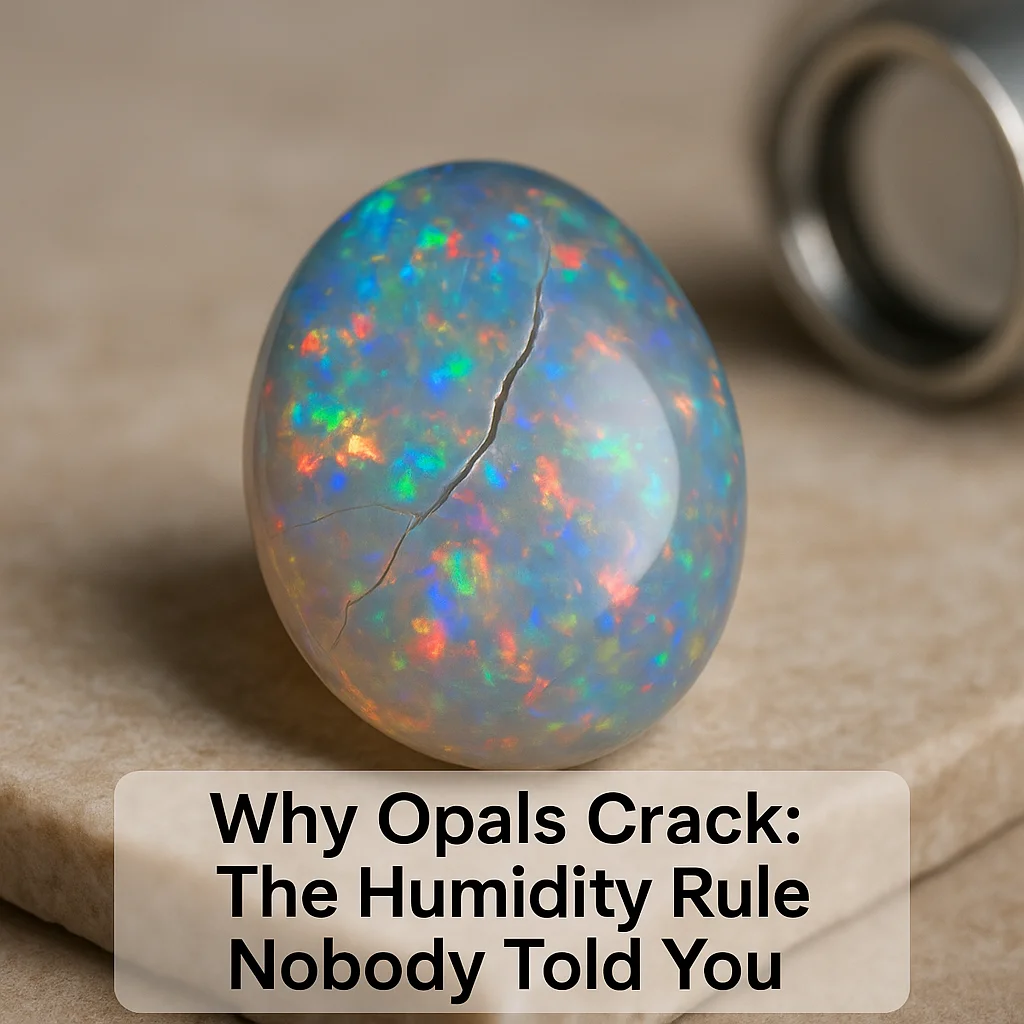
This is a common scenario that many jewelry enthusiasts face. The truth is, understanding opals involves more than just admiring their beauty. It includes a careful consideration of their environment.
To avoid such disappointment, here's a quick list of what you should do today:
- Check the humidity levels where you live.
- Keep opals away from direct sunlight.
- Store opals in a soft, damp cloth when not in use.
- Avoid sudden temperature changes.
- Consider investing in a hygrometer to monitor home humidity.
- Verify the source and treatment of the opal with the seller.
- Educate yourself on different types of opals. >
🧪 What Actually Makes It “Real”
Opals can be categorized broadly into three types: natural, lab-grown, and imitation. Natural opals are formed over millions of years, while lab-grown opals replicate this process in a controlled environment more quickly. Imitations might look flashy but lack the structural integrity and water content found in genuine opals.
Photographs alone often can't reveal an opal's authenticity. Price and paperwork can hint but aren't definitive without understanding the context of the market. Certificates help but only if issued by reputable gemological labs.
🔍 My Buyer Checklist (Step by Step)
- If the price seems too good to be true, investigate why.
- Verify if the seller offers detailed certificate information.
- Check seller reviews about return policies and customer service.
- If opal is labeled as natural, ask about its origin.
- Clarify whether the opal is untreated or has undergone any treatments.
- Ask for multiple photos, including close-ups, under various lighting conditions.
- If you notice uniform perfection, consider it might be an imitation.
- If unsure about an opal, seek a second opinion from a gemstone expert.
- Request information on the clarity and specific type of opal.
- If buying in person, inspect the opal under different lighting options. >
- Treating opals like diamonds; they're porous and need gentler care. Use special storage.
- Assuming paperwork is proof; certificates complement but don't confirm authenticity.
- Underestimating humidity's impact; use a humidifier if needed.
- Overlooking return policies; ensure there's a good one in place before purchasing.
- Ignoring lighting in photos; check for varied lighting representation.
- Assuming opals can handle everyday wear; limit their exposure to harsh conditions.
- Buying if it looks too perfect; real opals have natural variations.
- Forgetting that opals can be dyed; question unusually vivid colors.
- Not researching the seller; a reputable seller is often a safer bet.
- Assuming bigger is better; consider quality over size. >
- Use a soft, damp cloth for cleaning opals, avoiding detergents.
- Store opals away from direct sunlight and heat sources.
- Do wrap opals in a soft cloth for added humidity during storage.
- Don't expose opals to rapid temperature changes.
- Do keep opals in a controlled humidity environment.
- Don't use ultrasonic cleaners on opals.
- Do check your home's humidity levels often.
- Don't soak opals in water excessively.
- Do remove opals before engaging in sports or rigorous activities.
- Don't expect opals to withstand scratches or impact. >
- Maintain appropriate humidity levels to prevent opal cracking.
- Avoid rapid temperature changes to preserve structural integrity.
- Carefully scrutinize opal sources and seller claims before buying.
- Use soft cloth storage, mindful of ambient conditions.
- Consider professional verification for high-value purchases. >
This checklist guides you through making informed decisions without letting anxieties drive the choices. Trust but verify with each step.
⚠️ Mistakes People Make (And the Fix)
🎨 Look & Red Flags That Matter
The breathtaking play-of-color opals are known for is their most captivating feature. However, lighting can dramatically alter how this appears. Daylight usually offers the clearest view, while incandescent light may warm the hues.
Common treatments include resin infill and dye to enhance color. These treatments can affect opal durability, making them more susceptible to environmental changes like shifts in humidity.
Watch out for overly glossy surfaces, which might indicate resin coatings, and ensure that the opal's cut is symmetrical. Inclusions should look natural and not overpower the opal's intrinsic beauty.
🧼 Care & Storage (Safe Defaults)
🧾 What Certificates Can (and Can’t) Prove
Certificates from respected labs often confirm the type (natural, lab-grown, or imitation) and treatments (if any) done to an opal. They sometimes verify origin and quality specifics, too.
However, sellers can sometimes misrepresent what a certificate indicates. Some might skew findings to imply rarity or higher value than warranted. Always cross-verify claims with the certificate details.
Reports can be invaluable for higher-risk purchases where a significant investment is at stake. For mid-range opals, balancing personal scrutiny and professional validation might suffice.
❓ Quick Questions Buyers Ask
Q: Can I wear my opal ring every day?
A: It's best to wear opals occasionally due to their sensitivity to environmental conditions.
Q: Do opals dry out?
A: Opals can lose moisture, especially in low-humidity areas, leading to cracking.
Q: Are treated opals less valuable?
A: Treated opals can be less valuable but not always; it depends on the nature of the treatment.
Q: Should I avoid opal if I live in a dry climate?
A: Not necessarily, but you should take extra care to maintain humidity levels around the opal.
Q: How can I test an opal's authenticity?
A: Professional gemologists can perform non-invasive tests to confirm an opal's nature.
Q: What does a high fire opal mean?
A: It refers to the intensity of its play-of-color, which is highly desirable.
Q: Can opals crack from heat alone?
A: Yes, excessive heat can cause cracking, especially if combined with low humidity.
Q: Are opals okay in water?
A: Brief exposure is generally fine, but prolonged soaking should be avoided.