💎 Brown Smoky Quartz
🪨 What It Is
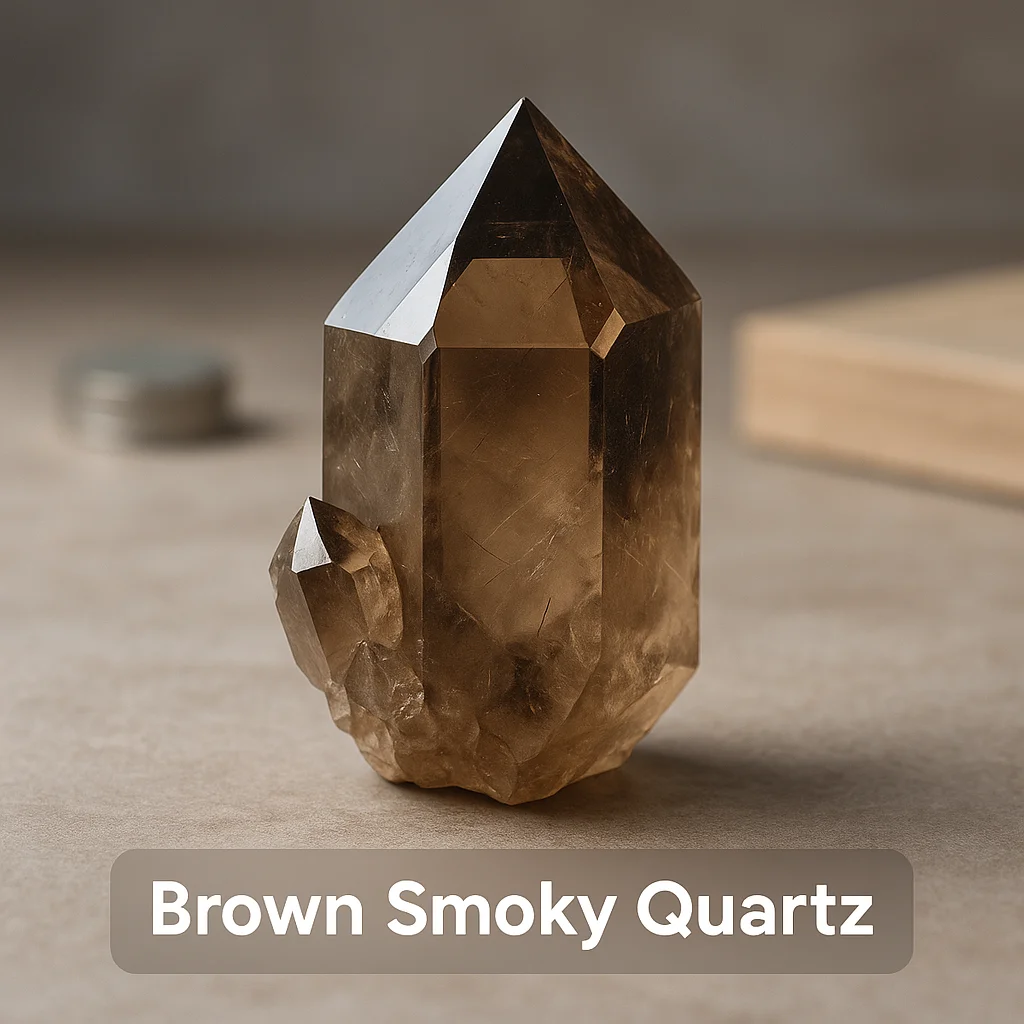
Brown Smoky Quartz is a variety of quartz that presents a range of brown hues, often with a smoky, translucent quality. As a mineral, quartz is one of the most abundant on Earth, composed primarily of silicon dioxide. Smoky Quartz is popular not only among gem enthusiasts but also in jewelry, where its earthy tones complement various styles.
Smoky Quartz is not typically associated with birthstones but is favored for its attractive appearance and versatility in jewelry. In this article, we’ll explore its unique properties, how it forms, where it is found, and practical tips for buying and caring for this beautiful gemstone.
Throughout this guide, you'll learn about the typical characteristics of Brown Smoky Quartz, including its origin, formation, colors, and key properties like hardness and luster. We'll also delve into cultural beliefs and provide practical advice for care and purchase, helping you make informed decisions.
🌍 Where It Comes From
Smoky Quartz occurs in various geological settings, primarily formed in igneous and metamorphic rocks. Large, well-formed crystals can be found in pegmatite dikes, cavities within granite, and high-temperature hydrothermal veins. It is the result of natural geological processes over millions of years, often in conjunction with the emergence of mountain ranges.
While it is found globally, notable sources include regions of the United States, Brazil, Switzerland, and parts of Africa and Asia. Each location can contribute slightly different characteristics to the quartz due to variations in geological conditions and mineral content.
The origin of Smoky Quartz can influence its market reputation and price. For instance, specimens from the Swiss Alps are especially prized for their clarity and smoky depth. When selecting Smoky Quartz, understanding its provenance can provide insights into its quality and value.
🔬 How It Forms
Brown Smoky Quartz forms through a combination of heat, pressure, and time. It originates deep within the Earth's crust, where gases and minerals interact at high temperatures, allowing quartz crystals to grow over millennia.
The brown color of Smoky Quartz is primarily due to natural radiation and trace amounts of aluminum in the crystal structure. This radiation exposure occurs while the quartz is still in the ground, altering its structure and giving it the characteristic smoky appearance.
Typically, Smoky Quartz crystals range from transparent to nearly opaque. They can form as single prismatic crystals or clusters, sometimes associated with other minerals, adding to their beauty and value.
🎨 Color and Look
Smoky Quartz ranges from a light, almost transparent brown to a rich, dark chocolate hue. Its smoky aspect can give it a captivating, cloudy appearance, enhancing its visual appeal in different light conditions.
The stone's appearance can be influenced by how it is cut and polished. Skilled lapidaries can maximize its translucency and ensure the surface is smooth, showcasing its natural luster.
Brown Smoky Quartz is occasionally treated to enhance its color, commonly through heat. Such treatments must be disclosed when purchasing, as they can affect the value and care of the gemstone.
🧪 Properties That Matter
On the Mohs scale of hardness, Smoky Quartz scores a 7, indicating good scratch resistance, suitable for various types of jewelry. Its toughness, or resistance to chipping, makes it a durable option for daily-wear rings and bracelets.
Smoky Quartz has no cleavage, meaning it does not split along specific lines, and instead exhibits a conchoidal fracture, which refers to its rounded breakage pattern that resembles shells.
The luster of Smoky Quartz is typically vitreous, providing a glassy, attractive sheen. Its transparency can vary, with clearer stones often being more desirable. These properties make it viable for rings, pendants, and earrings.
✨ Meanings, Birthstones, and Culture
Smoky Quartz is traditionally associated with grounding and protection. It is often used in crystals and gemstone practices for energy work, although such uses are cultural rather than scientifically proven.
In some cultures, Smoky Quartz is worn to enhance focus and clarity, playing a symbolic role in meditation. Though it is not a traditional birthstone, its warm, neutral tones make it a popular contemporary choice for personalized jewelry gifts.
As with many gemstones, the meanings attributed to Smoky Quartz vary widely across cultures and are deeply rooted in personal beliefs and traditions.
🧼 Care and Cleaning
Brown Smoky Quartz can be safely cleaned using warm, soapy water and a soft cloth. Avoid harsh chemicals and ultrasonic cleaners, especially if the stone has been treated.
It is best to avoid exposing Smoky Quartz to extreme temperatures or sudden temperature changes, which can cause thermal shock. Long-term exposure to intense sunlight may alter the color.
When storing Smoky Quartz, keep it separate from harder gemstones to prevent scratches. A soft pouch or cloth is advisable for added protection.
🛒 Buying Tips and What to Check
Quality indicators for Brown Smoky Quartz include color depth, clarity, and cut quality. Some prefer a deeper color, while others value translucency and shine.
It is important to inquire whether the stone has undergone any treatments. Documentation or certification from a reputable gem laboratory can provide assurance about the stone's natural and treated properties.
When buying Smoky Quartz online, check for clear photographs, a reliable return policy, and whether the seller is reputable with positive reviews. Confirmation of any treatments or enhancements should be part of the disclosure.
⚠️ Real vs Fake and Common Look-Alikes
Natural Smoky Quartz can sometimes be confused with synthetic or imitation materials. Synthetic stones are grown in labs but have the same physical properties as natural ones. Imitations, like glass or plastic, lack the mineral's durability and specific characteristics.
Doublets and triplets, which are assembled stones with layers, can sometimes mimic the appearance of Smoky Quartz but will not share the same properties. Identifying these often requires professional gemological testing.
Reliable identification of genuine Smoky Quartz is best left to trained gemologists, as some qualities are not visually discernible without specialized equipment.
❓ Common Questions and Misconceptions
Is it a mineral or a rock? Smoky Quartz is a mineral, specifically a variety of quartz.
Is it a birthstone? It is not a traditional birthstone but is popular in modern jewelry.
Will it scratch easily? With a Mohs hardness of 7, it is scratch-resistant compared to softer gemstones.
Can it go in water? Smoky Quartz can generally be placed in water for cleaning, as long as it is not exposed to extreme conditions.
Does color fade in sunlight? Prolonged exposure to sunlight might cause color fading in some Smoky Quartz.
What treatments are common? Heat treatment is the most common enhancement for Smoky Quartz, enhancing its color.
Is lab-grown 'fake'? Lab-grown Smoky Quartz is not fake but man-made, sharing the same properties as natural stones.
How do I store it safely? Store it separately from harder stones, in a soft pouch to avoid scratches.
Do inclusions always lower value? Not necessarily; mild inclusions can add character but excessive inclusions might lower transparency
How do I pick a good one for jewelry? Look for clarity, appealing color, and a quality cut to maximize its aesthetic appeal.
📌 Summary
- Brown Smoky Quartz is a mineral variegated by natural radiation, primarily composed of silicon dioxide.
- It features brown tones from light to dark, often with a translucent, smoky effect.
- Forms in igneous and metamorphic rocks, developing under heat and pressure over millions of years.
- Good Mohs hardness (7), meaning it’s durable and scratch-resistant, suitable for daily wear.
- Common treatments include heat to enhance color; always ask about treatments when purchasing.
- Cleaning involves gentle soap and water; avoid harsh chemicals or sudden temperature changes.
- Best suited for rings, pendants, and earrings, offering versatility in fashion.
- Look-alikes include synthetic quartz and glass, which don't replicate natural qualities effectively.
- Authenticity is most reliably confirmed by professional gemological testing.
- Key buying checklist includes examining color, clarity, cut, and verifying authenticity and treatments.
- While not a birthstone, it is valued culturally for its grounding symbolism.
- Remember, Brown Smoky Quartz's natural beauty and durability make it a cherished addition to any collection.