💎 Color Change Alexandrite
🪨 What It Is
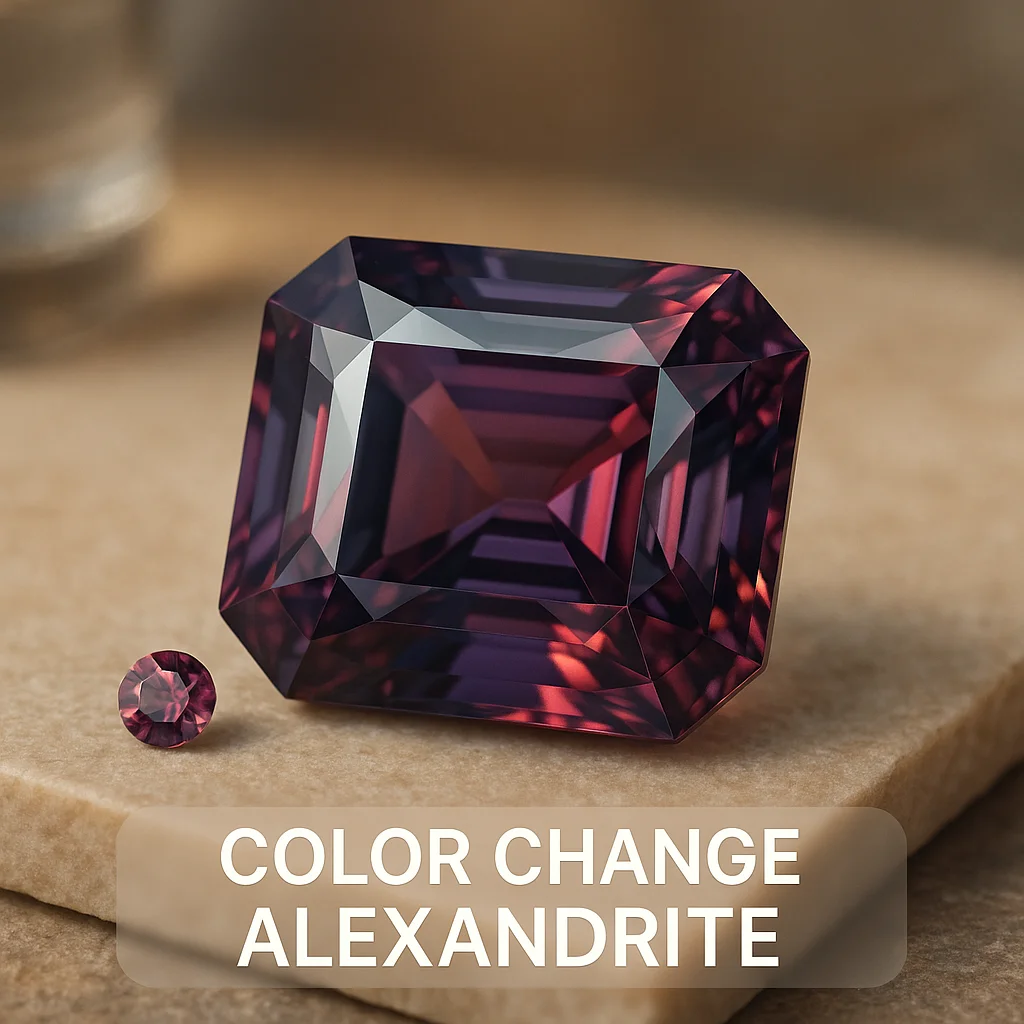
Color Change Alexandrite is a rare variety of the mineral chrysoberyl known for its remarkable ability to change color based on the lighting conditions. This gemstone is treasured by collectors and jewelers for its unique optical property.
Discovered in the 19th century and named after a Russian tsar, Alexandrite is not only a gemstone but also the modern birthstone for June, adding to its allure and cultural significance.
In this article, we will explore its appearance, properties, origins, value factors, care tips, and how to make informed purchase decisions when buying Color Change Alexandrite.
🌍 Where It Comes From
Color Change Alexandrite forms in igneous and metamorphic environments, where aluminum-rich rocks have been exposed to beryllium, chromium, and vanadium. These trace elements are critical for the distinct color-changing effect of the stone.
Historically, Alexandrite was first discovered in the Ural Mountains of Russia. Today, significant deposits have been found in parts of Africa, Brazil, and Sri Lanka. The location of a stone's origin can influence its color, clarity, and market value.
Russian Alexandrite is often regarded as the standard of quality due to its dramatic color change. However, stones from newer sources can also possess captivating transformations and contribute to the gemstone's global appeal.
🔬 How It Forms
Color Change Alexandrite forms under specific geological conditions involving intense heat and pressure over millions of years. This transformation occurs in aluminum-rich environments that contain chromium or vanadium impurities, which give Alexandrite its color-change characteristic.
In its crystalline form, Alexandrite typically exhibits well-formed prismatic crystals. Gem cutters often shape Alexandrite stones into ovals or rounds to best highlight their color-changing abilities.
The variations in color arise from chromium, which can absorb different wavelengths of light, leading to the fascinating color shift from green in daylight to red under incandescent light.
🎨 Color and Look
The hallmark feature of Alexandrite is its enchanting color change. In natural daylight, it usually appears green to bluish-green, while under incandescent light, it shifts to shades of red, purplish-red, or raspberry.
The degree of color change can vary significantly between stones and is a major factor in determining the stone's value. Skilled cutting and polishing can enhance this effect, although the inherent quality of the stone plays the most crucial role.
Color Change Alexandrite is generally not treated with heat or chemicals, as these processes could diminish or alter the desired color-change quality.
🧪 Properties That Matter
With a Mohs hardness of 8.5, Alexandrite is quite durable and suitable for various types of jewelry, including rings and earrings. Its toughness helps it resist chipping, making it practical for regular wear.
The gemstone has no significant cleavage, which means it doesn't have natural planes of weakness, thus making it less prone to breaking under stress compared to other gemstones. Its vitreous luster adds a brilliant sheen to any piece of jewelry.
Though robust, care should be taken to avoid hard knocks and abrasive surfaces to maintain its beauty and structural integrity.
✨ Meanings, Birthstones, and Culture
Color Change Alexandrite holds a special place in various cultures and is traditionally associated with balance and change, reflecting its unique ability to exhibit multiple colors.
As the June birthstone alongside pearl and moonstone, Alexandrite symbolizes joy and good fortune. While scientific studies do not validate these beliefs, they contribute to the stone's mystique and popularity.
In modern jewelry, Alexandrite is often crafted into exquisite engagement rings, pendants, and earrings, cherished for its rare and captivating optical phenomenon.
🧼 Care and Cleaning
Cleaning Color Change Alexandrite is best done using mild soap and water, avoiding harsh chemicals that could potentially damage the stone. Use a soft cloth to gently clean and dry the gemstone.
Avoid exposing Alexandrite to sudden changes in temperature and high heat, which can impact the stone's color-change effect. For similar reasons, long soaking should also be avoided.
To prevent scratches, store Alexandrite separately from other jewelry, ideally in a soft-lined box or pouch.
🛒 Buying Tips and What to Check
When purchasing Color Change Alexandrite, consider the intensity of the color change, the stone's clarity, and cut. Larger, clean stones with a pronounced color shift command higher prices.
Ask sellers about any treatments and obtain a gemological report for high-value purchases, as it can provide insights into authenticity and quality without guaranteeing every aspect.
For online purchases, verify the seller's reputation, examine detailed photos, and ensure there is a solid return policy to protect your investment.
⚠️ Real vs Fake and Common Look-Alikes
Natural Alexandrite is rare, and synthetic versions are created in labs using similar chemical compositions. While not "fake," lab-grown stones can be more affordable while offering similar optical properties.
Common imitation materials include colored glass, resin, and composites, which may lack the color-changing effect. Doublets and triplets are assembled stones that can also mimic Alexandrite's appearance.
Identification requires professional gemological testing, as visual inspection alone cannot confirm authenticity without proper equipment and expertise.
❓ Common Questions and Misconceptions
Is it a mineral or a rock? Alexandrite is a mineral, specifically a variety of chrysoberyl.
Is it a birthstone? Yes, Alexandrite is one of the birthstones for June.
Will it scratch easily? With a Mohs hardness of 8.5, it is quite resistant to scratches.
Can it go in water? Yes, but avoid long soaking and harsh chemicals when cleaning.
Does color fade in sunlight? Prolonged exposure to intense light can impact color change.
What treatments are common? While not commonly treated, synthetic versions are prevalent.
Is lab-grown 'fake'? No, lab-grown Alexandrite shares similar properties to natural stones.
How do I store it safely? Keep it in a soft pouch, separate from other jewelry to prevent scratches.
Do inclusions always lower value? Not always, but fewer inclusions generally increase desirability and value.
How do I pick a good one for jewelry? Consider color change quality, clarity, and secure setting suitable for your use.
📌 Summary
- Color Change Alexandrite is a rare and valued variety of chrysoberyl.
- Typical colors range from green in daylight to red under incandescent light.
- Forms under high heat and pressure with the presence of chromium.
- Hard and tough, suitable for regular wear in rings and other jewelry.
- Generally not treated, synthetic versions are common.
- Clean with mild soap and water; avoid chemical exposure.
- Best used in rings, pendants, and earrings for vibrant, changing brilliance.
- Watch out for imitations and lab-grown stones.
- Authenticity confirmed through professional gemological testing.
- Check quality based on color change, clarity, and cut.
- June birthstone, historically linked to balance and change.
- Renowned for its mystical color change, enthralling collectors and wearers alike.