💎 Green Tourmaline
🪨 What It Is
Green tourmaline is a beautiful and versatile gemstone that belongs to the tourmaline family. Known for its vivid shades of green, this gemstone is a variety of the mineral group created under specific geological conditions. Tourmalines are boron silicate minerals combined with various elements such as aluminum, iron, magnesium, sodium, and lithium, which contribute to its diverse color range.
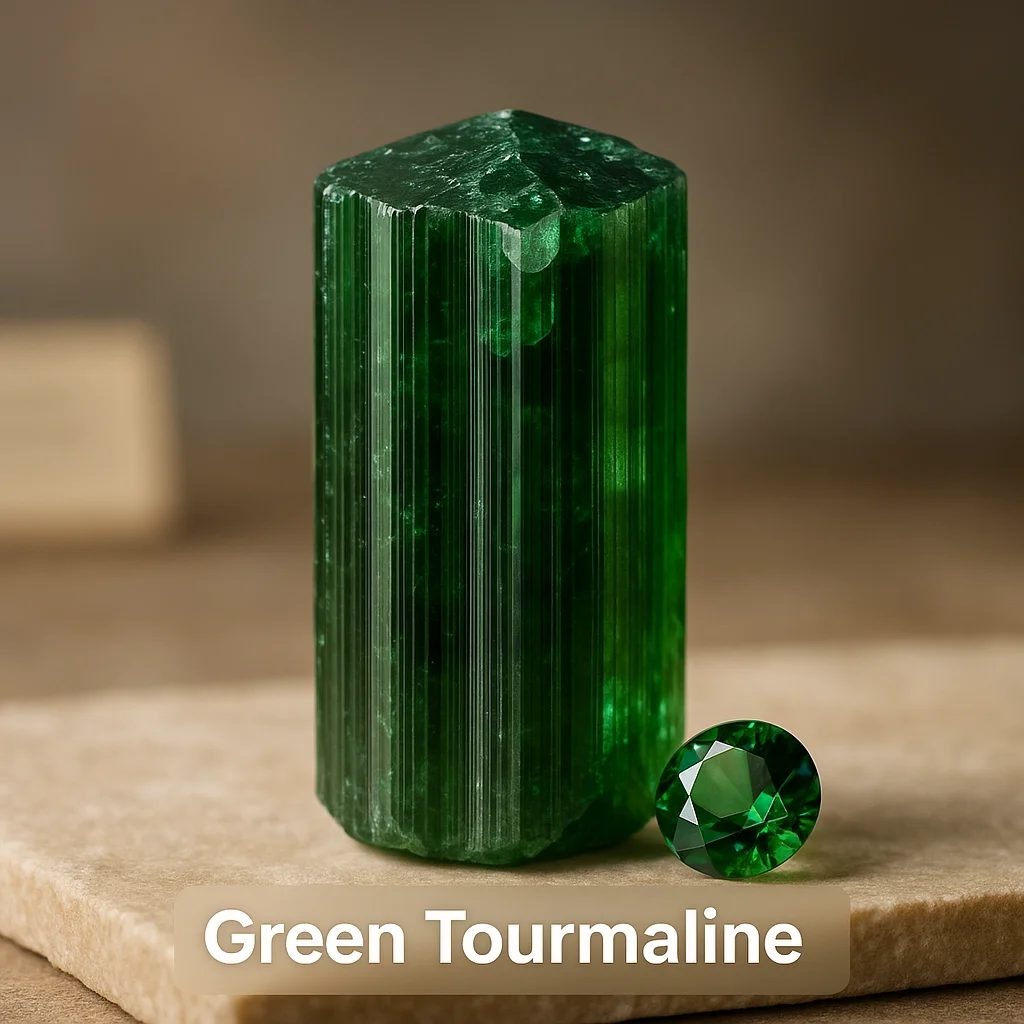
Often referred to as "Verdelite" in its green form, tourmaline is not only cherished for its color but also for its durability. Green tourmaline is a popular choice for jewelry due to its vibrant hue and robust properties. It's commonly found in rings, pendants, and earrings, offering a refreshing pop of color that is versatile enough for various style preferences.
In this article, you'll learn about the origins of green tourmaline, its formation process, distinguishing characteristics, care tips, and more. Whether you're a beginner gemstone enthusiast or looking to purchase a piece for jewelry, this guide provides valuable insights to help you understand and appreciate green tourmaline.
🌍 Where It Comes From
Green tourmaline is typically found in specific geological settings, primarily in igneous and metamorphic rocks. Igneous rocks are formed through the cooling and solidification of magma, while metamorphic rocks develop under pressure and heat that alter existing rock types. This gemstone forms in the cracks and cavities of these rocks as they crystallize over time.
This vibrant gemstone is mined in several parts of the world, including countries within Africa, Asia, and the Americas. Brazil is one of the most well-known sources of tourmalines, producing a vast range of colors due to its diverse geology. Other notable producers include Namibia, Nigeria, Mozambique, and parts of the United States.
Origin plays a role in the tourmaline's market value and characteristics. Stones from distinct regions might exhibit varying hues, clarity, and overall quality. However, origin alone doesn't dictate worth; other elements such as size, color saturation, and clarity also significantly impact the gem's value.
🔬 How It Forms
The formation of green tourmaline occurs through specific natural processes involving heat, pressure, and time. It forms in the cavities of igneous and metamorphic rocks when hot fluids rich in boron and other elements seep into the cracks. As the fluid cools, tourmaline crystals precipitate out of the solution.
The primary coloring element that gives tourmaline its lush green tones is chromium or vanadium. These elements replace aluminum in the crystal structure during formation, resulting in the distinctive green shades.
Tourmaline typically forms in long, slender prismatic crystals with striations running parallel to their length. This crystal habit, along with its impressive range of colors, makes tourmaline a favorite among gemstone collectors and jewelers alike.
🎨 Color and Look
Green tourmaline is prized for its range of vivid green shades, from light and grassy to deep emerald hues. Some stones may display a bluish tint, adding to their allure. The color variation is primarily due to the presence and concentration of chromium or vanadium within the crystal structure.
The stone's appearance can significantly be influenced by cut and polish, which enhance its natural brilliance and play of light. The cutting process can bring out a stone's best qualities, making the color appear more vibrant and evenly distributed.
Treatment methods such as heat can enhance the clarity and color of tourmaline. It's essential to be aware of these treatments as they can affect the stone's market value and durability. Untreated stones with outstanding natural qualities are typically more valued.
🧪 Properties That Matter
When considering tourmaline for jewelry, understanding its properties is vital. Green tourmaline ranks 7 to 7.5 on the Mohs scale of hardness, indicating good scratch resistance. This makes it suitable for everyday wear in rings and other types of jewelry.
The stone exhibits good toughness and is not prone to chipping, though it can still break if subjected to considerable force or impact. While it doesn't have perfect cleavage, it features uneven fracture patterns, adding to its durability for most jewelry applications.
Luster and transparency are important aesthetic attributes. Green tourmaline can exhibit a glassy (vitreous) luster that adds to its appeal. Its transparency can range from transparent to translucent, greatly influencing its overall look and desirability.
✨ Meanings, Birthstones, and Culture
In cultural contexts, green tourmaline is traditionally associated with creativity, abundance, and prosperity. While these associations are not scientifically validated, they continue to add to the gemstone's intrigue and use in symbolic jewelry.
Tourmaline is not a traditional birthstone; however, it is the modern birthstone for October, along with opal. This connection makes green tourmaline a popular choice for jewelry gifts and items marking birthdays or anniversaries in this month.
The deep green color of tourmaline is sometimes linked to the earth and nature, symbols of growth and vitality. While these interpretations offer personal insights and motivations, they should not be mistaken for the gemstone's scientifically proven attributes.
🧼 Care and Cleaning
Caring for green tourmaline involves regular cleaning to maintain its beauty and durability. The safest method is to use warm soapy water and a soft cloth. Avoid harsh chemicals and ultrasonic cleaners, as they can damage the gem.
This gemstone should be handled with care, avoiding exposure to extreme temperatures and sudden temperature changes that might cause internal damage. Additionally, it is advisable not to soak the gemstone for extended periods.
For storage, place green tourmaline pieces separately to prevent scratching from harder gemstones. Use soft fabric pouches or lined jewelry boxes to protect them from dust and impact.
🛒 Buying Tips and What to Check
When buying green tourmaline, there are several factors to consider to ensure you get quality and value. Pay attention to the stone's color, with preference often given to vivid, uniform green hues without visible inclusions. The cut should enhance the gemstone's natural brilliance.
Consider the stone's carat weight, as larger stones are rarer and may be more expensive. Ask the seller about any treatments the tourmaline has undergone, as untreated stones are generally more valuable.
For high-value purchases, request a gemological lab report, which can provide details on authenticity and any enhancements. When buying online, check for clear photographs, a reliable return policy, and the seller's reputation via reviews and ratings.
⚠️ Real vs Fake and Common Look-Alikes
Understanding the difference between natural, synthetic, and imitation tourmaline is crucial. Natural tourmaline is mined from the earth, while synthetic tourmaline is lab-created with identical physical and chemical properties. Imitations may be made of glass or plastic.
Common look-alikes include other green gemstones like peridot and emerald. While they may appear similar, the composition and properties differ. Professional gemological testing is the only sure way to authenticate a gemstone.
Doublets and triplets, which are composite stones made from multiple layers, can mimic the look of tourmaline. It’s essential to verify authenticity through reputable sources to avoid purchasing misrepresented gems.
❓ Common Questions and Misconceptions
Is it a mineral or a rock? Green tourmaline is a mineral, not a rock.
Is it a birthstone? Yes, it is the modern birthstone for October.
Will it scratch easily? With a Mohs hardness of 7, it is resistant to scratches, though not scratch-proof.
Can it go in water? Yes, for cleaning, but avoid long soaks to preserve the stone.
Does color fade in sunlight? Typically, tourmaline’s color remains stable under normal conditions.
What treatments are common? Heat enhancement is widely known to improve color and clarity.
Is lab-grown 'fake'? Lab-grown stones are real; they are synthetic but share the same properties as natural stones.
How do I store it safely? Keep it separate from other jewelry to avoid scratches, ideally in a fabric-lined box.
Do inclusions always lower value? Not always; it depends on the visibility and impact on appearance.
How do I pick a good one for jewelry? Focus on vivid color, quality cut, and trusted sourcing.
📌 Summary
- Green tourmaline is a mineral, renowned for its captivating green hues.
- Commonly found in igneous and metamorphic rocks.
- Forms when mineral-rich fluids cool and solidify in rock cavities.
- Durable with a Mohs hardness of 7-7.5.
- Heat treatment can enhance clarity and color.
- Clean with warm soapy water and store separately to avoid scratches.
- Ideal for jewelry like rings, pendants, and earrings.
- Often mistaken for emerald or peridot; professional ID is crucial.
- Authenticity requires lab reports or expert evaluation.
- When buying, prioritize color, clarity, and reputable sellers.
- Associated with prosperity and the month of October.
- A vibrant and versatile choice, perfect for various jewelry pieces.