💎 Orange Citrine
🪨 What It Is
Orange Citrine is a variety of quartz, known for its vibrant orange to golden yellow hues. It is one of the most popular gemstones used in jewelry, often appreciated for its affordability and availability. As part of the quartz family, citrine shares similar physical properties with other quartz minerals, such as amethyst and rose quartz.
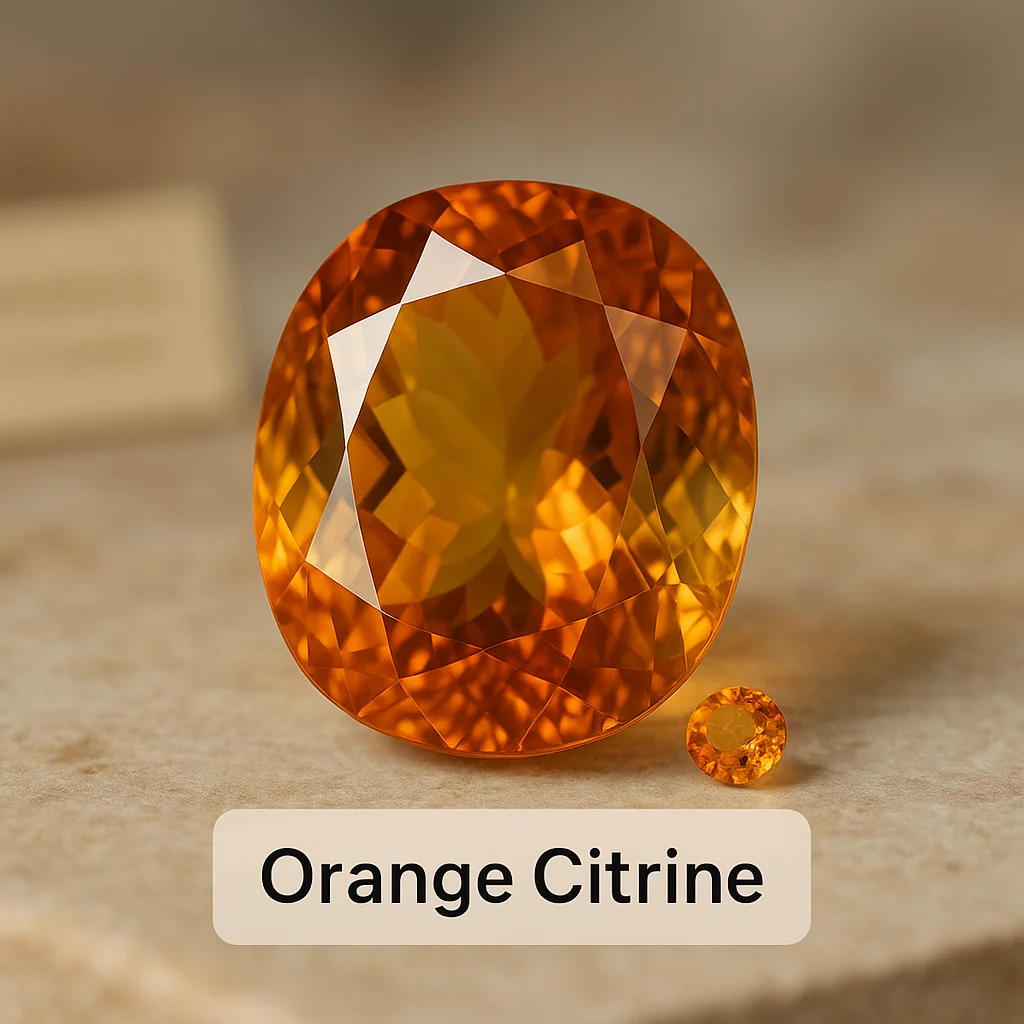
Citrine is commonly associated with the month of November as a birthstone. This connection adds to its allure and is often a reason for its popularity in jewelry gifts. This gemstone is typically available in a range of cuts and sizes, making it versatile for various types of jewelry, from rings to pendants.
Throughout this article, you'll learn about citrine's appearance, properties, origin, value, care, and buying tips. Our aim is to provide a comprehensive introduction to this fascinating gemstone, whether you're shopping for a piece of jewelry or simply looking to expand your knowledge about gemstones.
🌍 Where It Comes From
In nature, citrine occurs primarily in igneous and metamorphic rocks. It often forms in the cavities of these rocks where silica-rich fluids crystallize over time. These geological settings provide the necessary conditions for citrine's unique coloration and clarity.
Citrine is found in several regions around the world, with Brazil being one of the most significant producers. Other notable sources include parts of Africa and Madagascar. These regions are known for producing high-quality stones that are sought after by jewelers and collectors alike.
The origin of citrine can impact its color and quality, with certain locales producing stones that have distinctive hues. Understanding the source of a citrine gem can aid in determining its value and authenticity, although it is not the sole factor. Generally, Brazilian citrine is valued for its rich, warm tones.
🔬 How It Forms
Citrine forms through a natural geological process that involves heat and pressure over extended periods. Quartz, the mineral family to which citrine belongs, is abundant in the Earth's crust. When trace amounts of iron are present during the crystallization process, they can impart the distinctive orange to yellow color of citrine.
The color of citrine can range from pale yellow to deep amber, depending on the concentration and oxidation state of the iron within the crystal structure. The presence of these trace elements during formation is key to citrine's attractive appearance.
Citrine typically forms in well-developed hexagonal crystals. These crystals can be found in large, clear sections that are ideal for cutting into gemstones. When polished and cut, citrine reveals its characteristic transparency and luster.
🎨 Color and Look
Citrine is renowned for its spectrum of warm colors, ranging from light yellow to a deep, rich amber. The most valued stones display a saturated orange hue with excellent clarity and minimal inclusions. The color can be influenced by the way the stone is cut and polished, with certain cuts enhancing its brilliance and ensuring even color distribution.
Most natural citrine is heat-treated to enhance its color. This treatment creates a stable color change without compromising the stone's overall durability. While treated stones are common in the market, untreated natural citrine is rarer and often valued higher by collectors.
The appearance of citrine can also change depending on the lighting conditions. In natural daylight, citrine can exhibit a warm glow, whereas it can look deeper and more intense under artificial light. These optical properties make citrine an engaging gemstone for various jewelry applications.
🧪 Properties That Matter
Citrine has a Mohs hardness of 7, which means it is quite resistant to scratches and suitable for daily wear in rings, bracelets, and other pieces. This durability makes it a practical choice for those seeking a gemstone that withstands regular use.
Despite its hardness, citrine should be treated with care due to its moderate toughness. While it can bear knocks and bumps better than more fragile stones, it is still susceptible to chipping if hit too hard.
Citrine exhibits a vitreous luster, giving it a glass-like sheen. It is transparent, allowing light to pass through with minimal distortion, which enhances its brilliance. The stone's fracture is conchoidal, meaning it breaks with smooth, curved surfaces.
✨ Meanings, Birthstones, and Culture
Traditionally, citrine is associated with warmth, vitality, and abundance. These associations make it a favored choice for can be given as thoughtful gifts for milestone birthdays or achievements. As the birthstone for November, citrine is believed to bring good fortune to those born in this month.
In modern jewelry traditions, citrine is often set in luxurious gold settings to emphasize its fiery color. Its versatile nature allows it to be paired with both contemporary and classic designs, catering to a wide range of aesthetic preferences.
It is important to note that while these associations and traditions are widely embraced, they are cultural and not scientifically verified. The appeal of citrine lies in both its beauty and the stories we associate with it.
🧼 Care and Cleaning
To maintain citrine's beauty, clean it using warm, soapy water and a soft cloth. Avoid using harsh chemicals or ultrasonic cleaners, as they can cause damage to the stone's surface or treatment. Rinse thoroughly to remove any soap residue and dry with a clean, soft cloth.
Avoid exposing citrine to excessive heat or sudden temperature changes, which can cause the stone to crack or the color to change over time. Long soaks in water should also be avoided to prevent any potential weakening of surface integrity.
Store citrine jewelry separately in a soft pouch or lined box to avoid scratches from harder stones and metals. Proper care ensures that citrine remains a cherished part of your jewelry collection for years to come.
🛒 Buying Tips and What to Check
When purchasing citrine, consider factors such as color, clarity, cut, and carat weight. Premium-quality citrine displays an even color distribution with minimal visible inclusions and is often cut to maximize its luster.
Inquire about any treatments the stone may have undergone, as this information can influence value and care recommendations. High-value stones may come with a gemological report verifying authenticity, clarity, and any treatments.
For online purchases, ensure the seller offers clear, high-quality images of the actual stone and has a favorable return policy. Consider the seller's reputation and read reviews to verify reliability and transparency.
⚠️ Real vs Fake and Common Look-Alikes
Understanding the differences between natural, synthetic, and imitation citrine is important for making informed purchases. Natural citrine is mined from the earth, whereas synthetic citrine is created in a lab with similar physical and chemical properties.
Imitation stones, such as colored glass or plastic, may be visually similar but lack the properties of authentic citrine. Assembled stones, like doublets or triplets, consist of multiple layers bonded together to simulate a natural gem.
Common look-alikes include topaz, which can appear similar in color. However, a professional gemologist can accurately distinguish these stones through specific tests and equipment.
❓ Common Questions and Misconceptions
Is it a mineral or a rock? Citrine is a mineral; specifically, a variety of quartz.
Is it a birthstone? Yes, citrine is the birthstone for November.
Will it scratch easily? With a Mohs hardness of 7, it resists scratches fairly well but can still be scratched by harder materials.
Can it go in water? Brief exposure is general safe, but it is advisable to avoid prolonged soaking.
Does color fade in sunlight? Prolonged exposure to intense sunlight can sometimes fade colors, so it is best to store citrine away from direct light when not worn.
What treatments are common? Heat treatment is commonly used to enhance color.
Is lab-grown 'fake'? Lab-grown citrine has the same properties as natural citrine and is not considered fake, but it is synthetically produced.
How do I store it safely? Store separately in a soft-lined box or pouch to avoid scratches.
Do inclusions always lower value? Inclusions can impact value, especially if they affect transparency or cause weak points.
How do I pick a good one for jewelry? Look for even color, high clarity, and quality cut.
📌 Summary
- Citrine is a variety of quartz known for its vibrant orange to golden yellow hues.
- Its colors range from light yellow to rich amber, often enhanced by heat treatment.
- Forms naturally in igneous and metamorphic geological settings.
- Has a Mohs hardness of 7, making it suitable for everyday jewelry wear.
- Commonly treated to enhance color; untreated stones are rarer.
- Use gentle soap and water for cleaning; avoid harsh chemicals and heat.
- Best for rings, pendants, and earrings due to its vibrant color.
- Look-alikes include synthetic quartz and glass, but professional testing can verify authenticity.
- Buying tips: Check color, clarity, cut, and inquire about treatments.
- Considered a November birthstone, rich cultural associations but not proven effects.
- Citrine's beauty and vibrant colors make it a cherished choice for many jewelry enthusiasts.