💎 Pink Sapphire
🪨 What It Is
Pink sapphire is a precious gemstone that belongs to the corundum family, sharing its mineral classification with blue sapphires and the red variety known as rubies. Corundum is made of aluminum oxide, and the pink color is primarily caused by trace amounts of chromium. This lovely stone is celebrated for its vibrant appearance and is a popular choice for various types of jewelry.
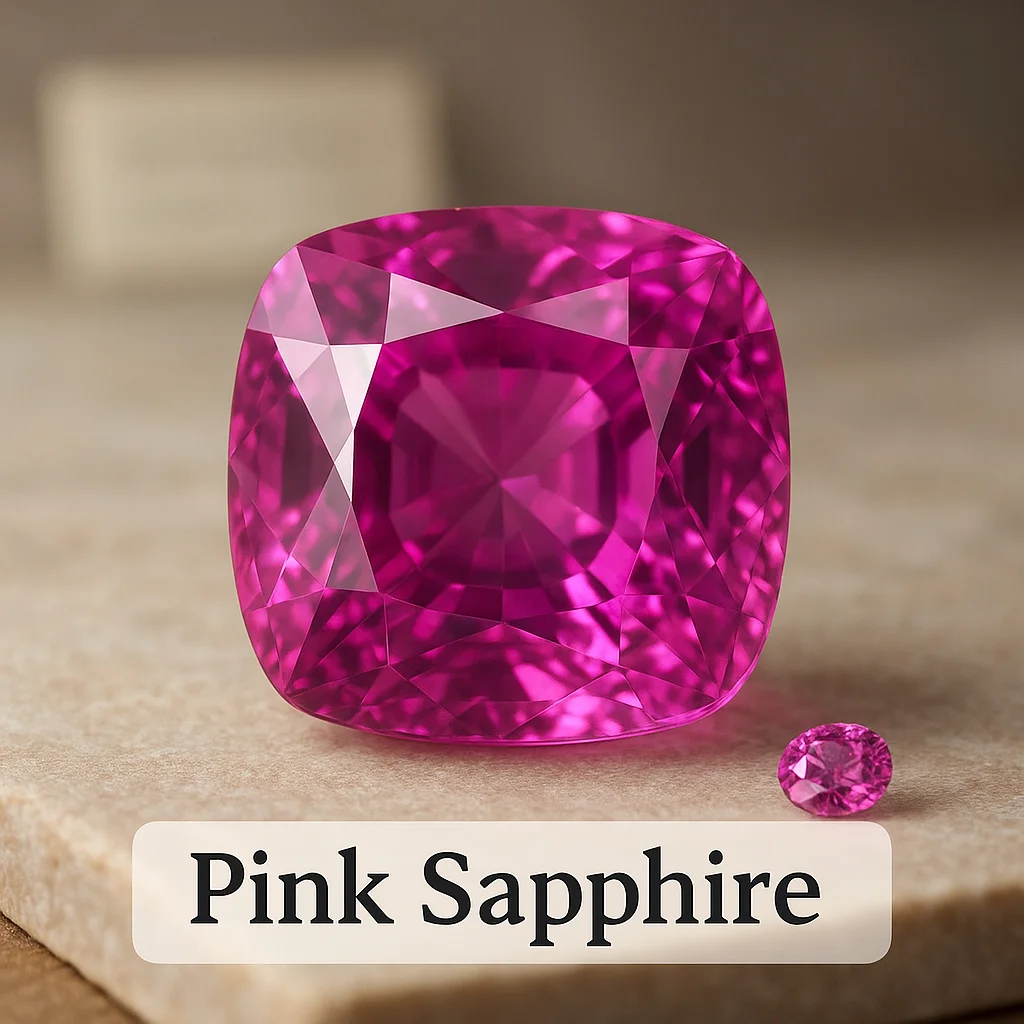
A key feature of pink sapphire is its exceptional durability, making it an attractive option for all kinds of adornments, from engagement rings to simple pendants. With its brilliant sparkle and diverse shades, it captivates both gem enthusiasts and casual jewelry buyers alike.
Pink sapphire is also considered a birthstone for those born in September, sharing this cultural role with the more widely known blue sapphire. Throughout this article, you'll uncover the origins of pink sapphire, its formation processes, its properties, and guidelines for buying and care.
🌍 Where It Comes From
Pink sapphires are found primarily in igneous and metamorphic rocks. They form where alumina-rich minerals have been exposed to high temperatures and pressures over millions of years, creating ideal conditions for corundum crystals to develop. Often, they are discovered in alluvial deposits, carried downstream from their original locations by natural processes.
Some of the most notable sources of pink sapphire include Madagascar, Sri Lanka, Myanmar, and East Africa. Origin can affect the color intensity and clarity of the stones, with certain regions being known for producing stones of specific hues or qualities. For instance, Madagascar sapphires are often prized for their vibrant and uniform color.
While origin can have significant implications for a stone's market reputation, it's important to understand that each region's pink sapphires can have unique characteristics. Thus, the region of origin can influence both aesthetic preference and value, though it's not the sole determining factor in assessing quality.
🔬 How It Forms
The formation of pink sapphire occurs deep within the Earth's crust, where specific conditions allow for the development of corundum crystals. High geologic temperatures and pressures encourage the growth of these crystals, which incorporate trace elements such as chromium to attain their pink coloration.
Pink sapphires typically crystallize in a trigonal crystal system, often resulting in well-formed hexagonal prismatic crystals. They may also be found as pebbles or grains in secondary deposits, having been transported by erosion and water away from their primary formations.
The color of pink sapphire can vary widely from pale to deep, intense pinks with the presence of chromium being the primary element responsible for this range of hues. The amount of chromium and the conditions during formation lead to these different shades.
🎨 Color and Look
Pink sapphires are cherished for their beautiful color spectrum which ranges from light pastel hues to vibrant magenta. The richness of the pink can vary within a single stone, affected by light exposure and the stone's cut, which can enhance or diminish color and brilliance.
Unheated pink sapphires might show some zoning or uneven color distribution, whereas stones that have been heat-treated may exhibit a more uniform and saturated appearance. Heat treatment is a common and accepted process that enhances both color and clarity.
The overall look of a pink sapphire also depends on its clarity and the number of inclusions, naturally occurring internal characteristics that can affect transparency. However, minimal natural inclusions can prove beneficial by indicating a sapphire is natural rather than synthetic.
🧪 Properties That Matter
Pink sapphires rank at 9 on the Mohs hardness scale, making them extremely resistant to scratches and ideal for everyday wear in jewelry, such as rings. Their toughness, the ability to withstand breakage or chipping, is also excellent, which adds to their suitability for high-impact settings.
The luster of pink sapphire is vitreous, meaning it boasts a glassy, shiny appearance that increases its appeal in gemstone jewelry. Considering these factors, pink sapphires are commonly used for pieces worn daily, like engagement rings, or for fashion pieces like bracelets and necklaces.
The cleavage of pink sapphire is absent, meaning it does not tend to break along specific planes like some other minerals might, making it more durable during the cutting and setting process.
✨ Meanings, Birthstones, and Culture
Traditionally, pink sapphires have been associated with love, wisdom, and sincerity, and in some cultures, they are believed to attract good fortune and positive relationships. While there is no scientific evidence to support these claims, they continue to play a role in the stone’s allure.
As a September birthstone, pink sapphire shares its place with the more famous blue sapphire, contributing to its popularity for birthday gifts and celebratory jewelry. It's also used in modern jewelry traditions, often chosen for its unique and fetching color.
Folklore often depicts sapphires as stones of wisdom and prosperity, grounding their use in various cultural contexts around the world.
🧼 Care and Cleaning
Care for pink saphires is relatively straightforward. Cleaning with a gentle soap and water solution, followed by a soft cloth patting dry, is recommended to maintain their luster. Avoid using harsh chemicals or ultrasonic cleaners that could potentially damage treated stones.
Though pink sapphires are durable, avoid exposing them to extreme temperatures or long, hot baths. Such conditions might compromise their structural integrity, especially if the stone has been subject to treatment.
To prevent scratches when not in use, store pink sapphires separately in a soft pouch or lined jewelry box. This precaution will minimize contact with harder gemstones, ensuring their beauty over time.
🛒 Buying Tips and What to Check
When buying pink sapphires, consider the four Cs: color, clarity, cut, and carat size. Color is the most crucial factor, with vivid, saturated pinks typically carrying a premium price. Clarity is next, where fewer inclusions often indicate higher value.
Always inquire if the stone has been treated, as heat treatment is common and accepted, but color diffusion or fracture filling might decrease its value. A reputable seller should disclose these details.
Requesting a lab report can confirm whether a stone is natural or synthetic, detailing any enhancements. When buying online, check for clear photographs, a solid return policy, and seller reputation to ensure a safe purchase.
⚠️ Real vs Fake and Common Look-Alikes
Understanding the differences between natural, synthetic, and imitation stones is crucial for any buyer. Natural pink sapphire is mined from the Earth, while synthetic stones are lab-grown but share identical physical properties. Imitations, such as glass or plastic, mimic the look but do not possess the same characteristics.
Common look-alikes for pink sapphire include pink tourmaline and morganite. These gemstones differ in properties such as refractive index and toughness, justifying professional identification to ensure accuracy.
Reputable jewelers and gemologists can provide assurance through testing, confirming the authenticity and specific origin of a pink sapphire.
❓ Common Questions and Misconceptions
Is it a mineral or a rock? Pink sapphire is a mineral.
Is it a birthstone? Yes, it's a birthstone for September.
Will it scratch easily? No, it is very scratch resistant due to its hardness.
Can it go in water? Yes, brief exposure to water is safe.
Does color fade in sunlight? Generally, pink sapphire color is stable and does not fade from sunlight.
What treatments are common? Heat treatment is common to improve color and clarity.
Is lab-grown 'fake'? No, lab-grown stones have the same properties as natural ones.
How do I store it safely? Store separately in soft material to avoid scratches.
Do inclusions always lower value? Not necessarily; minor inclusions can add character.
How do I pick a good one for jewelry? Look for vibrant color and minimal visible inclusions.
📌 Summary
- Pink sapphire is a precious gemstone variety of corundum.
- It typically varies in color from light to intense pink.
- The gemstone forms under heat and pressure conditions in the Earth's crust.
- It has excellent scratch resistance, suitable for everyday jewelry.
- Heat treatment is a common and accepted method to enhance its qualities.
- Use gentle soap and water for cleaning; store cautiously to avoid scratches.
- Ideal for rings, pendants, and earrings due to its toughness.
- Common look-alikes include pink tourmaline and morganite.
- Professional testing is needed for authentic identification.
- Buying checklist: consider color, clarity, treatments, and use a reputable seller.
- Recognized as a September birthstone, associated with sincerity and wisdom.
- Remember: vivid color and clarity often signify higher quality.