💎 Yellow Heliodor
🪨 What It Is
Yellow Heliodor is a captivating variety of the mineral beryl. Known for its vibrant yellow hues, it is often confused with its more famous counterpart, the emerald, which is the green variety of beryl. Heliodor's striking color, ranging from pale lemon to deep gold, makes it a popular choice for jewelry enthusiasts and collectors alike.
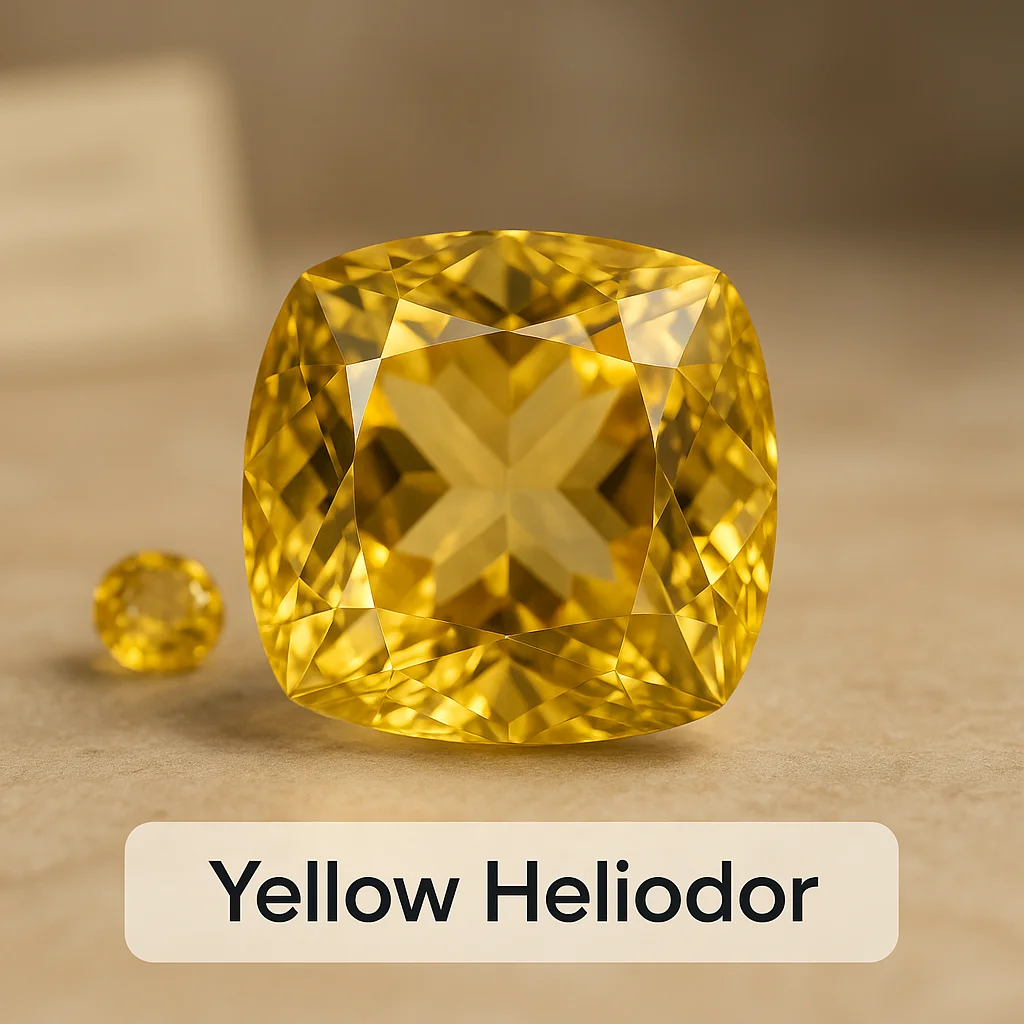
Beryl is a well-known mineral group that also includes aquamarine and morganite, among others. Heliodor, however, possesses a unique sunny disposition that is unmatched, making it a favored gemstone to be crafted into a wide range of jewelry pieces, from delicate rings to bold statement necklaces.
Those interested in gemstones will learn about Yellow Heliodor's appearance, properties, origins, and how to care for it properly. This guide also discusses how to make informed buying decisions and how to distinguish this stone from its look-alikes.
🌍 Where It Comes From
Yellow Heliodor is naturally found in pegmatite veins, which are igneous formations known for their coarse crystals and abundant mineral deposits. Such geological settings provide the necessary conditions for large crystal growth, often resulting in sizable, gem-quality specimens.
The gemstone is predominantly mined in regions known for their rich geological diversity, including parts of Africa and Brazil. These locations are renowned for producing beryl stones that are highly regarded in the gemstone market for their color and clarity.
The origin of Yellow Heliodor can play a significant role in its market value and desirability. Gemstones from well-known regions might attract higher prices due to their established reputation for quality. However, each stone should be evaluated on its own merits, as color and clarity can vary widely.
🔬 How It Forms
Yellow Heliodor forms under specific geological conditions where beryllium-rich minerals are present. During the formation process, trace elements such as iron contribute to the stone's distinctive yellow coloration. This element acts as a chromophore, imparting the hues that range from light to intense yellow.
The crystallization of beryl, including Yellow Heliodor, occurs in pegmatite dikes. These are formed from the slow cooling of magma, allowing for the development of large, well-formed crystals. Heliodor's typical crystal habit includes hexagonal prisms, which are common among beryl varieties.
🎨 Color and Look
Yellow Heliodor boasts a palette of yellow shades, from soft pastels to vibrant golden tones. The depth and intensity of its color are greatly influenced by the concentration of iron within the crystal structure. A higher concentration typically results in a deeper, richer hue.
The optical appearance of Heliodor can be further enhanced by skilled cutting and polishing, which can amplify its natural luster and brilliance. Lighting conditions can also impact its visual appeal; for instance, sunlight can bring out its golden glow magnificently.
Commonly, Yellow Heliodor stones might undergo heat treatment to improve their color. Such treatments are standard in the gemstone industry and aim to enhance the stone's visual appeal without altering its integrity significantly.
🧪 Properties That Matter
In terms of hardness, Yellow Heliodor stands at 7.5 to 8 on the Mohs scale, indicating good scratch resistance, which makes it suitable for everyday jewelry like rings and bracelets. This hardness means it's durable enough for frequent wear, though care should be taken to avoid hard knocks.
Heliodor exhibits a vitreous luster, meaning it has a glass-like shine that adds to its beauty. Its tough nature implies that it does not chip easily, although it does have good cleavage, a tendency to break along parallel planes, requiring caution when cutting or setting.
The gemstone is generally transparent to translucent, allowing light to pass through and enhancing its brightness. These properties make Heliodor an enticing choice for those who appreciate vibrant and durable gemstones.
✨ Meanings, Birthstones, and Culture
Heliodor, whose name means "gift from the sun," carries cultural significance rooted in its sunny coloration. Traditionally, the stone is associated with positive energy and is often linked symbolically to warmth, abundance, and illumination.
While not a traditional birthstone, Yellow Heliodor is sometimes celebrated in modern gem lore as a representation of brightness and optimism, making it a popular gift for those celebrating milestones or new beginnings.
In some cultural traditions, Heliodor is believed to be a stone of clarity and insight. However, these symbolic interpretations are based on cultural heritage and are embraced subjectively by individuals.
🧼 Care and Cleaning
Yellow Heliodor should be cleaned gently with mild soap and water. A soft cloth or a soft-bristled brush can be used to remove any dirt or oil accumulation from everyday wear. Avoid exposing the gemstone to harsh chemicals or ultrasonic cleaners, as they could damage the stone.
This stone is sensitive to temperature changes, so it is recommended to avoid exposing Heliodor to extreme heat or long periods in direct sunlight, as these conditions might affect its color over time. Short-term exposure under considerate conditions should be safe.
For storage, Heliodor should be kept separately from other gemstones and jewelry to prevent scratches. A soft pouch or jewelry box with padding is ideal for safeguarding it from physical contact with harder gemstones.
🛒 Buying Tips and What to Check
When buying Yellow Heliodor, color is the most crucial factor affecting its value. Look for even, vibrant yellow hues without too much brown or green tint. Clarity is also important; fewer inclusions usually mean a higher-quality stone, though some inclusions are typical.
Ensure the stone is well-cut to maximize its color and luster, and consider its carat size, as larger stones may command higher prices. Always inquire about any treatments the stone may have undergone and ask to see any lab reports providing validation of its natural origin.
For online purchases, verify the seller's reputation, request detailed photos, and ensure there is a clear return policy. Full disclosure of the stone's characteristics should be provided to make an informed choice confidently.
⚠️ Real vs Fake and Common Look-Alikes
Understanding what constitutes a real Yellow Heliodor involves recognizing its natural formation as opposed to synthetics, which are lab-grown counterparts possessing similar chemical compositions but not naturally occurring.
Imitation stones made from glass or plastic can resemble Heliodor but lack the mineral's natural features and durability. Assembled stones, such as doublets or triplets, are made of multiple parts glued together and can be deceiving at first glance.
Common look-alikes include citrine or yellow topaz, which may have similar coloration but differ in hardness and other mineral properties. Professional gem testing is essential to confirm authenticity and differentiate them reliably.
❓ Common Questions and Misconceptions
Is it a mineral or a rock? Heliodor is a mineral, part of the beryl group.
Is it a birthstone? It is not a traditional birthstone but is appreciated for its beauty and symbolism.
Will it scratch easily? With a Mohs hardness of 7.5 to 8, it is fairly resistant to scratches.
Can it go in water? Yes, a quick rinse is safe as long as it's dried well after.
Does color fade in sunlight? Long exposure might affect its color. Short-term exposure should not be harmful.
What treatments are common? Heat treatment to enhance color is common.
Is lab-grown "fake"? Lab-grown stones are genuine beryl but not naturally occurring.
How do I store it safely? Store separately in a soft pouch to prevent scratches.
Do inclusions always lower value? Minimal inclusions are preferred, but some do not significantly impact value.
How do I pick a good one for jewelry? Focus on even color, good clarity, and quality cut for the best appearance.
📌 Summary
- Yellow Heliodor is a variety of beryl known for its bright yellow color.
- Typical colors range from pale yellow to deep gold, influenced by iron content.
- It forms in igneous pegmatite veins and is mined in regions like Africa and Brazil.
- With a Mohs hardness of 7.5 to 8, it is suitable for various jewelry types.
- Common treatments include heat to enhance color.
- Clean gently with soap and water, avoiding harsh chemicals and extreme heat.
- Ideal for rings, pendants, and earrings due to its vibrant look and durability.
- Distinguishable from citrine and yellow topaz with professional testing.
- Authenticity confirmed through lab reports and seller verification.
- Consider color, clarity, cut, carat, and treatments when buying.
- Symbolically associated with warmth and illumation as a "gift from the sun."
- Valued for its appearance and versatility, making it a cherished addition to any jewelry collection.