💎 Azurite
🪨 What It Is
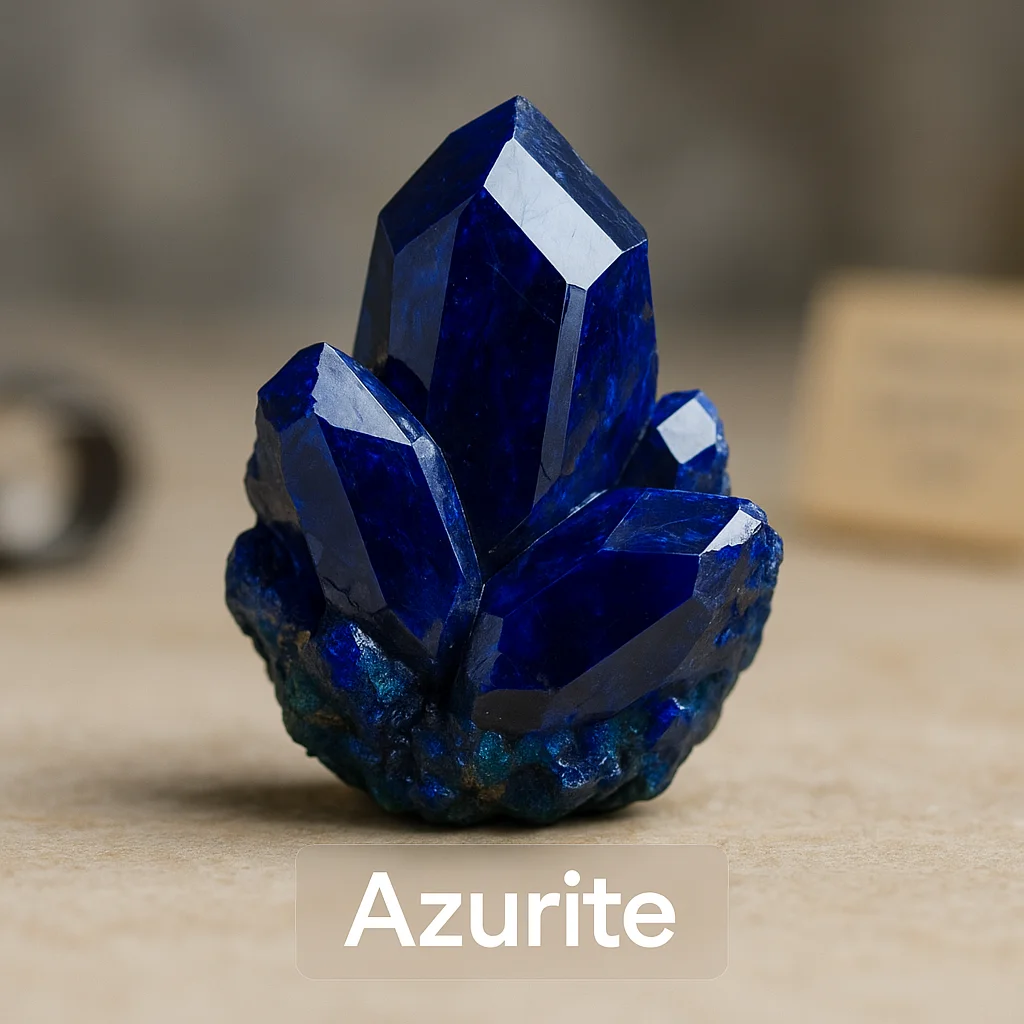
Azurite is a vibrant blue mineral primarily composed of copper carbonate hydroxide. It is well-known for its deep blue color, which can range from light to dark shades. As a mineral, it forms through the chemical weathering of copper ore deposits. Although azurite itself is not a gemstone, it is often associated with other gemstones due to its stunning appearance and is widely used as an ornamental stone.
While not classified as a traditional birthstone, azurite is popular in jewelry-making and is often appreciated for its unique color. It is also frequently used in decorative objects and as a collector's mineral. In this article, you'll learn about azurite's appearance, properties, origins, value, care, and buying tips.
Azurite's striking blue hue makes it a standout mineral for anyone interested in rocks and minerals. It is also of interest to collectors, hobbyists, and jewelry enthusiasts who admire its beauty and historical significance in various cultures.
🌍 Where It Comes From
Azurite is typically found in the oxidized portions of copper ore deposits and is often accompanied by other minerals such as malachite, its green counterpart. This mineral occurs in a variety of geologic settings, most commonly in hydrothermal veins and in sedimentary rock environments where copper is present.
Significant deposits of azurite have been discovered in areas rich in copper ore, such as parts of Africa, Australia, and the southwestern United States. However, the mineral can also be found in some regions of Asia and Europe.
The origin of azurite can have an impact on its appearance and value in the market. For instance, azurites from specific well-known localities may be more sought after due to their vibrant color or particular crystal formations. However, it's important for buyers to focus on individual stone quality rather than solely on origin.
🔬 How It Forms
Azurite forms through the chemical weathering and oxidation of copper deposits. The process involves the interaction of copper ore with carbon dioxide and water, resulting in the distinctive blue mineral. This transformation occurs over many years and can be influenced by various environmental factors.
The presence of trace elements, including varying amounts of copper, oxygen, and water, contributes to azurite's color. The mineral typically crystallizes in a monoclinic system, with well-formed crystals resembling prismatic to tabular structures.
Azurite can appear in various forms, such as crystal clusters, massive nodules, or even in combination with malachite. It is essential for enthusiasts to recognize these variations when identifying and evaluating azurite specimens.
🎨 Color and Look
Azurite is renowned for its intense blue color, ranging from light azure to a dark, almost indigo shade. The vibrant color is one of its most appealing features and makes it recognizable in both polished and raw forms. The surface luster of azurite can be glassy to vitreous, enhancing its visual appeal.
The appearance of azurite can be affected by the manner in which it is cut and polished. Cut forms of azurite in cabochons or beads can highlight its color and enhance necklace or bracelet designs. A clear, well-polished surface brings out the mineral's rich blue hues, making it an attractive choice for jewelry.
It's essential to understand that azurite is a relatively soft mineral and doesn't undergo treatments commonly associated with harder gemstones. However, azurite's color can be sensitive to heat and prolonged exposure to bright light, potentially causing fading.
🧪 Properties That Matter
When considering azurite for wear or display, understanding its properties is crucial. The Mohs hardness of azurite is around 3.5 to 4, indicating it is relatively soft and prone to scratching and chipping. As a result, azurite is best suited for jewelry pieces that won't face harsh wear, such as pendants or earrings.
The toughness of azurite, related to its ability to resist breaking, is low due to its brittle nature. It can fracture easily, which is why careful handling and protective settings are recommended if used in jewelry.
Azurite displays a vitreous to dull luster when polished, adding to its visual appeal. It generally exhibits good transparency in thin sections but remains opaque in thicker pieces. Despite its lower hardness, azurite's beautiful color and unique look are cherished qualities in the mineral world.
✨ Meanings, Birthstones, and Culture
Azurite has a rich cultural history with various traditional meanings and associations. While it is not designated as a birthstone, azurite is appreciated for its symbolic connections to intuition and insight. Certain cultures have historically linked it to spiritual awareness and mental clarity.
Symbolically, azurite has been associated with improving communication and understanding, often referenced in folklore as a stone of wisdom. However, it is important to note that these meanings and associations are cultural and not scientifically proven.
In modern jewelry, azurite's beautiful appearance is its prime appeal. Designers often incorporate azurite for its stunning blue color, creating eye-catching pieces that draw attention and admiration.
🧼 Care and Cleaning
Proper care is essential to maintaining azurite's beauty and integrity. To clean azurite stones, gentle soap and water are recommended. Use a soft cloth to ensure no scratches occur and avoid using harsh chemicals or ultrasonic cleaners, which can damage the stone.
Azurite should be kept away from excessive heat and sudden temperature changes, as these can cause thermal shock and result in fractures. Prolonged exposure to bright sunlight can also fade the stone's vibrant color.
When storing azurite, place it in a way that minimizes contact with harder materials to avoid scratches. Using a separate compartment in a jewelry box or wrapping it in a soft piece of cloth is advisable.
🛒 Buying Tips and What to Check
When purchasing azurite, several factors can impact its price and quality. The most critical aspects include color intensity, clarity, and overall appearance. A deep blue color with minimal inclusions is typically more valuable.
Before buying high-value azurite, inquire about any treatments and request a lab report if available. Such reports provide assurance about the stone's authenticity and can offer peace of mind about specific details like provenance and treatments.
For online buying, check for clear photographs, a return policy, and the seller's reputation. Transparency about the stone's qualities and treatments should always be a priority in your purchasing decision.
⚠️ Real vs Fake and Common Look-Alikes
Identifying genuine azurite involves distinguishing it from synthetic (lab-grown) or imitation stones, which may be crafted from materials like glass or plastic. Natural azurite often features unique formation patterns and a particular range of blue shades.
Common look-alikes include lapis lazuli and sodalite, whose blue hues can confuse inexperienced buyers. However, lapis lazuli typically contains flecks of pyrite, and sodalite exhibits different mineral properties.
To confirm authenticity, professional testing by gemologists is recommended as they use equipment that can identify subtle differences without subjecting the stone to risky experiments.
❓ Common Questions and Misconceptions
Is it a mineral or a rock? Azurite is a mineral, specifically a copper carbonate hydroxide.
Is it a birthstone? No, azurite is not traditionally assigned as a birthstone.
Will it scratch easily? Yes, with a Mohs hardness of 3.5 to 4, azurite is susceptible to scratching.
Can it go in water? While azurite can withstand brief water exposure, prolonged soaking should be avoided.
Does color fade in sunlight? Yes, azurite's color can fade with extended exposure to sunlight.
What treatments are common? Azurite typically does not undergo common gemstone treatments.
Is lab-grown "fake"? Lab-grown azurite mimics natural formation but is not naturally sourced.
How do I store it safely? Store azurite separately or wrapped in soft cloth to avoid scratches.
Do inclusions always lower value? Not always, as some inclusions are characteristic and acceptable.
How do I pick a good one for jewelry? Choose azurite with vivid color, minimal inclusions, and good surface polishing.
📌 Summary
- Azurite is a copper carbonate mineral known for its diverse blue hues.
- Commonly forms through chemical weathering in copper-rich environments.
- Mohs hardness of 3.5-4, making it susceptible to scratching.
- Typically untreated; care needed to prevent fading and damage.
- Best suited for pendants or earrings due to its softness.
- Can be confused with lapis lazuli, distinguished by unique coloration.
- Authenticity verified through professional testing and lab reports.
- Buying tips include assessing color, clarity, and seller transparency.
- Not a traditional birthstone but historically valued for its cultural meanings.
- A memorable takeaway is azurite's unique, captivating blue color that holds a special place in mineral collections.