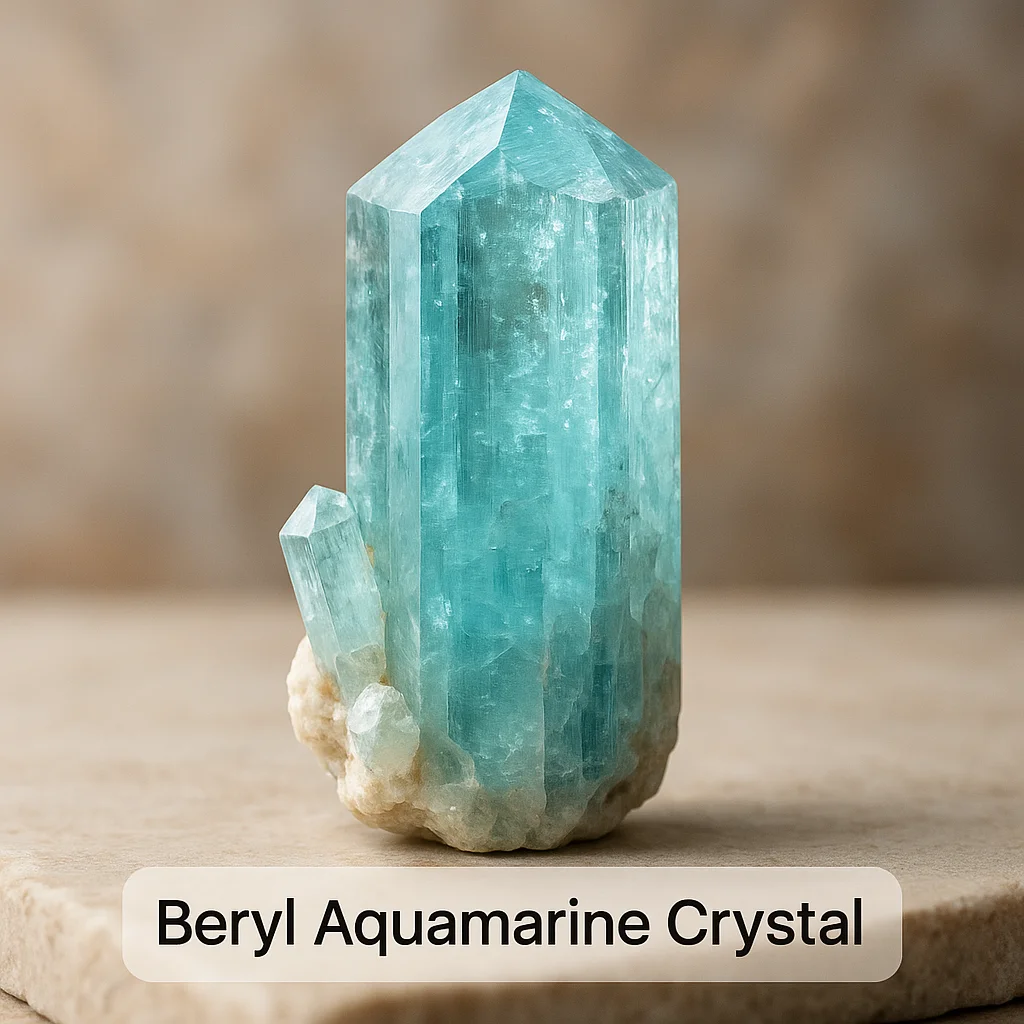
💎 Beryl Aquamarine Crystal
🪨 What It Is
Aquamarine is a variety of the mineral beryl, known for its captivating blue to blue-green hues. This gemstone is highly prized in the world of jewelry, especially for its clarity and unique coloration. It is important to know that Aquamarine is also designated as a birthstone for March, often associated with the tranquil qualities of the sea.
This article will guide you through understanding the enticing world of Aquamarine. We will explore its appearance, properties, natural origins, factors affecting its value, and tips for care. Additionally, we will navigate the fascinating cultural significance that surrounds this stone.
As you learn more about Aquamarine, you'll gain insights into what makes this gemstone a popular choice for various jewelry pieces. We will provide practical tips for buying authentic stones and how to maintain their beauty over time.
🌍 Where It Comes From
Aquamarine forms in nature through simple yet powerful geological processes. It is commonly found in igneous rocks, particularly in granitic pegmatites. These rocks form deep within the Earth's crust when molten rock cools slowly, allowing large, well-defined crystals to develop.
Brazil is perhaps the most famous source of high-quality Aquamarine, but deposits can be found in several other countries as well. Regions of Africa, Russia, and parts of the United States are notable for producing significant amounts of this gemstone. Each location may impart subtle differences in color and clarity.
The origin of an Aquamarine crystal can influence its market value and desirability. Stones from certain areas may be more sought after due to their distinct hues or reputation for quality. Collectors and jewelers alike often consider the geographic source when selecting a stone.
It's interesting to note that the environmental conditions at these sites, such as temperature and pressure, contribute to the formation of Aquamarine’s distinctive color. Understanding these natural processes provides a deeper appreciation for the uniqueness of each crystal.
🔬 How It Forms
Aquamarine forms over millions of years under specific geological conditions. It begins with the presence of beryllium-rich rocks subjected to high temperatures and pressures. The cooling of these molten materials allows for the growth of beryl crystals, of which Aquamarine is one variety.
The blue to greenish-blue color in Aquamarine is typically due to trace amounts of iron within the beryl crystal structure. These trace elements absorb certain wavelengths of light, giving Aquamarine its characteristic hue.
Crystals often form as elongated prisms, making them ideal for faceted jewelry. They can vary in size, from small, delicate pieces to large, robust specimens that are highly valued. The stone's natural beauty is enhanced through skilled cutting and polishing, which maximizes its brilliance.
🎨 Color and Look
Aquamarine is celebrated for its serene blue shades, reminiscent of a clear ocean. The color can range from pale, almost translucent blue to deep, intense blue-green. The exact shade depends on the presence and quantity of iron impurities in the beryl's crystal lattice.
The cut and polish of Aquamarine significantly affect its visual appeal. A well-cut stone will display its brilliance and color more effectively, making it more attractive in jewelry settings. Lighting conditions also play a role; natural daylight often reveals the gem's true beauty.
While Aquamarine typically boasts strong clarity, some stones may undergo heat treatment to enhance their color. This is a standard practice in the gemstone industry and should be disclosed to buyers as part of ethical selling.
🧪 Properties That Matter
With a Mohs hardness of 7.5 to 8, Aquamarine is a relatively hard and durable stone, making it suitable for various types of jewelry, including rings, pendants, and earrings. This hardness means it resists scratches from most everyday materials.
Despite its hardness, Aquamarine is not immune to chipping. Proper care is essential to prevent damage from hard knocks. The stone exhibits a vitreous luster, which means it has a glass-like shine when polished.
Aquamarine has good cleavage, meaning it can split along definite planes, so caution is needed to avoid impacts on those planes. This property helps jewelers in achieving a good finish during cutting.
Its transparency ranges from transparent to semi-transparent, with the most valuable stones being highly clear and free of inclusions. This transparency and luster make Aquamarine a favorite among gem enthusiasts.
✨ Meanings, Birthstones, and Culture
Traditionally, Aquamarine is associated with the sea and is believed to bring serenity and clarity to those who wear it. As the birthstone for March, it symbolizes rebirth and renewal, making it a cherished stone for those born in spring.
The cultural significance of Aquamarine extends to its use in modern jewelry. It is a popular choice for engagement rings, statement necklaces, and elegant earrings, often set in silver or white gold to enhance its cool tones.
Folklore and tradition ascribe various symbolic meanings to Aquamarine, such as courage and protection for sailors. While these beliefs are part of the gem's rich cultural history, they are not scientifically proven effects.
🧼 Care and Cleaning
When cleaning Aquamarine, gentle methods are best. Use mild soapy water and a soft brush to maintain its luster. It is advisable to dry the stone with a soft cloth to prevent water spots.
Avoid exposing Aquamarine to harsh chemicals, high heat, or sudden temperature changes, which can cause damage. Steam cleaning and ultrasonic cleaners are generally not recommended, especially for treated stones.
Store Aquamarine jewelry separately from harder gemstones like diamonds to prevent scratches. Use a soft pouch or lined jewelry box for added protection when not wearing the piece.
🛒 Buying Tips and What to Check
When purchasing Aquamarine, consider factors such as color, clarity, and cut. The most valuable stones have a vibrant blue color and high transparency. Cut affects how light is reflected within the stone, impacting its brilliance.
Always inquire about any treatments the stone may have undergone, such as heat treatment to enhance color. Requesting a reputable lab report can provide confidence in the authenticity and quality of high-value purchases.
When buying online, ensure the seller has clear photos, a good return policy, and a strong reputation. Disclosure of the stone's characteristics, including origin and any treatments, is crucial for an informed decision.
⚠️ Real vs Fake and Common Look-Alikes
Aquamarine can be natural or synthetic. Synthetic Aquamarine is lab-grown but shares the same physical and chemical properties as natural stones. It is not an imitation and should be clearly identified as synthetic.
Imitations, often made of glass or other materials, may resemble Aquamarine but lack its durability and specific properties. Assembled stones, or doublets, may combine layers of different materials and should always be disclosed.
Common look-alikes include blue topaz and synthetic spinel. Professional gemological testing is the most reliable way to distinguish genuine Aquamarine from its look-alikes and imitations.
❓ Common Questions and Misconceptions
Is it a mineral or a rock? Aquamarine is a mineral variety of beryl.
Is it a birthstone? Yes, it's the birthstone for March.
Will it scratch easily? With a Mohs hardness of 7.5 to 8, it is fairly scratch-resistant.
Can it go in water? Yes, but prolonged soaking is not recommended.
Does color fade in sunlight? Prolonged exposure may cause fading, so store it away from direct sunlight.
What treatments are common? Heat treatment is common to enhance color.
Is lab-grown 'fake'? Lab-grown stones have the same properties as natural, but they are not the same as imitations.
How do I store it safely? Store in a soft pouch or lined box, away from harder gems.
Do inclusions always lower value? Not always; minor inclusions can be acceptable if they do not affect appearance significantly.
How do I pick a good one for jewelry? Look for deep color, high clarity, and a well-executed cut.
📌 Summary
- Aquamarine is a variety of the mineral beryl, prized for its blue to blue-green hues.
- Typical colors range from pale blue to deep blue-green, depending on iron content.
- Forms in granitic pegmatites under high temperatures and pressures.
- With a hardness of 7.5 to 8, it's suitable for regular jewelry wear but needs care to prevent chipping.
- Heat treatment is common to enhance its color.
- Use mild soap and water for cleaning; avoid harsh chemicals and high temperatures.
- Ideal for rings, pendants, and earrings due to its clarity and color.
- Blue topaz and synthetic spinel are common look-alikes.
- Professional testing confirms authenticity; lab reports aid in validation.
- For safe online purchases, verify seller reputation and ensure proper disclosure.
- Linked to March as a birthstone, traditionally associated with tranquility and the sea.
- Retains a timeless beauty, appealing to both traditional and modern gem enthusiasts.