💎 Garnet Crystal
🪨 What It Is
The Garnet Crystal is a group of silicate minerals that are widely appreciated for their stunning array of colors and their widespread use as gemstones. Known for its beauty and versatility, garnet has been a favorite for jewelry aficionados for centuries. It is important to note that garnet is not a single mineral but rather a group consisting of several closely related mineral species.
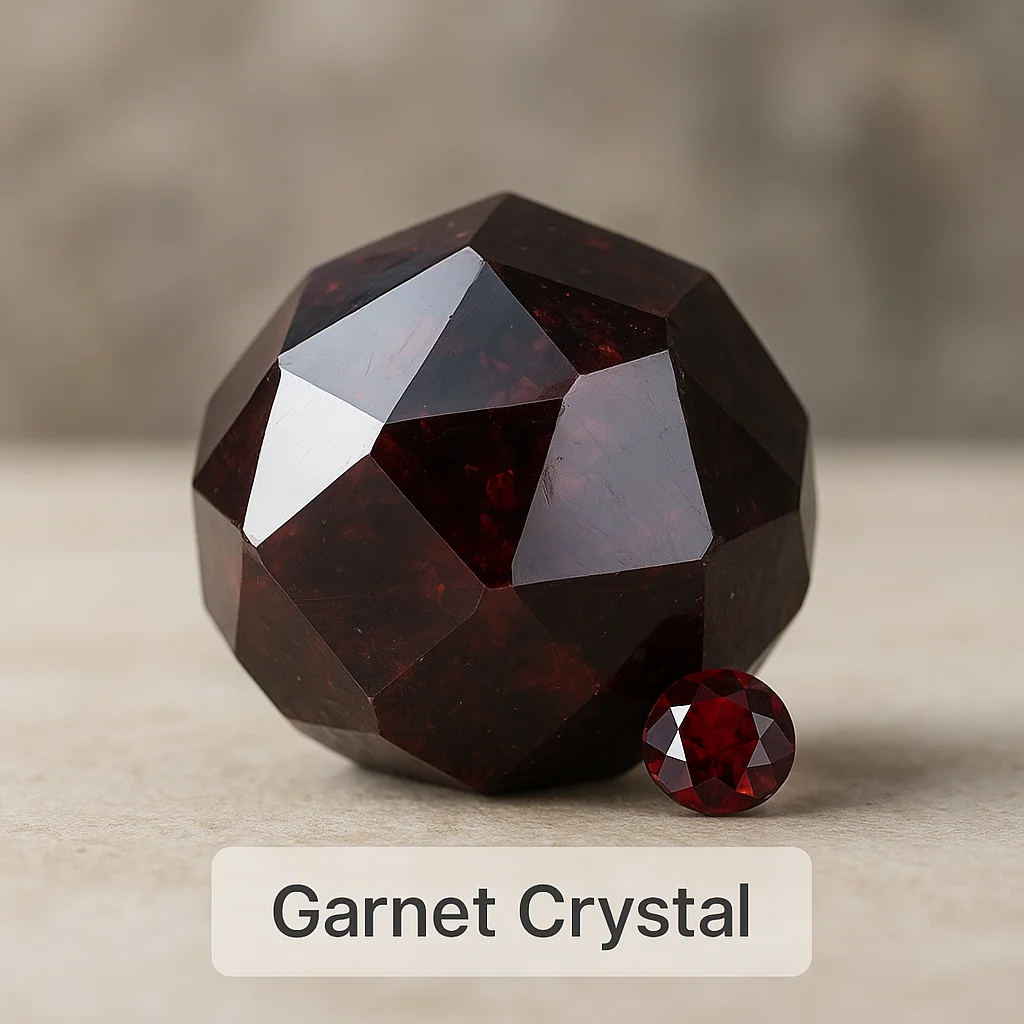
Garnet holds a special place in the world of gemstones, not only for its aesthetic appeal but also as a traditional birthstone for the month of January. This makes it a popular choice for personalized jewelry, such as rings, necklaces, and earrings.
In this article, you'll learn about the garnet's appearance, properties, and origins, along with practical advice on value, care, and purchasing tips. Whether you're a gemstone enthusiast or a novice, understanding the fundamentals of garnet crystal will enhance your appreciation for this remarkable gem.
🌍 Where It Comes From
Garnet crystals are typically found in a range of geological settings, predominantly in metamorphic rocks. These rocks form under high temperature and pressure conditions, where garnet is often found alongside other minerals like mica and staurolite. The presence of garnet in these rocks can be an indicator of the conditions under which the rock was formed.
Garnet is mined in various parts of the world, including regions of Africa and Asia. Different types of garnet can be more prominently found in specific areas; for instance, the vivid green Tsavorite garnet is primarily found in East Africa. Meanwhile, the deep red varieties can be sourced from regions such as India and Sri Lanka.
The origin of garnet can influence its color, clarity, and overall market reputation. For instance, garnets from certain regions may be more sought after due to their superior color saturation or because they are more difficult to obtain.
🔬 How It Forms
The formation of garnet is a process that takes place deep within the Earth’s crust. Under intense heat and pressure, silicate minerals undergo metamorphism, which leads to the growth of garnet crystals. Depending on the chemical elements present during this process, different varieties of garnet can form.
The rich colors of garnets are typically the result of trace elements. For example, iron is often responsible for the deep red hues seen in almandine garnets, while manganese can cause the pinkish tones in spessartine garnets.
Garnets generally crystallize in a dodecahedral shape, which is a form with twelve flat faces. This crystal habit is typical, although other complex shapes can also occur.
🎨 Color and Look
One of the most captivating aspects of garnet crystals is their wide variety of colors. Although they are commonly associated with a red hue, garnets can be found in virtually every color of the spectrum except blue. These include shades of green, yellow, orange, and even pink and purple.
The appearance of a garnet can be significantly affected by its cut and polish, enhancing its natural brilliance and color. Proper lighting can also play a role in showcasing its full beauty.
Garnets are not commonly treated to enhance their appearance. However, some may undergo heat treatment, so it’s important to inquire about any treatments when purchasing a garnet gemstone.
🧪 Properties That Matter
Garnets have a Mohs hardness of 6.5 to 7.5, making them fairly resistant to scratches and suitable for various types of jewelry. However, their toughness, or resistance to chipping, varies among different varieties.
Garnet does not exhibit cleavage, which means it does not break along defined planes, resulting in a typically conchoidal fracture pattern. This property makes garnet less prone to breakage upon impact. The luster of garnet is generally vitreous, contributing to its shiny and appealing appearance.
Due to these durable properties, garnet can be an excellent choice for rings that will be worn daily, in addition to other jewelry types like pendants and earrings.
✨ Meanings, Birthstones, and Culture
Traditionally, garnet has been associated with various symbolic meanings. It is often considered a stone of protection and commitment. While these attributes are based on folklore, many still hold them in regard when selecting garnet jewelry.
As the birthstone for January, garnet holds special significance for those born in this month. It symbolizes new beginnings and is said to represent traits such as loyalty and sincerity. In modern jewelry traditions, it serves as a meaningful birthday gift or an anniversary present.
Despite these cultural associations, it's important to approach garnet with an appreciation for its beauty and durability, not relying on unproven mystical properties.
🧼 Care and Cleaning
Caring for garnet requires a gentle touch due to its moderate hardness. Cleaning should be done using warm water, mild soap, and a soft cloth. It is best to avoid harsh chemicals or ultrasonic cleaners, as they could damage the garnet or its setting.
While garnet is relatively durable, it is advisable to prevent exposure to heat or sudden temperature changes, which might cause stress fractures. Long soaking should also be avoided.
For storage, garnet jewelry should be kept separately in a soft pouch or jewelry box to prevent scratches from contact with harder stones or metal.
🛒 Buying Tips and What to Check
When purchasing garnet, several factors can affect its price and quality, including color, clarity, cut, and carat size. Deep, vivid colors often command higher values, particularly in rarer shades like green or orange.
Transparency and the absence of inclusions are desirable, though minor inclusions are often accepted. Ask about any treatments and consider requesting a gemological report for high-value stones to verify authenticity and details.
For online purchases, ensure you buy from reputable sellers who offer clear photos, detailed descriptions, and a reasonable return policy. A lab report can provide additional assurance, illustrating stone characteristics and confirming genuine origin.
⚠️ Real vs Fake and Common Look-Alikes
When it comes to garnet, distinguishing real from fake is crucial. Natural garnet is distinct from synthetic garnet, which is lab-grown. Synthetic garnets possess the same chemical composition as natural ones, making them legitimate but fabricated gemstones.
Imitations, often made of glass or plastic, are also common and can be convincing in appearance. Assembled stones (such as doublets or triplets) might mix garnet with other materials to create a gemstone look-alike.
Common look-alikes for garnet include red glass or certain types of colored quartz. For accurate identification and valuation, professional testing by a gemologist is recommended, avoiding risky at-home tests.
❓ Common Questions and Misconceptions
Is it a mineral or a rock? Garnet is a mineral group, not a rock.
Is it a birthstone? Yes, garnet is the birthstone for January.
Will it scratch easily? Garnet is relatively hard, though it can scratch if overheated or handled roughly.
Can it go in water? Yes, but avoid prolonged soaking to protect the setting.
Does color fade in sunlight? No, garnet’s color is stable in natural light.
What treatments are common? Garnets are usually untreated, though some may be heat-treated.
Is lab-grown 'fake'? No, lab-grown garnets are real but not naturally formed.
How do I store it safely? Store separately in a soft pouch or box to prevent scratches.
Do inclusions always lower value? Not always; minor inclusions can be accepted in garnets.
How do I pick a good one for jewelry? Look for vivid color, good clarity, and a well-balanced cut.
📌 Summary
- Garnet is a group of silicate minerals used as gemstones.
- Colors range from red to green, orange, and pink.
- Forms under heat and pressure in metamorphic rocks.
- Offers good scratch resistance (Mohs hardness 6.5-7.5).
- Usually untreated but can be heat-treated.
- Clean with warm soapy water and a soft cloth.
- Suitable for rings, pendants, earrings due to durability.
- Looks like red glass but requires expert testing.
- Authenticity confirmed by gemological labs.
- Check origin, color, clarity, cut when buying.
- January birthstone; symbolism of loyalty and commitment.
- Memorable takeaway: A versatile stone with a wide color range and rich historical significance.