💎 Gypsum Desert Rose
🪨 What It Is
The Gypsum Desert Rose is a fascinating mineral formation known for its unique, rose-like appearance. It is not a gemstone in the traditional sense but is highly valued by collectors and enthusiasts for its intricate and natural beauty. Unlike gemstones that are often incorporated into jewelry, Gypsum Desert Rose is more commonly displayed as a specimen or in educational exhibits.
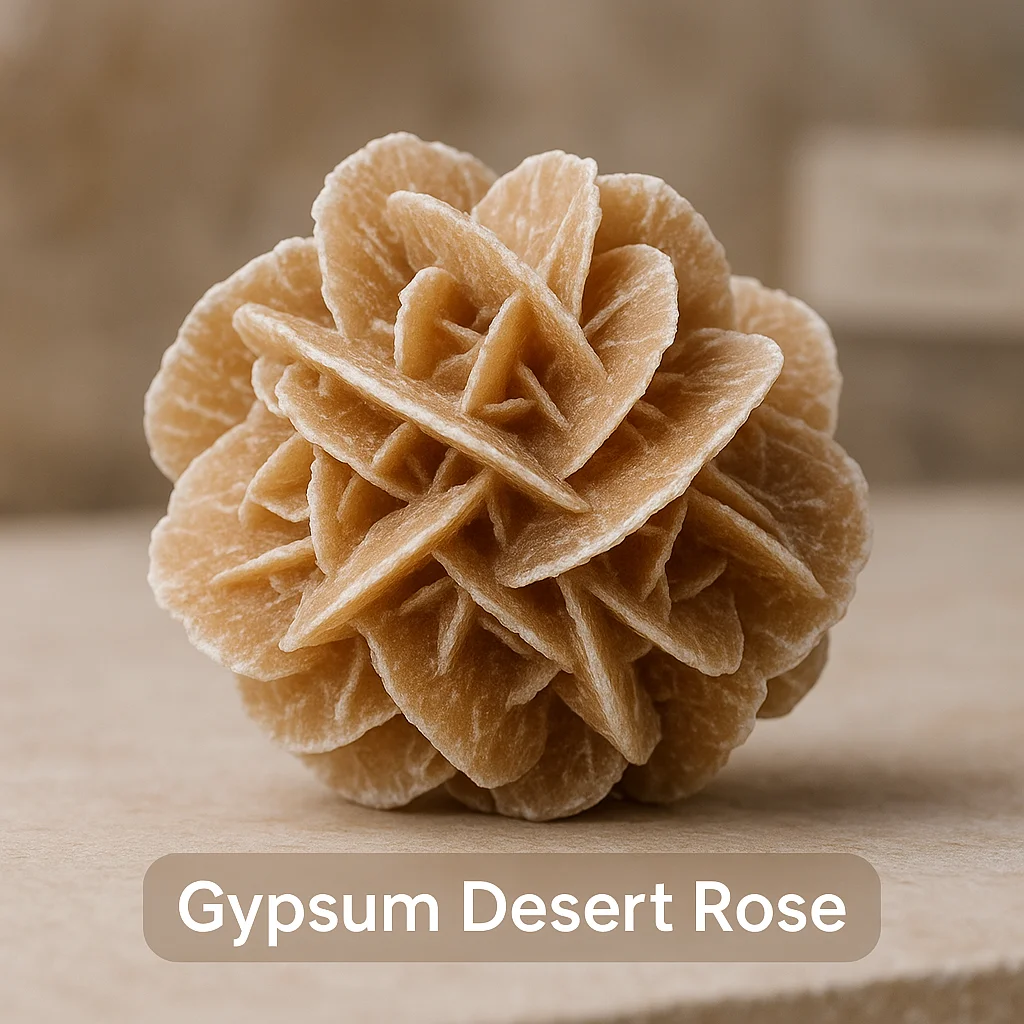
This mineral is a variety of gypsum, composed primarily of calcium sulfate with water. It sometimes occurs alongside sand grains, which become trapped inside the crystal structure, giving the Desert Rose its distinctive, petal-like shape. The allure of Gypsum Desert Rose is largely in its sculptural appearance rather than traditional gemstone qualities like clarity or color.
In this article, you will learn about its origins, formation processes, distinguishing characteristics, care tips, and buying advice. Understanding these elements will enhance your appreciation of this natural wonder and help you make informed decisions about collecting or gifting one of these beautiful mineral specimens.
🌍 Where It Comes From
Gypsum Desert Rose can be found in a variety of sedimentary environments across the world, particularly in arid regions where evaporation exceeds precipitation. This creates the ideal conditions for gypsum to form. These regions often include parts of North Africa and the Middle East, where the climate supports the slow, systematic formation of these mineral roses.
The Desert Rose forms within saline lakes, hot springs, or in desert regions where water has evaporated repeatedly over time. The layers of evaporation and precipitation help develop the characteristic ‘petals’ that resemble a rose in bloom. Locations known for producing stunning Gypsum Desert Roses are usually notable for their environmental conditions that allow for the formation of well-defined crystals.
The origin of a Gypsum Desert Rose can matter to collectors primarily due to aesthetic preferences, as certain regions may produce crystals with particular qualities, such as larger average size or variations in petal intricacy. However, these preferences are often personal rather than market-driven, and availability can affect pricing more than geographic origin. While no one origin is deemed superior, each region offers unique specimens that appeal to different tastes.
🔬 How It Forms
The formation of a Gypsum Desert Rose begins with gypsum, a mineral that is quite common in evaporite environments. When water evaporates in these environments, gypsum crystals can begin to form. This process is slow and takes place over a considerable span of time. The presence of sand in the environment is crucial as it becomes trapped between the layers of crystal growth, resulting in the formation of the petals that define the Desert Rose.
These formations are intriguing examples of how nature works methodically to create intricate designs. As gypsum crystals continue to grow, they capture more grains of sand, gradually forming the rose-like clusters. Sometimes, a Desert Rose can also incorporate other minerals, which may slightly alter its appearance and color.
The delicate aesthetic of the Desert Rose is due to environmental conditions that allow for stable and gradual growth. Variations in the formation process, such as the concentration of minerals or changes in temperature and humidity, can slightly alter the final appearance of each specimen, making every Desert Rose unique.
🎨 Color and Look
The typical color of a Gypsum Desert Rose ranges from light creamy hues to pale orange or reddish-brown, largely influenced by the sand particles incorporated into its structure. The color variations are typically subtle, as the gypsum itself is colorless, and the sand it captures dictates the overall color palette of the rose.
Gypsum Desert Roses have a naturally matte finish, which can be enhanced with a little polishing without altering their core characteristics. However, most collectors and enthusiasts prefer them in their natural state, appreciating the untouched beauty that nature has crafted.
Unlike some gemstones, Desert Roses are infrequently treated because their value lies in natural formation and uniqueness. Any artificial alteration, like dyeing, would typically be considered undesirable. Therefore, the focus remains on the original, natural artistry, with well-preserved specimens often favored by collectors.
🧪 Properties That Matter
When considering the properties of Gypsum Desert Rose, its Mohs hardness, which is a mere 2, indicates that it is relatively soft and prone to scratches. In everyday terms, this means that any Gypsum Desert Rose should be handled with care, especially if it is part of a display piece that may be frequently touched.
The mineral has fair toughness, meaning it can chip or fracture somewhat easily if mishandled. These properties make it inadvisable for use in jewelry that would be subjected to daily wear, such as rings or bracelets, but it can be suitable for pendants or earrings that are worn with care.
The luster of Gypsum Desert Rose is typically silky or pearly, and it is often translucent when held up to light. This gives it a gentle, natural glow which can be pleasing to observe in a well-lit setting. Its intricate shape and subtle visual properties are often best appreciated with careful handling, making it more suited for display rather than wear.
✨ Meanings, Birthstones, and Culture
Gypsum Desert Rose is traditionally associated with themes of perseverance and natural beauty, drawing metaphorical connections to the rose that blooms in harsh desert conditions. Culturally, it is valued for its symbol of resilience, though it does not hold a place as an official birthstone or in major jewelry traditions.
Some folklore suggests Gypsum Desert Roses are protective charms or good luck talismans, but these associations are cultural stories rather than scientifically proven effects. It is important for beginners to separate these traditional stories from facts when appreciating these unique mineral formations.
In modern collections, Desert Roses are appreciated as natural wonders and are often used as educational pieces in museums to illustrate the geological processes of crystallization. Though they lack the traditional attributes that define gemstones, they resonate with collectors who appreciate their natural artistry and geological significance.
🧼 Care and Cleaning
Caring for a Gypsum Desert Rose requires a gentle touch. The best method to clean it is with mild soap and lukewarm water, using a soft cloth for gentle wiping. Avoid using chemical cleaners, which can damage the surface, and never submerge it in water for extended periods as this can lead to dissolution of the gypsum.
Avoid exposing the Desert Rose to extreme temperatures or direct sunlight for prolonged periods, as heat can cause changes in color or structural integrity. When storing your Gypsum Desert Rose, choose a protective, padded container to prevent scratches and accidental damage.
Gentle handling and considerate display practices will maintain the beauty of your Desert Rose. If it is part of a larger collection, consider rotating its exposure to light and temperature variations, ensuring a long-lasting, visually pleasing display within its storage or decorative environment.
🛒 Buying Tips and What to Check
While purchasing a Gypsum Desert Rose, observe its color, size, and the delicacy of its petal formations. Color and size may vary, but more intricate formations are often favored by collectors. Authenticity is typically not disputed, but be aware of any artificially enhanced specimens, as collectors generally prefer natural formations.
Ensure the seller has a reputable background and offers high-quality photographs so you can adequately assess the piece prior to purchase. For larger specimens that might command a higher price, it is wise to consult with a professional for a thorough examination.
While gemological reports are less common for mineral specimens like Desert Roses, asking about the origin and any treatments is a good practice. If buying online, verify the return policy and check reviews from previous customers to gauge the seller’s credibility.
⚠️ Real vs Fake and Common Look-Alikes
When distinguishing between real Gypsum Desert Roses and imitations, be aware that the real mineral is slightly heavier than artificial reproductions made from plastic or resin. Synthetic Desert Roses are less common but may be encountered, and natural ones can usually be confirmed by sight and feel.
Sometimes, similar formations can be found in other minerals, but their distinct crystal patterns and sand inclusion are clear identifiers of a true Gypsum Desert Rose. Look-alikes may attempt to imitate the form but often lack the natural intricacy and texture of a genuine specimen.
Professional or semi-professional testing methods can accurately determine authenticity but should be handled by those experienced in gemology practices. Attempting to conduct such tests at home without expertise can result in damage to the specimen or incorrect identification.
❓ Common Questions and Misconceptions
Is it a mineral or a rock? Gypsum Desert Rose is a mineral formation.
Is it a birthstone? No, it is not a designated birthstone.
Will it scratch easily? Yes, due to its low Mohs hardness of 2.
Can it go in water? Prolonged water exposure is not recommended.
Does color fade in sunlight? Prolonged exposure can impact the color.
What treatments are common? Treatments are rare; the natural state is preferred.
Is lab-grown 'fake'? Lab-grown specimens are considered reproductions.
How do I store it safely? Use a padded container and protect it from scratching.
Do inclusions always lower value? For Gypsum Desert Rose, sand inclusion is part of its appeal.
How do I pick a good one for jewelry? Focus on intricacy if chosen for pendants or earrings.
📌 Summary
- Gypsum Desert Rose is a mineral formation known for its rose-like shape.
- Typical colors include creamy, pale orange to reddish-brown hues.
- Forms from gypsum in evaporative, arid environments over time.
- Soft and delicate, suitable for display but not daily wear jewelry.
- No common treatments; natural presentations are favored.
- Clean with mild soap, avoid harsh chemicals; store carefully.
- Best suited for pendants and earrings, not rings or bracelets.
- Look-alikes may lack natural intricacy of genuine specimens.
- Authentication should be professionally verified for accuracy.
- Ensure reputable sellers and clear photos if buying online.
- Not a birthstone but culturally valued for symbolism of resilience.
- Remember its extraordinary natural formation and cultural significance.