💎 Kyanite
🪨 What It Is
Kyanite is a fascinating mineral known for its striking blue hues, though it can also be found in colors such as green, white, gray, and even black. It falls under the category of aluminosilicate minerals, which means it's primarily composed of aluminum and silicon compounds.
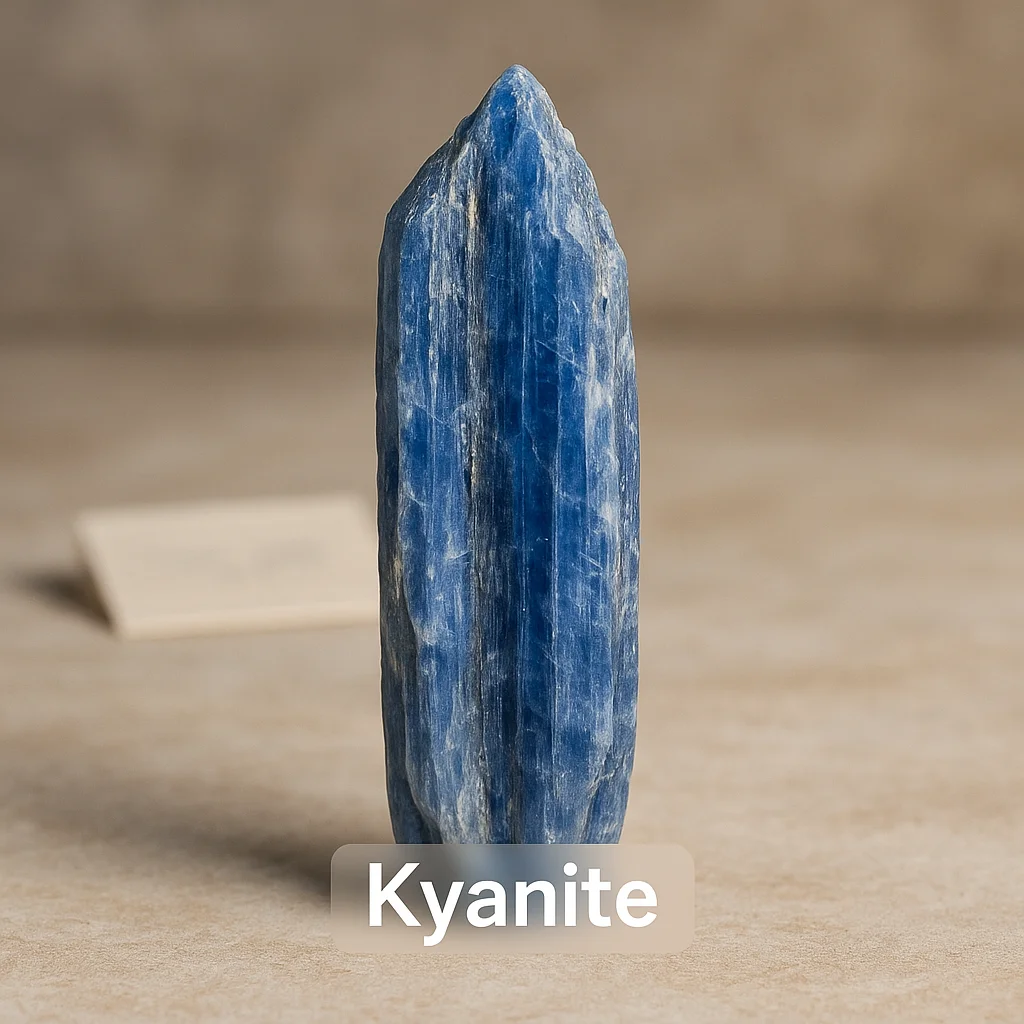
This mineral is not traditionally considered a birthstone, nor is it one of the more common types in mainstream jewelry. However, its unique properties make it a favorite among gemstone enthusiasts and collectors. In this article, you'll learn about kyanite's appearance, properties, origin, and how to care for it.
Kyanite is often appreciated for its distinct appearance, especially the strong and vibrant blue color it often exhibits. This attribute makes it a desirable choice for collectors and those interested in rare and aesthetically pleasing minerals.
🌍 Where It Comes From
Kyanite generally forms in metamorphic rocks, which are rocks that have changed due to high temperatures and pressures deep below the Earth's surface. It is most commonly encountered in regions known for metamorphic activity, such as mountain belts.
Some of the well-known countries where kyanite is mined include Brazil, India, and the United States. In these regions, kyanite may form as large, beautiful crystals, sometimes reaching several inches in length.
The origin of kyanite can have an impact on its color and clarity, which in turn affects its market reputation and value. For example, kyanite from Nepal is particularly noted for its rich blue color. While the exact location doesn't significantly change the stone's intrinsic properties, provenance can often matter to collectors and jewelry buyers.
🔬 How It Forms
Kyanite forms under conditions of high pressure and relatively low temperatures, which is typical of metamorphic environments. This can occur during mountain building processes when existing sedimentary or igneous rocks are subjected to intense geological forces.
The beautiful colors of kyanite are mainly influenced by trace elements within the crystal structure, often featuring shades of blue due to the presence of iron or titanium. Though it can also display a range of other colors, the deep blue variety is the most sought-after.
This mineral often forms elongated, blade-like crystals, which can intergrow with other minerals. Its crystal habit contributes to one of its defining features: strong anisotropic properties, which means it can have different hardness in different directions.
🎨 Color and Look
Kyanite is predominantly known for its captivating blue color, but as mentioned earlier, it can also be found in a palette of other colors like green, yellow, black, and grey. The intensity and saturation of its hues are most influenced by the mineral's exact chemical composition and trace elements.
The appearance of kyanite can be enhanced through cutting and polishing, which reveal its glassy luster. The way it interacts with light can give it a sheen that enhances its natural beauty, making it appealing for jewelry use.
Common treatments for kyanite are minimal compared to other gemstones. Although heat treatments can alter its color, such methods are not often employed. Generally, what you see is quite close to its natural state, making it a genuine choice for enthusiasts who value untreated stones.
🧪 Properties That Matter
One of the key properties of kyanite is its unique hardness, which varies in different directions; on the Mohs scale, the hardness ranges from about 4.5 to 7 depending on the orientation of the crystal. This characteristic poses a fascinating challenge for gem cutters but also adds a layer of complexity to its use in jewelry.
Kyanite is not known for its toughness, which refers to its ability to resist chipping or breaking. This makes it less suitable for rings, where the stone might be subjected to knocks, but more appropriate for earrings or pendants where impact is less likely.
The cleavage of kyanite is perfect in one direction, meaning it can split easily along specific planes. This is something to be aware of in jewelry settings to ensure the stone is protected.
✨ Meanings, Birthstones, and Culture
In cultural and historical contexts, kyanite is traditionally associated with calming energies and is thought to aid in communication and self-expression. It is not linked with any zodiac sign or specific month for birthstone purposes, but its soothing colors lend it a place in various spiritual and meditative practices.
Many crystal enthusiasts appreciate kyanite for its purported ability to align energy centers or chakras, although such effects are anecdotal and not supported by scientific evidence. It remains popular in non-traditional jewelry settings for those who appreciate its natural beauty.
As with many other stones, kyanite's symbolic meanings are deeply rooted in personal beliefs and cultural traditions, rather than scientific validation.
🧼 Care and Cleaning
Caring for kyanite involves mild cleaning solutions such as gentle soap and lukewarm water. Harsh chemicals and ultrasonic cleaners should be avoided, as they can damage the stone or alter its appearance.
It's advised to use a soft cloth when cleaning kyanite and to store it in a fabric-lined box or a separate compartment to prevent scratches from harder gemstones.
Avoid exposing kyanite to high heat or sudden temperature changes, as these can lead to thermal shock, causing the stone to crack. Consistent care can help maintain its aesthetic and structural integrity.
🛒 Buying Tips and What to Check
When buying kyanite, key quality factors include color, clarity, and cut. The most desirable stones exhibit a deep, uniform blue without visible inclusions or veining. The cut should be designed to maximize the stone’s natural beauty and minimize its cleavage planes.
Always ask about any treatments the stone may have undergone, although they are rare with kyanite. Requesting a gemological report is wise for high-value pieces to validate authenticity and details like origin and treatments.
When shopping online, ensure the seller has a good reputation and offers clear return policies. Check for accurate photos and complete disclosure about the stone you are purchasing. A trustworthy dealer should provide plenty of detailed information about the gemstone.
⚠️ Real vs Fake and Common Look-Alikes
Kyanite is generally found in its natural form rather than synthesized. However, it can often be confused with similar-looking stones like sapphire, especially due to its blue coloration. Another common imitation could be blue tourmaline, which also shares similar hues.
Distinguishing kyanite from look-alikes requires professional gemological testing, often involving refractive index measurements and microscopic examination. Such tests can differentiate between natural, synthetic, and imitation forms.
Though kyanite doublets or triplets are rare, it’s always prudent to be cautious of altered stones in the market. Only certified professionals should perform any identification tests to ensure accuracy and safety.
❓ Common Questions and Misconceptions
Is it a mineral or a rock? Kyanite is a mineral.
Is it a birthstone? No, kyanite is not a traditional birthstone.
Will it scratch easily? Its hardness varies between 4.5 and 7, making it relatively scratch-resistant depending on the direction.
Can it go in water? Yes, brief exposure to water can be acceptable, but prolonged soaking is not recommended.
Does color fade in sunlight? Kyanite's color is generally stable, but prolonged exposure to intense light can affect any mineral.
What treatments are common? Kyanite is typically untreated, though heat treatment can occur.
Is lab-grown 'fake'? While kyanite is generally natural, synthetic versions would be considered lab-created rather than "fake."
How do I store it safely? Store in a padded compartment and away from harder stones to avoid scratches.
Do inclusions always lower value? Not necessarily, but fewer inclusions are usually preferred for appearance reasons.
How do I pick a good one for jewelry? Look for deep color, good clarity, and a secure setting that protects the stone.
📌 Summary
- Kyanite is an aluminosilicate mineral, best known for its blue color.
- It forms in metamorphic rocks under high-pressure conditions.
- The mineral exhibits strong anisotropy in hardness, affecting its handling and use in jewelry.
- Treatments for kyanite are rare, with most stones remaining unaltered.
- Care involves gentle cleaning and cautious storage to prevent damage.
- Best suited for pendants or earrings, avoiding rings due to cleavage risk.
- Common look-alikes include blue sapphire and blue tourmaline.
- Authenticity is best confirmed through gemological testing.
- When buying, focus on color, clarity, and reputable sources.
- Not tied to any birthstone or zodiac month, but noted for cultural symbolism.
- Kyanite stands out for its striking appearance and unique properties in the mineral world.