💎 Labradorite Raw
🪨 What It Is
Labradorite is a fascinating mineral known for its captivating play of colors, making it highly valued among gemstone enthusiasts. It is a member of the feldspar group, which is one of the most abundant mineral groups found on Earth. Labradorite's unique visual properties make it a popular choice for both collectors and jewelry makers.
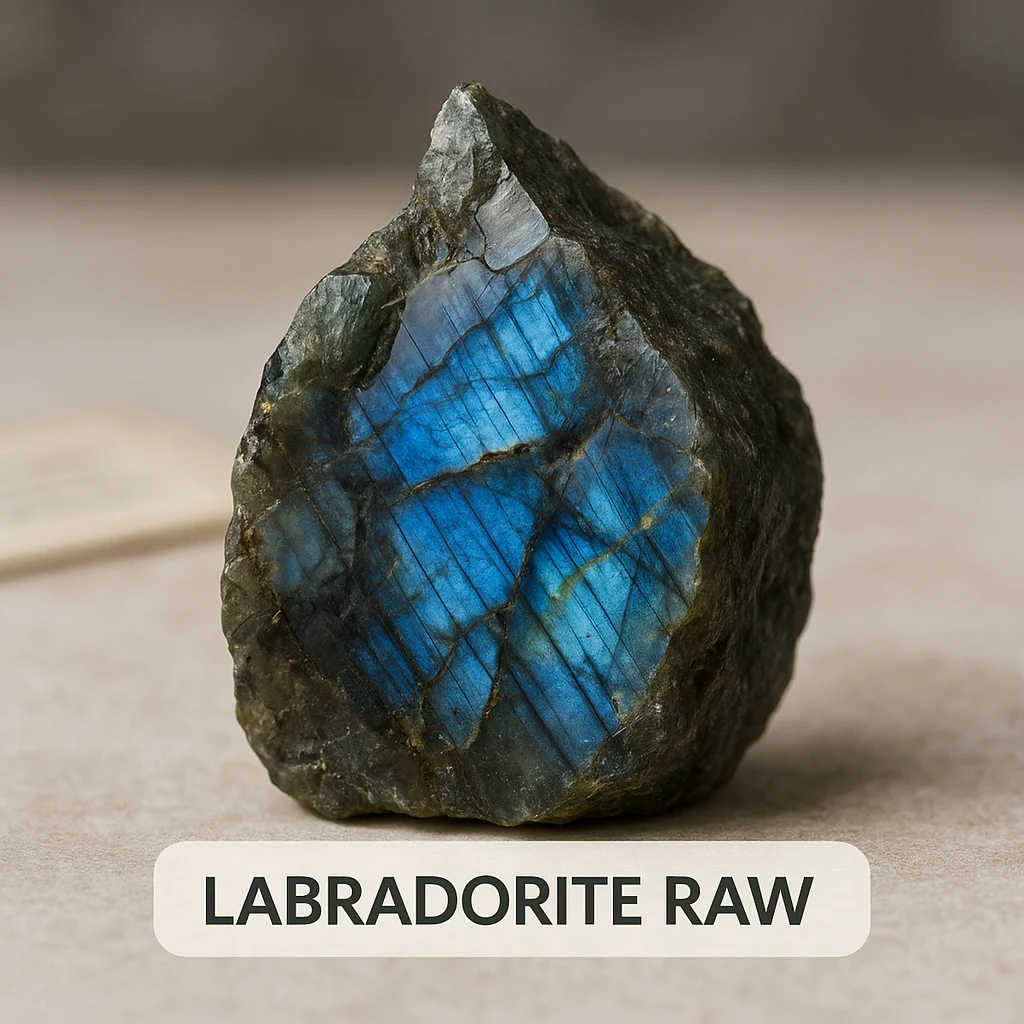
This mineral is often used as a gemstone, although it is not classified as a traditional birthstone. However, its beautiful appearance contributes to its popularity as a jewelry stone. This article will guide you through the essential aspects of Labradorite Raw, including its appearance, properties, origin, value, care, and buying tips.
Beginners exploring the world of gemstones will find Labradorite particularly intriguing due to its remarkable optical phenomenon, known as labradorescence. This effect presents as vivid flashes of color, typically in blue and green, when light hits the stone from different angles.
🌍 Where It Comes From
Labradorite is primarily formed in igneous rocks such as basalt and gabbro. These rocks are created from the rapid cooling of lava or magma, which provides the ideal environment for labradorite crystals to develop. The mineral can also be found in some metamorphic rocks, where existing minerals have been transformed due to intense heat and pressure.
Significant deposits of labradorite have been discovered in various parts of the world. Some of the most notable sources include Labrador in Canada, which gave the mineral its name. Other important locations are found in Finland, Madagascar, Russia, and the United States. The geographic origin can influence the color and pattern of labradorescence, affecting the stone's market value.
The origin of labradorite can be important for those seeking specific visual characteristics or market reputation. For instance, stones from Finland, known as spectrolite, are particularly prized for their vibrant colors. However, with careful selection, beautiful specimens can be found from any of the major producing regions.
🔬 How It Forms
Labradorite forms deep within the Earth's crust in environments with a rich supply of calcium, sodium, and aluminum. As the magma cools, these elements combine to create the mineral's unique structure. The formation process is influenced by factors such as temperature, pressure, and the presence of other elements, which can introduce color variations.
The labradorescence in labradorite is caused by internal structures within the stone, which refract light through thin layers. These layers are often the result of twinning, where crystal structures are repeated in a symmetrical pattern. This phenomenon is responsible for the stone's signature play of color, which can include shades of blue, green, gold, and occasionally red or purple.
Labradorite often forms as well-defined crystals but can also occur in massive formations. The mineral's crystal habit, or typical shape, may be tabular, prismatic, or granular, depending on environmental conditions during formation.
🎨 Color and Look
Labadorite's most defining characteristic is its labradorescence, a play of colors that can make the stone appear to glow from within. The base color of labradorite is usually dull gray or dark green, but its colorful flashes can transform its appearance dramatically.
The quality of labradorescence can vary significantly between stones. In some specimens, the colors are vivid and sharply defined, while in others, they might be softer and more diffuse. Polishing enhances the stone's ability to reflect light, maximizing its visual appeal.
Labradorite is typically not treated for color enhancement. However, selecting stones with the most appealing natural colors and reflections is crucial. Lighting plays an essential role in showcasing the stone's beauty, so viewing it under different conditions can help in appreciating its full potential.
🧪 Properties That Matter
Labradorite has a Mohs hardness of 6 to 6.5, indicating moderate scratch resistance. It's more durable than some jewelry stones like opal and fluorite, making it suitable for various types of jewelry, although it is best worn with care to avoid scratches.
The toughness of labradorite, which refers to its resistance to chipping, is considered fair. It can withstand occasional bumps, but care should be taken to avoid impact with hard surfaces. Its cleavage, or the patterns of natural breakage, is good in two directions, meaning it can split relatively easily if struck.
Labradorite exhibits a vitreous to pearly luster, and its transparency ranges from translucent to opaque, depending on the quality of the stone. These properties determine how the stone reflects and refracts light, contributing to its overall appearance.
✨ Meanings, Birthstones, and Culture
Although not a traditional birthstone, labradorite is often associated with transformation and protection in cultural symbolism. Many believe it can enhance intuition and ward off negative energy. These qualities, however, are rooted in folklore rather than scientific evidence.
The stone is sometimes incorporated into contemporary jewelry pieces that emphasize its mystical allure, often designed with a modern interpretation of ancient styles. Labradorite's striking colors make it a favorite among designers aiming to create eye-catching and spiritually inspired pieces.
In several cultures, labradorite is considered a powerful stone, traditionally used by shamans and healers. While these beliefs are not supported by scientific research, they add to the stone's allure and mystique in various cultural contexts.
🧼 Care and Cleaning
Proper care and cleaning of labradorite involve using gentle methods to maintain its natural beauty. The stone is best cleaned with mild soap and lukewarm water, using a soft cloth or brush to remove dirt. Avoid harsh chemicals and ultrasonic cleaners, as they may damage the stone's structure.
Make sure to avoid exposing labradorite to sudden temperature changes or prolonged soaking, which can cause fractures or diminish its shine. After cleaning, it should be thoroughly dried before storing to prevent moisture damage.
Labradorite can be stored wrapped in a soft cloth or in a padded jewelry box to minimize the risk of scratches from harder stones. Proper storage is essential to maintaining the stone's luster and preventing accidental damage.
🛒 Buying Tips and What to Check
When purchasing labradorite, factors such as color, clarity, and the quality of labradorescence heavily influence the stone's value. Look for stones with vibrant flashes of color and minimal inclusions, which can detract from its appearance.
Origin can also impact price, with labradorite from renowned sources like Finland sometimes commanding higher prices. Always inquire about any treatments the stone may have undergone, even though treatment is not common for labradorite.
Requesting a lab report can be helpful for high-value purchases, as it can confirm the authenticity of the stone. When buying online, consider examining photos carefully, checking return policies, and researching the seller's reputation to ensure a satisfactory purchase.
⚠️ Real vs Fake and Common Look-Alikes
Distinguishing between natural and synthetic or imitation labradorite can be challenging without professional testing. Synthetic labradorite is not common; however, imitations made of glass or plastic can be mistaken for the real stone.
Common look-alikes include spectrolite, a variation of labradorite from Finland with particularly vivid colors, and rainbow moonstone, a type of feldspar with similar optical properties.
To ensure that a labradorite piece is genuine, it's best to purchase from reputable dealers and seek laboratory certification when possible, as home testing methods can be risky and inaccurate.
❓ Common Questions and Misconceptions
Is it a mineral or a rock? Labradorite is a mineral and a member of the feldspar group.
Is it a birthstone? Labradorite is not a traditional birthstone, though it is popular in jewelry.
Will it scratch easily? With a Mohs hardness of 6 to 6.5, it can scratch, so care is recommended.
Can it go in water? Yes, brief contact with water is normally safe, but avoid prolonged soaking.
Does color fade in sunlight? Labradorite's color doesn't typically fade, but prolonged exposure to sunlight and heat should be avoided.
What treatments are common? Labradorite is usually untreated, retaining its natural beauty.
Is lab-grown 'fake'? Lab-grown gemstones are synthetic but not fake, though synthetic labradorite is rare.
How do I store it safely? Keep labradorite in a soft, protective pouch to prevent scratches.
Do inclusions always lower value? Inclusions can affect value, but the quality of labradorescence is more crucial.
How do I pick a good one for jewelry? Choose stones with strong labradorescence, minimal inclusions, and an appealing color play.
📌 Summary
- Labradorite is a mineral known for its unique labradorescence.
- Typical colors include blue, green, and gold flashes.
- It forms in igneous rocks from cooling lava.
- Moderate hardness makes it suitable for various jewelry.
- Usually untreated, ensuring natural appeal.
- Clean gently with soap and water; avoid harsh treatments.
- Best for pendants, earrings, or occasional wear rings.
- Commonly confused with spectrolite and rainbow moonstone.
- Authenticity confirmed through professional lab testing.
- Check for vivid colors, clarity, and origin when buying.
- Associated with transformation and protection in folklore.
- Remember its dual nature: a dazzling natural and cultural phenomenon.