💎 Lapis Lazuli Raw
🪨 What It Is
Lapis Lazuli is a deep-blue metamorphic rock used as a semi-precious stone, renowned for its intense color and historical significance. It is a popular choice for jewelry and ornamentation, especially in its polished form. In its raw state, Lapis Lazuli is a stunning illustration of nature's artistry.
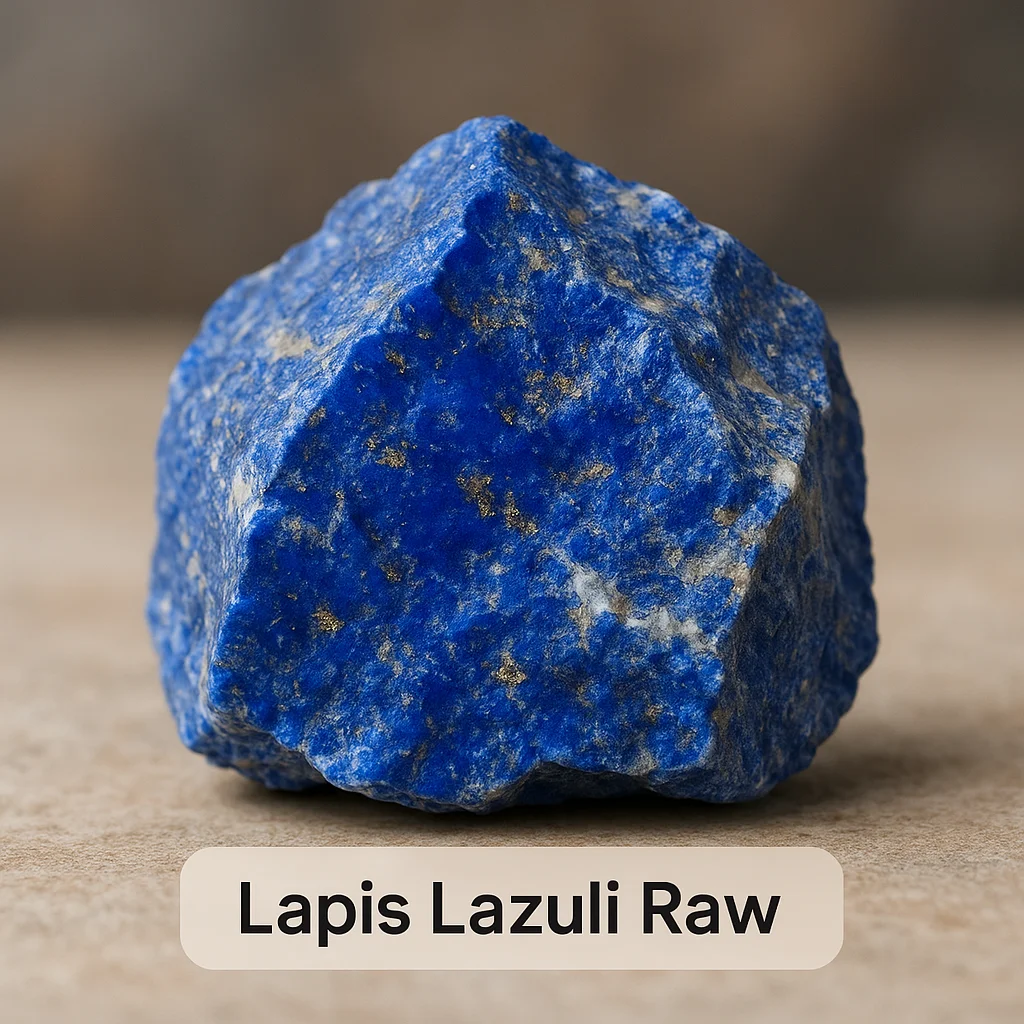
The stone is composed of several minerals, primarily lazurite, calcite, and pyrite, which contribute to its distinctive appearance. Lazurite provides the intense blue color, while pyrite offers a subtle metallic glint, appearing as gold specks.
Lapis Lazuli is often confused with other blue stones such as sodalite and azurite, but its unique combination of minerals gives it an identity all its own. By reading further, beginners will learn about its appearance, geographical origins, value determinants, care instructions, and how to purchase genuine Lapis Lazuli.
🌍 Where It Comes From
Lapis Lazuli is primarily found in metamorphic rocks formed by the alteration of sedimentary deposits. These deposits evolved millions of years ago through heat and pressure, transforming into the beautiful blue stone we cherish today.
The most renowned source of high-quality Lapis Lazuli is the Sar-e-Sang mines in Afghanistan. These mines have been the principal producer for over 6,000 years. Other notable sources include regions within Chile, Russia, and parts of the Middle East.
The stone's origin can significantly affect its value, with Afghan Lapis known for its deep-blue color and minimal calcite inclusions often being the most highly regarded. Understanding the geographical roots of Lapis helps in selecting stones based on desired quality and color.
🔬 How It Forms
The formation of Lapis Lazuli begins when calcite-rich limestone undergoes metamorphism, a process involving exposure to great heat and pressure. During this transformation, the mineral lazurite forms, which is responsible for the stone's iconic blue color.
Trace amounts of other minerals, such as pyrite and calcite, become part of the stone. Pyrite, an iron sulfide, can create a glittering effect that resembles tiny stars in a deep blue sky. Calcite, another common mineral in Lapis, can appear as white streaks or patches.
Lapis Lazuli rarely forms visible crystals; instead, it exists in massive, compact aggregate forms, making it an excellent material for carving and beads.
🎨 Color and Look
In its ideal state, Lapis Lazuli displays an intense ultramarine blue, occasionally highlighted by the sparkle of pyrite inclusions. The presence of calcite can dilute the color or present in white veins or patches, impacting its overall appearance.
The quality of Lapis Lazuli is often judged by its color. Stones with too much calcite or a duller color are considered lower quality. Cutting and polishing play significant roles in enhancing its visual appeal by revealing its rich colors and intricate mineral patterns.
Treatments like dyeing can enhance or even create a deeper blue to meet market desires, but these should be disclosed by sellers. A natural, untreated stone usually fetches a higher value.
🧪 Properties That Matter
Lapis Lazuli is relatively soft, with a Mohs hardness of 5-6, meaning it can be scratched by harder materials. This makes it more suited for pendants, earrings, or brooches rather than rings or bracelets that encounter daily wear.
The stone is moderately tough but can chip or fracture if subjected to impact. It has a characteristic dull to vitreous luster and is opaque, which means it doesn't transmit light.
Understanding these properties helps collectors and jewelry lovers choose appropriate settings and applications, ensuring longevity and aesthetic appeal.
✨ Meanings, Birthstones, and Culture
Lapis Lazuli has a long history of cultural significance, often associated with wisdom, truth, and tranquility. It was highly prized by ancient civilizations such as the Egyptians, who used it for amulets and burial masks.
While not a traditional birthstone, Lapis Lazuli is sometimes associated with the zodiac sign of Sagittarius and is embraced in modern crystal practices for its perceived symbolic qualities.
Regardless of its historical and cultural meanings, Lapis Lazuli remains popular in contemporary jewelry for its striking color and distinctive appearance.
🧼 Care and Cleaning
To preserve the beauty of Lapis Lazuli, cleaning should be done gently using warm soapy water and a soft cloth. It's important to avoid harsh chemicals, ultrasonic cleaners, and steamers, as these can damage the stone.
Lapis Lazuli should not be exposed to heat, as sudden temperature changes can cause fractures. It should be stored in a soft pouch or cloth to prevent scratching from harder gemstones or metals.
Due to its porosity, extended soaking should be avoided, and it should be dried immediately to prevent water spots.
🛒 Buying Tips and What to Check
When purchasing Lapis Lazuli, pay attention to color richness, uniformity, and the presence of pyrite glitter versus calcite specks. Generally, the less calcite visible, the more valuable the stone is.
Always inquire about treatments. Reputable sellers will disclose any dyeing or enhancements. A lab report can confirm a stone's authenticity and whether it has been treated.
For online purchases, examine photos closely, verify the return policy, and select vendors with good reputations and transparent disclosures.
⚠️ Real vs Fake and Common Look-Alikes
Naturally occurring Lapis Lazuli is sometimes confused with dyed howlite, sodalite, or synthetic imitations. Synthetic Lapis Lazuli is lab-created yet possesses the same chemical composition, while imitations made from glass or plastic look similar but lack authenticity.
Doublets and triplets involve Lapis slabs bonded with glass or other materials. Professional gemological testing is recommended to confirm authenticity, as home tests can be inaccurate and damaging.
❓ Common Questions and Misconceptions
Is it a mineral or a rock? Lapis Lazuli is a rock composed of various minerals, primarily lazurite.
Is it a birthstone? It is not traditional but is often linked with Sagittarius.
Will it scratch easily? With a Mohs hardness of 5-6, it can be scratched by harder materials.
Can it go in water? Brief, gentle cleaning in water is safe, but avoid long exposure due to porosity.
Does color fade in sunlight? Prolonged exposure may dull the color or cause surface fading.
What treatments are common? Dyeing is common to enhance or alter color.
Is lab-grown 'fake'? Lab-grown is synthetic but genuine in terms of chemical structure.
How do I store it safely? Keep in a soft cloth or pouch away from other stones.
Do inclusions always lower value? Pyrite inclusions can enhance value, while calcite may lower it.
How do I pick a good one for jewelry? Look for deep color, minimal calcite, and even distribution of pyrite.
📌 Summary
- Lapis Lazuli is a deep-blue metamorphic rock with historical significance.
- It typically appears as a rich blue with pyrite specks and some calcite.
- Forms through metamorphic processes involving heat and pressure.
- Features Mohs hardness of 5-6, suitable for occasional wear.
- Common treatments include dyeing to enhance color.
- Clean gently with soapy water; store in a soft cloth or pouch.
- Best suited for pendants, earrings, and ornamental pieces.
- Common look-alikes include sodalite and dyed howlite.
- Authenticity is confirmed through professional testing.
- Buying tips: check color quality, treatment disclosure, seller reputation.
- Not a traditional birthstone but linked to Sagittarius in culture.
- Memorable for its striking color, historical allure, and versatile use.