💎 Magnetite
🪨 What It Is
Magnetite is a common mineral recognized for its distinctive magnetic properties. It belongs to the spinel group and comprises iron oxide (Fe3O4). As a member of the oxide minerals family, magnetite is usually black or brownish-black with a metallic luster, adding a unique appeal to its appearance.
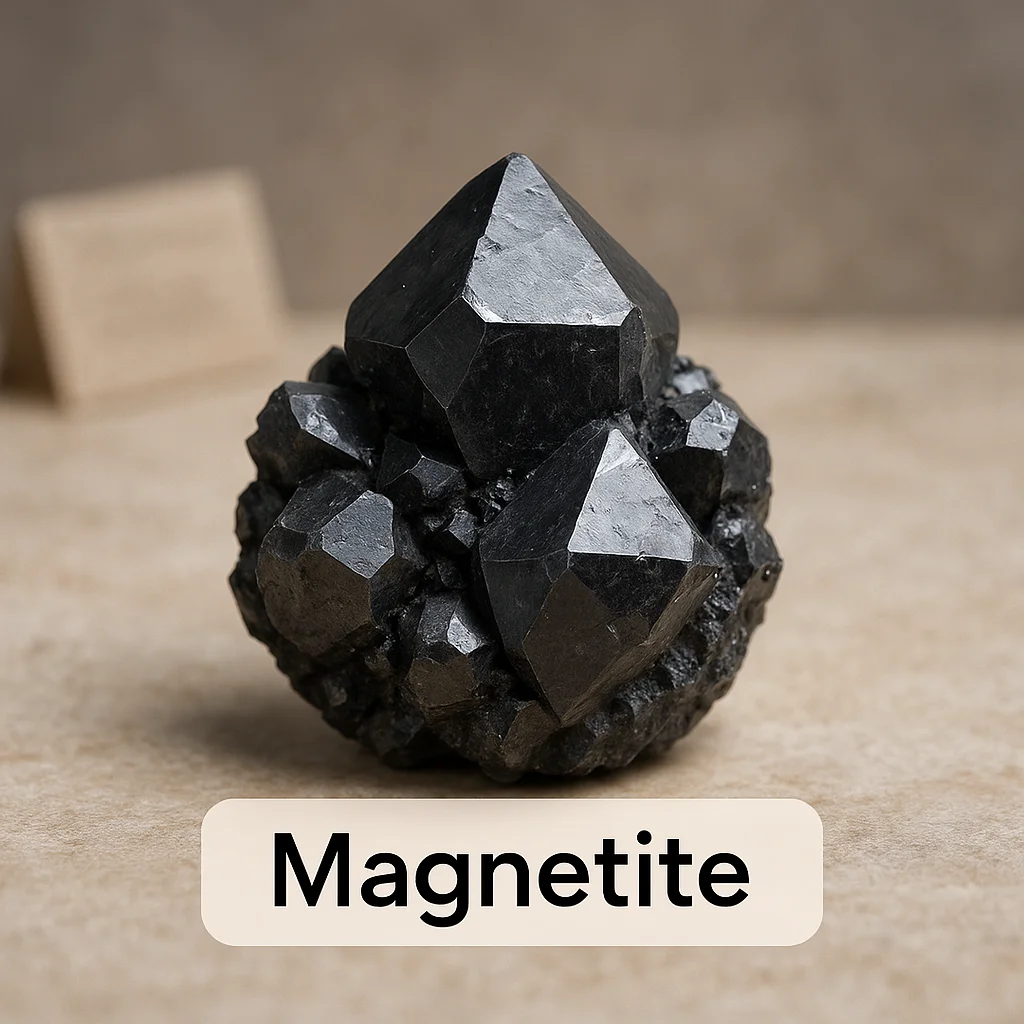
This mineral is significant not only for its magnetic capabilities but also for its presence in the natural world. While not classified as a gemstone or a traditional jewelry stone, magnetite holds interest for collectors and geologists due to its physical properties and occurrence in various geological settings.
In this article, you'll explore the formation, appearance, properties, and cultural associations of magnetite. We will also consider practical aspects such as care, cleaning, buying tips, and how to distinguish it from look-alikes.
🌍 Where It Comes From
Magnetite forms under a variety of geological conditions. It is found in igneous, metamorphic, and sedimentary rocks, often appearing as small grains, massive formations, or crystals. This versatility in formation environments makes magnetite widespread across the globe.
Significant deposits of magnetite are found in regions such as Australia, South Africa, and parts of Asia and North America. These localities are known for producing high-quality magnetite, which is often sought by collectors and industries interested in its iron content and magnetic properties.
The origin can play a role in determining the quality and value of magnetite. Factors like the size of crystals, purity, and magnetic strength can vary based on the locality where it is mined. Understanding its origin helps in appreciating its variations and applications better.
🔬 How It Forms
Magnetite forms through a series of natural geological processes. In igneous settings, it crystallizes from magma as it cools. The presence of iron and oxygen in the molten rock contributes to the formation of magnetite crystals. These crystals can be minute or develop into significant masses, depending on the conditions.
In metamorphic environments, magnetite can form through the alteration of iron-rich minerals under heat and pressure. Sedimentary formations may also host magnetite due to the chemical precipitation of iron from solutions over long periods.
While the process may differ slightly depending on the environment, the essential factors are the availability of iron and oxygen, which combine to create this distinctive mineral.
🎨 Color and Look
Magnetite is primarily recognized by its black or brownish-black color and metallic luster. Occasionally, it presents as grey or silver when polished. The appearance can vary slightly based on the locality and formation conditions.
The finish and polish of magnetite significantly influence its visual appeal. A polished piece can enhance its metallic luster, making it more attractive for collectors, even though it is not commonly used in traditional jewelry. Magnetite typically does not undergo color or clarity treatments due to its natural properties, maintaining its original appearance.
🧪 Properties That Matter
Magnetite stands out for its unique magnetic properties. These properties are often what draw collectors and gemstone enthusiasts to this mineral. Magnetite has a Mohs hardness of 5.5 to 6.5, making it moderately resistant to scratching compared to materials like quartz.
The mineral's toughness is fair, meaning it can withstand some impact but may chip if handled roughly. Magnetite possesses no cleavage, so it fractures irregularly, adding character to its natural formations.
Its metallic luster gives magnetite a striking appearance, though it is opaque. This opacity, combined with its hardness and durability, makes it suitable for specialized applications beyond jewelry, such as in industrial or decorative contexts.
✨ Meanings, Birthstones, and Culture
In various cultures, magnetite has been associated with the grounding of energy and strength of character. However, it's crucial to note that these associations are part of tradition and folklore, not scientifically proven effects.
While magnetite is not recognized as a birthstone in modern gemology, its distinct characteristics and magnetic abilities have made it a subject of interest in metaphysical circles. It is traditionally associated with balance and grounding energies, reflecting its grounding properties in nature.
🧼 Care and Cleaning
Caring for magnetite involves general guidelines suitable for most minerals. It should be cleaned with gentle soap and water, using a soft cloth to prevent scratches. Acidic or harsh cleaning agents should be avoided to preserve its surface and appearance.
Given its magnetic properties, keeping magnetite away from electronic devices that may be sensitive to magnetic fields is advised. When storing, ensure it is wrapped in a soft cloth or placed individually in a box to prevent contact scratches from other minerals or metals.
🛒 Buying Tips and What to Check
When purchasing magnetite, consider its magnetic properties, appearance, and origin. While size and crystal definition can influence value, magnetite is typically valued for its unique magnetic qualities and pure specimens.
Always inquire about treatments and authenticity, especially with high-value pieces, to ensure the mineral's natural characteristics have been preserved. Requesting a gemological report can provide confirmation of its properties and origin.
When buying magnetite online, check seller reputations, understand return policies, and request detailed photographs to ensure authenticity and avoid disappointments.
⚠️ Real vs Fake and Common Look-Alikes
While magnetite is unique, there are look-alikes and imitations that one must be cautious of. Hematite, another iron oxide, resembles magnetite in its black appearance but lacks magnetic qualities, which can help in distinguishing between the two.
Imitations might include synthetic forms or composites that mimic magnetite's visual properties without its magnetic behavior. Natural magnetite and synthetic versions may look similar, but synthetic versions might lack the full range of natural properties.
Professional gemological tests can confirm authenticity, distinguishing between natural, synthetic, and imitation materials. Relying on experts for identification ensures accurate and safe evaluations.
❓ Common Questions and Misconceptions
"Is it a mineral or a rock?" Magnetite is a mineral known for its stunning magnetic properties.
"Is it a birthstone?" Magnetite is not considered a traditional birthstone.
"Will it scratch easily?" With a Mohs hardness of 5.5 to 6.5, magnetite is moderately scratch-resistant.
"Can it go in water?" Yes, magnetite can be cleaned with water, but dry it well to avoid rust-like residues.
"Does color fade in sunlight?" Color in magnetite is generally stable and should not fade with sunlight exposure.
"What treatments are common?" Magnetite is typically not treated for color or clarity, retaining its natural properties.
"Is lab-grown 'fake'?" Lab-grown magnetite mimics natural formation but might lack certain natural characteristics.
"How do I store it safely?" Store magnetite in a soft cloth to protect it from scratches and keep electronic devices away due to its magnetism.
"Do inclusions always lower value?" Inclusions are common, but value is more influenced by magnetic properties and quality.
"How do I pick a good one for jewelry?" Choose magnetite with a consistent color, luster, and magnetic response, suitable for the intended application.
📌 Summary
- Magnetite is a mineral known for its magnetic properties.
- Typically dark-colored with a metallic luster.
- Forms in various geological settings, like igneous and metamorphic.
- Mohs hardness of 5.5–6.5; makes it scratch-resistant.
- Usually untreated; retains natural magnetic qualities.
- Clean with mild soap, avoid harsh chemicals, and strong magnetic fields.
- Suitable for specific jewelry applications more than others.
- Look-alikes include hematite; check magnetic properties.
- Professional testing confirms authenticity, especially for unique specimens.
- Buying checklist: seller reputation, detailed photos, inquire about treatments.
- Traditionally associated with grounding energies but not a formal birthstone.
- A memorable quality: its compelling magnetic ability sets it apart.