💎 Obsidian
🪨 What It Is
Obsidian is a fascinating natural glass formed by the rapid cooling of lava without crystallization. Unlike traditional minerals that have a defined crystal structure, obsidian is an amorphous material, meaning it lacks a structured arrangement of atoms.
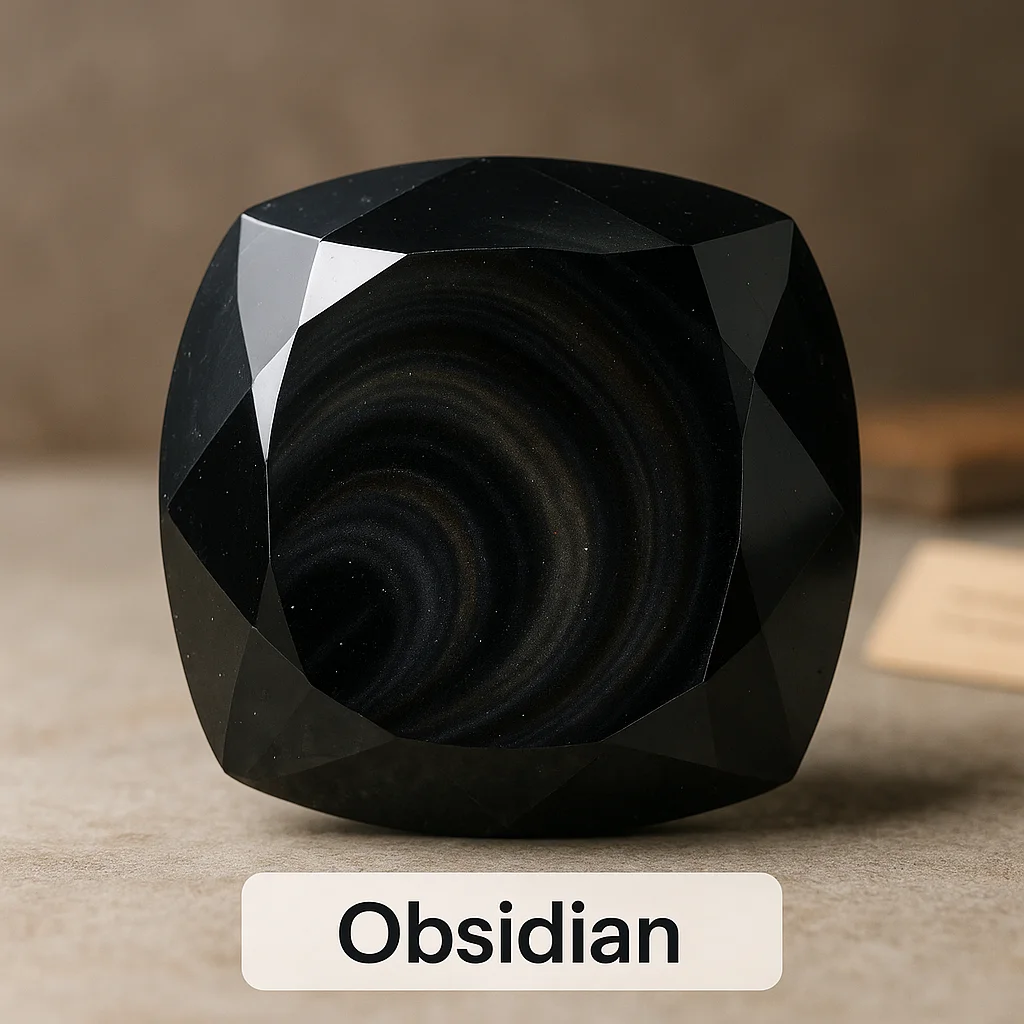
Often considered a gemstone, obsidian is cherished for its unique appearance and historical significance in jewelry and tools. While it is not a birthstone, obsidian remains a popular choice in modern jewelry pieces, including pendants, beads, and cabochons.
In this article, you'll learn about obsidian's origins, properties, formation process, and practical aspects such as care, buying tips, and how to distinguish it from look-alikes.
🌍 Where It Comes From
Obsidian typically forms in the geologic settings of volcanic regions, where lava cools rapidly. It is most commonly associated with igneous rocks found in areas with active or ancient volcanism.
Some of the most notable deposits of obsidian are found in regions such as the United States, particularly in states like Oregon, California, and Arizona. Mexico is also renowned for its beautiful obsidian varieties. Additionally, volcanic areas in parts of Europe and Asia also host this captivating natural glass.
While the origin of obsidian might not greatly affect its appearance, location-specific varieties may carry cultural or historic significance, fueling their desirability in particular markets.
🔬 How It Forms
Obsidian forms through the rapid cooling of felsic lava at the earth's surface. When the lava cools quickly, it solidifies without growing crystals, resulting in its glass-like texture. This lack of crystallization distinguishes obsidian from other volcanic rocks.
The cooling process often occurs during volcanic eruptions that expose the molten rock to cooler environmental temperatures. Subtle variations in obsidian's appearance can arise from differences in chemical composition and cooling rates during formation.
Obsidian primarily occurs as smooth, homogeneous mass, often taking on a black or dark green appearance due to the presence of oxides and iron or magnesium impurities.
🎨 Color and Look
Obsidian is most commonly recognized for its deep black color, but it can also be found in shades of brown, gray, and even green. Some obsidian displays striking iridescent or metallic sheen known as sheen or rainbow obsidian, caused by light reflecting off gas bubbles trapped in the glass.
Typically, obsidian has a smooth, glassy luster, which enhances its dark and reflective surface. Its appearance is best showcased when cut and polished, revealing an elegant and glossy finish.
While obsidian generally does not undergo treatments to alter its color or clarity, buyers should be aware of man-made glass that mimics obsidian's appearance.
🧪 Properties That Matter
Obsidian has a Mohs hardness of about 5 to 5.5, making it softer than quartz but still capable of withstanding minor wear. Its lack of crystal structure makes it more prone to chipping, so it is regarded as having low toughness.
When it breaks, obsidian exhibits conchoidal fracture, producing smooth, curved surfaces that can be extremely sharp. This property historically made it valuable for crafting tools and weapons.
The vitreous luster of obsidian's surface adds a dramatic impact to jewelry design, allowing it to shine as an accent in necklaces or statement pieces.
✨ Meanings, Birthstones, and Culture
Throughout history, obsidian has been used in various cultures for carving and making tools due to its sharp fracture properties. It is traditionally associated with protection and grounding, themes frequently cited in cultural symbolism.
Obsidian is not designated as a birthstone, but it is connected with certain zodiac signs in some traditions. For example, it is sometimes linked to Scorpio due to perceived correlating characteristics.
Today, obsidian continues to hold a place in modern jewelry traditions, favored for its striking color and smooth finish, appealing to those drawn to minimalist or bold designs.
🧼 Care and Cleaning
To prolong the life of obsidian jewelry, gentle cleaning with mild soap and water is recommended. Use a soft cloth to carefully dry and polish it afterward, avoiding abrasive materials that may cause scratches.
Care should be taken to avoid exposing obsidian to sudden temperature changes, as its glass-like composition makes it more susceptible to thermal shock and cracking.
When storing obsidian, keep it separate from harder gemstones and materials that may scratch its surface. A soft pouch or lined jewelry box is ideal for protecting its reflective gloss.
🛒 Buying Tips and What to Check
When purchasing obsidian, consider the color and translucency, as well as the presence of any unique optical effects like sheen or rainbow luster that may increase its appeal. Consistency in texture and finish should also be taken into account.
For higher-value pieces, ask about potential treatments, though such processes are rare for natural obsidian. If purchasing from an unfamiliar source, ensure they have a clear return policy and inquire about the seller's reputation.
Collectors should seek lab reports, when possible, to confirm authenticity, but remember that some characteristics are best evaluated in person or by trained professionals.
⚠️ Real vs Fake and Common Look-Alikes
Differentiating natural obsidian from synthetic or imitation products can be challenging. Synthetic versions may be produced in labs, but they lack the natural origin and geological story of true obsidian.
Common imitations include black glass, plastic, or composite materials that mimic obsidian's appearance but are less durable and authentic.
Professional testing is essential for correct identification, highlighting the importance of consulting gemologists to ensure purchases are genuine and accurately represented.
❓ Common Questions and Misconceptions
Is it a mineral or a rock? Obsidian is a type of natural glass, which means it is neither a mineral nor a traditional rock.
Is it a birthstone? No, obsidian is not recognized as an official birthstone.
Will it scratch easily? With a Mohs hardness of 5-5.5, obsidian can be scratched by harder materials like quartz.
Can it go in water? Yes, but extended water exposure should be avoided to prevent damage.
Does color fade in sunlight? Obsidian's color is stable in sunlight, though care should be taken with display and storage.
What treatments are common? Obsidian is rarely treated; most forms seen in jewelry are natural.
Is lab-grown 'fake'? Lab-grown obsidian is synthetic, lacking the natural origin of true obsidian.
How do I store it safely? Store obsidian separately in a protective pouch to prevent scratches.
Do inclusions always lower value? Inclusions can affect appearance, but unique patterns might enhance value for specific collectors.
How do I pick a good one for jewelry? Look for smooth surfaces, consistent color, and a pleasing luster fitting personal style.
📌 Summary
- Obsidian is a natural volcanic glass, known for its rich, dark appearance.
- Common colors include black, brown, gray, and green, sometimes with optical effects.
- Forms from rapid cooling of lava, resulting in an amorphous glass.
- Has a Mohs hardness of 5-5.5; prone to chipping and conchoidal fracture.
- Commonly untreated; natural sheen enhances its aesthetic appeal.
- Clean with mild soap, avoid sudden temperature changes; store separately.
- Ideal for pendants, earrings, and statement jewelry pieces.
- Look-alikes include synthetic glass and plastic imitations; confirm authenticity professionally.
- Consult reputable sources and lab reports for genuine purchases.
- Though not a birthstone, it holds cultural significance as a symbol of protection.
- Recognizable by its glossy luster and smooth texture, making it a visible and dynamic choice for jewelry.