💎 Quartz Crystal
🪨 What It Is
Quartz crystal is one of the most abundant and widely studied minerals on Earth. It belongs to the family of silica minerals and is composed of silicon and oxygen atoms. Known for its clear, glass-like appearance, quartz is often used as a gemstone in jewelry due to its natural beauty and variety of colors.
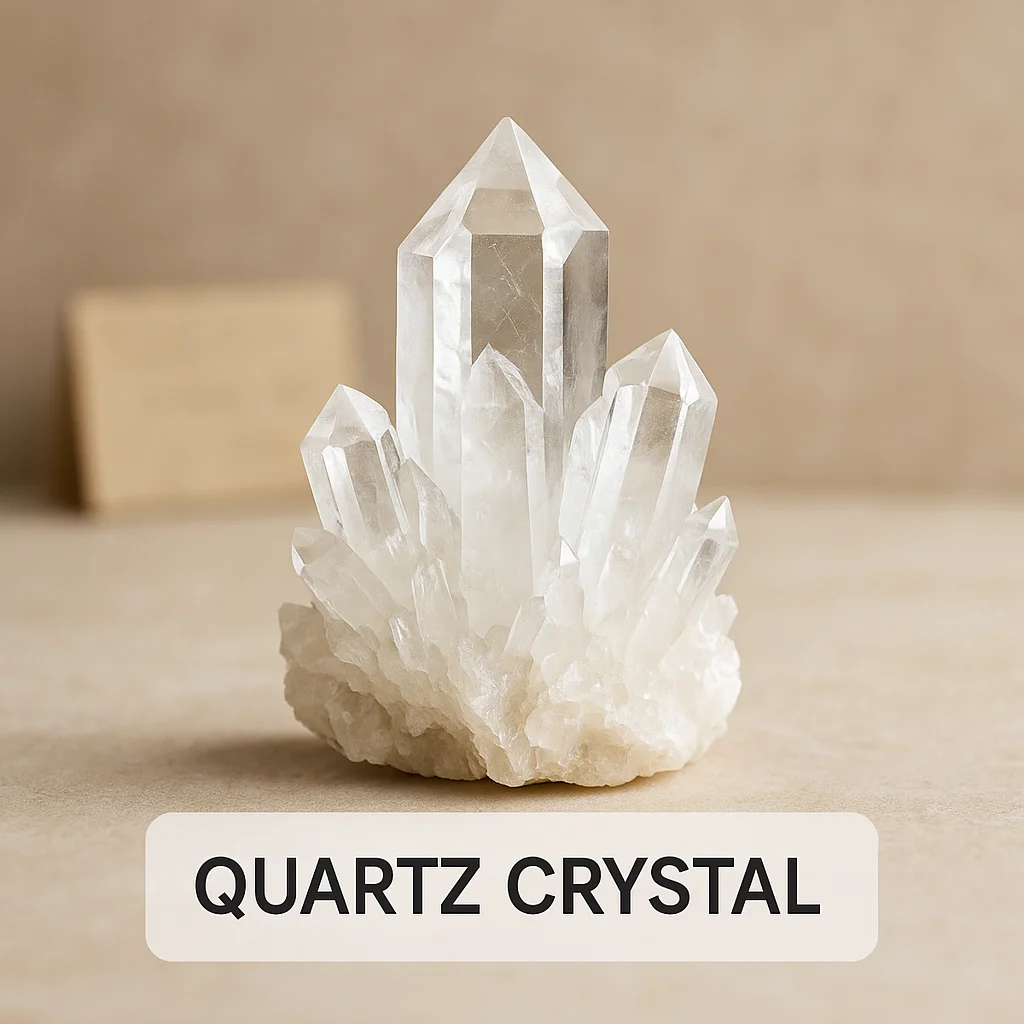
Quartz is a popular gemstone choice for both jewelry and collectors. However, unlike traditional gemstones like diamonds or rubies, quartz is not a birthstone in modern Western traditions. It is celebrated for its aesthetic qualities and versatility in various applications, from decorative carvings to clock movements.
In this article, we'll explore the fascinating nature of quartz crystal, including its appearance, properties, origins, value, care tips, and buying advice. Whether you're curious about gemological details or cultural significance, quartz offers a rich history to explore.
🌍 Where It Comes From
Quartz crystals are found in many different geological environments across the globe. This mineral predominantly forms in igneous rocks, which are created when molten lava cools and solidifies. It can also be found in metamorphic forms, where rock has transformed under intense heat and pressure.
Some of the most famous quartz-crystal-producing regions include parts of Brazil, the United States, particularly in Arkansas, and Madagascar. These areas are known for producing high-quality quartz crystals, often used in jewelry and ornamental carvings. The specific location where quartz is mined can affect factors such as clarity and color, which in turn influence its market value.
Understanding the origins of quartz can enhance one's appreciation for this mineral's natural beauty. The geographic origin often contributes to the crystal's desirability and can help buyers make informed decisions when purchasing quartz for their collections.
🔬 How It Forms
Quartz crystals form through the cooling and solidification of silica-rich magma or hydrothermal fluids. When these molten materials cool, the silicon and oxygen atoms arrange themselves into the crystal structure that gives quartz its distinctive properties. Over millions of years, these conditions allow quartz crystals to grow in size and clarity.
The color variations in quartz are primarily due to trace elements entering the crystal lattice during its formation. For example, the presence of iron can create shades of purple, known as amethyst, while traces of aluminum and irradiation result in the yellow hues of citrine.
Quartz commonly appears in crystal clusters or geode formations. These formations occur when minerals precipitate from hydrothermal solutions, filling cavities in volcanic or sedimentary rocks. Over time, the continued deposition of silica layers eventually leads to the formation of the stunning crystals we admire today.
🎨 Color and Look
Quartz is best known for its clarity and color variety, ranging from clear to a spectrum of shades, including pink, purple, yellow, and smoky brown. Additionally, quartz is often found in opaque forms, such as milky quartz. Its wide range of colors makes it a versatile choice for a variety of jewelry types and artistic expressions.
The appearance of quartz can be significantly influenced by how it is cut and polished. Well-cut and polished quartz can capture light brilliantly, enhancing its natural beauty. Clarity is another important factor, with higher clarity quartz being more desirable in the gem market.
Some quartz crystals undergo treatments to enhance or change their color. Common treatments include heat treatment, which can deepen its color, and irradiation, which is used to create or intensify certain hues. It's important that sellers disclose these treatments to buyers, as they can affect value and care requirements.
🧪 Properties That Matter
Quartz is characterized by a Mohs hardness of 7, making it relatively resistant to scratching compared to other minerals. This durability makes quartz suitable for everyday jewelry like rings and bracelets, which are subject to more wear and tear.
The toughness of quartz, or its ability to resist chipping, isn't as high as its hardness, so care should be taken to avoid dropping or striking it against hard surfaces. While it doesn't display perfect cleavage, quartz typically exhibits conchoidal fracture, which means it breaks with curved surfaces—a feature also seen in materials like glass.
Quartz has a vitreous luster, giving it a glassy appearance, and it is generally transparent to translucent. Transparency and reflection of light accentuate its sparkle, especially when the stone is well-cut and polished.
✨ Meanings, Birthstones, and Culture
While quartz itself isn't specifically recognized as a modern birthstone, it has considerable cultural and historical significance. Traditionally, various quartz varieties hold associations with emotional clarity and spiritual awakening in many cultures.
Different color varieties of quartz might carry distinct cultural symbolism. For example, amethyst, a purple form of quartz, has been historically associated with sobriety and is considered a protective stone in various cultural contexts.
Quartz is also popular in modern jewelry settings, often used for its aesthetic appeal and versatility. Its widespread availability allows for creative expressions in both low-budget and high-end jewelry designs.
🧼 Care and Cleaning
Cleaning quartz is a straightforward process, as it’s a resilient stone. The safest method is to use warm, soapy water and a soft cloth. It is important to avoid harsh chemicals or abrasive cleaners that could scratch or dull the surface.
Quartz should not be exposed to extreme heat or sudden temperature changes, as these can potentially cause cracks. Long soaking should also be avoided to prevent any potential damage to treated stones.
For storage, it's advisable to keep quartz crystals away from harder gemstones that could scratch their surface. A soft pouch or separate compartment in a jewelry box is ideal for preventing damage.
🛒 Buying Tips and What to Check
When purchasing quartz, focus on color, clarity, and cut. Transparency and brightness are generally indicators of higher-quality quartz. Realistic expectations about size and complexity can also guide a better purchase decision.
Be sure to ask sellers about any treatments the quartz may have received, as untreated stones are often more valued. Requesting a detailed gemological report for high-value purchases can provide insights into authenticity and quality.
For buyers looking online, ensuring there is a clear return policy, reviewing the seller's reputation, and examining detailed photographs can minimize the risks associated with virtual purchases.
⚠️ Real vs Fake and Common Look-Alikes
Quartz can be natural or synthetic, with synthetic quartz being created in labs to mimic the appearance of natural stones. Synthetic quartz, while not ‘fake’, should be disclosed clearly by sellers as it differs in value from natural quartz.
Common imitations include glass and plastic replicas, which are often less durable and less vibrant than genuine quartz. Assembled stones, known as doublets or triplets, may use a thin layer of quartz fused to a different material to enhance appearance.
To accurately identify quartz and distinguish it from look-alikes, professional gemological testing is recommended, as home testing can often be misleading and potentially damaging.
❓ Common Questions and Misconceptions
Is it a mineral or a rock? Quartz is a mineral composed of silicon and oxygen.
Is it a birthstone? No, quartz itself is not a designated birthstone.
Will it scratch easily? With a Mohs hardness of 7, quartz is relatively scratch-resistant.
Can it go in water? Yes, quartz can generally be immersed in water for cleaning.
Does color fade in sunlight? Prolonged exposure to direct sunlight can cause fading in some treated varieties.
What treatments are common? Heat treatment and irradiation are common for color enhancement.
Is lab-grown ‘fake’? Lab-grown quartz is not fake; it simply differs in value and origin.
How do I store it safely? Store quartz in a soft pouch separately to avoid scratches.
Do inclusions always lower value? Not always; some inclusions can add character and uniqueness.
How do I pick a good one for jewelry? Focus on clarity, color, and cut according to personal preference and style.
📌 Summary
- Quartz crystal is a prolific mineral made of silicon and oxygen.
- Colors range from clear to purple, yellow, and smoky brown.
- Forms through cooling of silica-rich materials over time.
- Hardness of 7 on the Mohs scale, good for daily wear.
- Common treatments include heating and irradiation.
- Clean with mild soap and water, store separately.
- Suitable for rings, pendants, and earrings.
- Look-alikes include glass and synthetic quartz.
- Professional testing required for genuine identification.
- Check for clear disclosures and reports when buying.
- Not a birthstone but linked to clarity and focus traditionally.
- Remember, quartz offers a balance of beauty and durability, making it a versatile gemstone choice.