💎 Rhodonite
🪨 What It Is
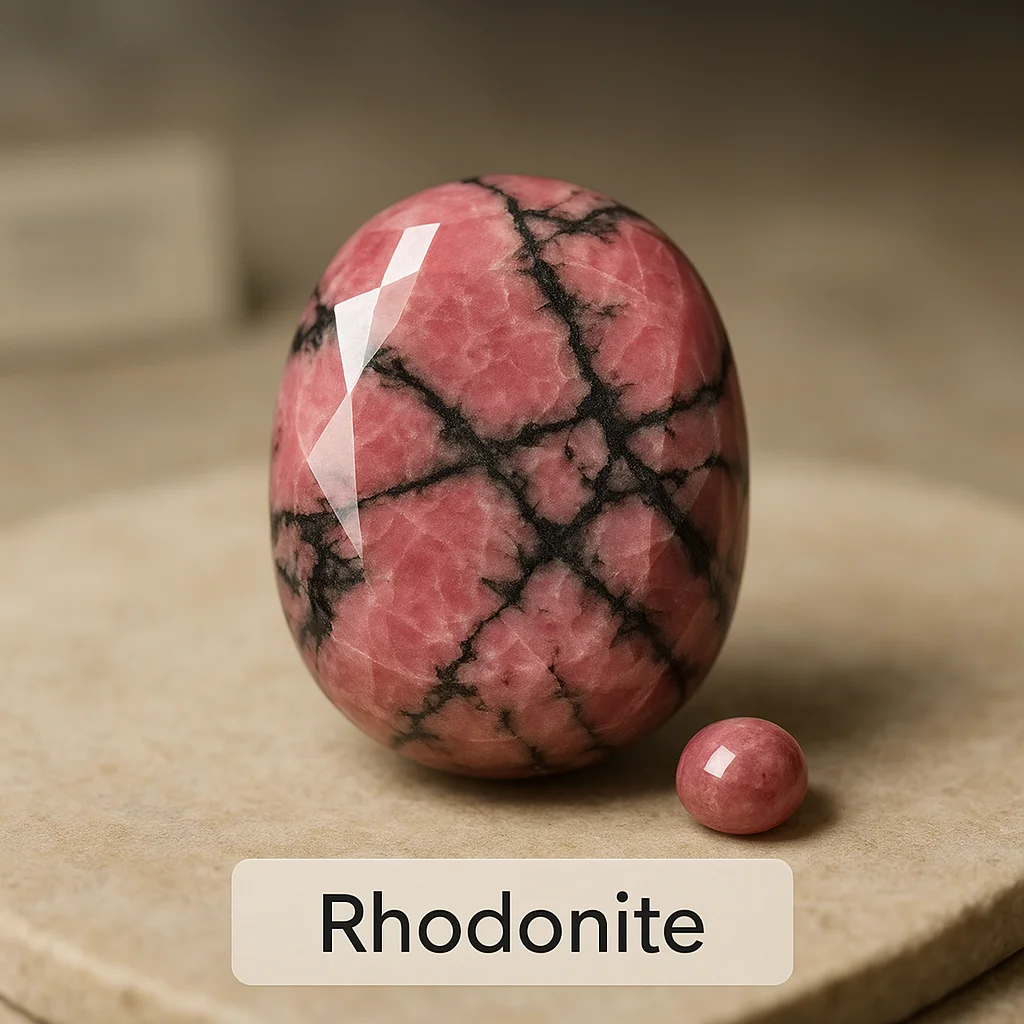
Rhodonite is a mineral known for its striking rose-pink color and occasional dark veining. It belongs to the pyroxenoid group of minerals. For beginners entering the world of gemstones, rhodonite stands out due to its unique appearance and approachable price range.
While not a traditional birthstone, rhodonite is a popular choice among jewelry enthusiasts and collectors who appreciate its visual appeal. In this article, you'll learn about its appearance, properties, origins, and practical considerations, including selection and care tips.
As you explore the characteristics of rhodonite, you'll gain insights into what makes this gemstone unique and desirable for different applications, both in jewelry and other decorative uses.
🌍 Where It Comes From
Rhodonite can typically be found in metamorphic rocks, which are formed under conditions of heat and pressure over extensive periods. These geologic settings facilitate the transformation of minerals, leading to the formation of rhodonite's distinct color and texture.
Notable sources of rhodonite include regions in Russia, Sweden, and Australia, though it can also be found in places like Brazil and the United States. Each location can produce rhodonite with varying colors and clarity, adding to its diversity.
The origin of rhodonite can impact its market reputation. For instance, Russian rhodonite is often prized for its deep color and minimal veining, which may appeal to collectors seeking high-quality specimens.
Although the geological setting plays a significant role in the formation of rhodonite, human factors such as extraction techniques and processing methods also influence its availability and appeal.
🔬 How It Forms
Rhodonite forms through metamorphic processes involving significant heat and pressure over geological time frames. This process typically transforms specific rock types, resulting in the unique crystalline structure and color that rhodonite is known for.
The rose-pink color of rhodonite is primarily due to the presence of manganese within its structure. This trace element contributes to the mineral's characteristic hue, distinguishing it from other similar minerals.
Commonly found as nodules or mass formations rather than individual crystals, rhodonite's habit often includes intricate veining patterns, which are a result of other mineral inclusions, adding to its visual intrigue.
🎨 Color and Look
Rhodonite is easily recognizable for its rose-pink to red color, often accompanied by black veining due to manganese oxide inclusions. Its appearance can vary, with some stones displaying more intense colors and distinct patterns.
The beauty of rhodonite is often enhanced by cutting and polishing processes that bring out its luster and distinctive patterns. Jewelers frequently use it for cabochons or beads, which highlight its opaque aesthetic.
Rhodonite is generally not subjected to color-enhancing treatments like dyeing or irradiation, preserving its natural appearance. However, the way it's cut and polished can dramatically affect its final look in jewelry pieces.
🧪 Properties That Matter
Rhodonite has a Mohs hardness of about 5.5 to 6, meaning it is relatively scratch-resistant, although not as hard as quartz. This hardness level makes rhodonite suitable for jewelry that isn't subject to heavy wear and tear.
While it possesses good toughness, care should be taken to avoid sharp impacts, as rhodonite can be prone to chipping. Its cleavage, or the way it breaks, can be irregular, so it's important to handle rhodonite pieces with care.
Rhodonite's luster ranges from vitreous to pearly, providing it with a gentle shine that complements its opaque nature. Its physical properties make it ideal for pendants and earrings, which experience less friction.
✨ Meanings, Birthstones, and Culture
Though not part of the traditional birthstone list, rhodonite is often associated with healing and love in cultural contexts. It is believed to encourage emotional balance and is favored for its symbol of kindness and compassion.
Rhodonite does not have universal zodiac associations, but its warm color and supposed heart-centered energy make it popular in certain metaphysical circles that explore crystals for emotional wellness.
In modern jewelry traditions, rhodonite is embraced for its unique color and patterns, making it a thoughtful choice for personalized jewelry pieces and gifts that express individuality and warmth.
🧼 Care and Cleaning
To preserve the beauty of rhodonite, clean it using mild soap and water, gently rubbing with a soft cloth. Avoid harsh chemicals or ultrasonic cleaners, which can damage the stone's surface.
Rhodonite should be kept away from extreme heat or sudden temperature changes as it may cause cracking. Prolonged soaking in water should also be avoided to maintain its natural integrity.
Store rhodonite jewelry separately from harder gemstones to avoid scratches. Keeping it in a soft pouch or lined box can help prevent surface damage and preserve its beauty over time.
🛒 Buying Tips and What to Check
When purchasing rhodonite, factors like color, pattern, and size will affect its value. Deep pink hues with minimal veining may command higher prices, while a balanced cut ensures the best visual appeal.
Ask sellers about the origin and any treatments the stone may have undergone. A lab report, while not always necessary for rhodonite, can offer additional assurance for high-value purchases.
For online purchases, ensure that the seller provides clear photographs, a satisfactory return policy, and detailed descriptions. A reputable seller will be willing to disclose all necessary information about the gemstone.
⚠️ Real vs Fake and Common Look-Alikes
Natural rhodonite can sometimes be confused with similarly colored stones like rhodochrosite and pink jade. Both appearance and physical properties can help differentiate these minerals.
While rhodonite is typically natural, synthetic versions are uncommon. Instead, watch for imitation stones made of glass or plastic, which may mimic the color but lack the characteristic features of genuine rhodonite.
Proper identification ideally involves professional gemological testing. Simple at-home tests may not reliably ascertain authenticity, making expert evaluation a valuable step for serious collectors.
❓ Common Questions and Misconceptions
Is it a mineral or a rock? Rhodonite is a mineral.
Is it a birthstone? No, rhodonite is not a traditional birthstone.
Will it scratch easily? It has moderate scratch resistance (Mohs hardness 5.5-6).
Can it go in water? Yes, but avoid prolonged soaking.
Does color fade in sunlight? Generally, it does not fade quickly in sunlight.
What treatments are common? Rhodonite is usually untreated.
Is lab-grown "fake"? Lab-grown stones are synthetic but not necessarily fake.
How do I store it safely? Store separately in a soft pouch or box.
Do inclusions always lower value? Not always; interesting veining can enhance its appeal.
How do I pick a good one for jewelry? Look for consistent color and appealing patterns.
📌 Summary
- Rhodonite is a mineral with a distinctive rose-pink color.
- It usually features black veining, contributing to its unique appearance.
- Formed under high heat and pressure in metamorphic rocks.
- Its Mohs hardness of 5.5-6 makes it moderately durable for jewelry.
- Typically untreated; natural color and veining are valued.
- Clean with gentle soap and water; store separately to prevent scratches.
- Ideal for pendants and earrings due to its soft nature.
- Can be confused with rhodochrosite and pink jade.
- Authenticity is best confirmed by professional testing.
- Inquire about origin and treatments when buying.
- Cultural associations include love and emotional balance.
- A memorable stone known for its beautiful pink hues and natural patterns.