💎 Smoky Quartz
🪨 What It Is
Smoky quartz is a stunning variety of quartz, distinguished by its transparent to translucent smoky brown to black color. It is considered both a semi-precious gemstone and a mineral, found in various locations worldwide. Many appreciate smoky quartz for its earthy tones and versatility in jewelry design.
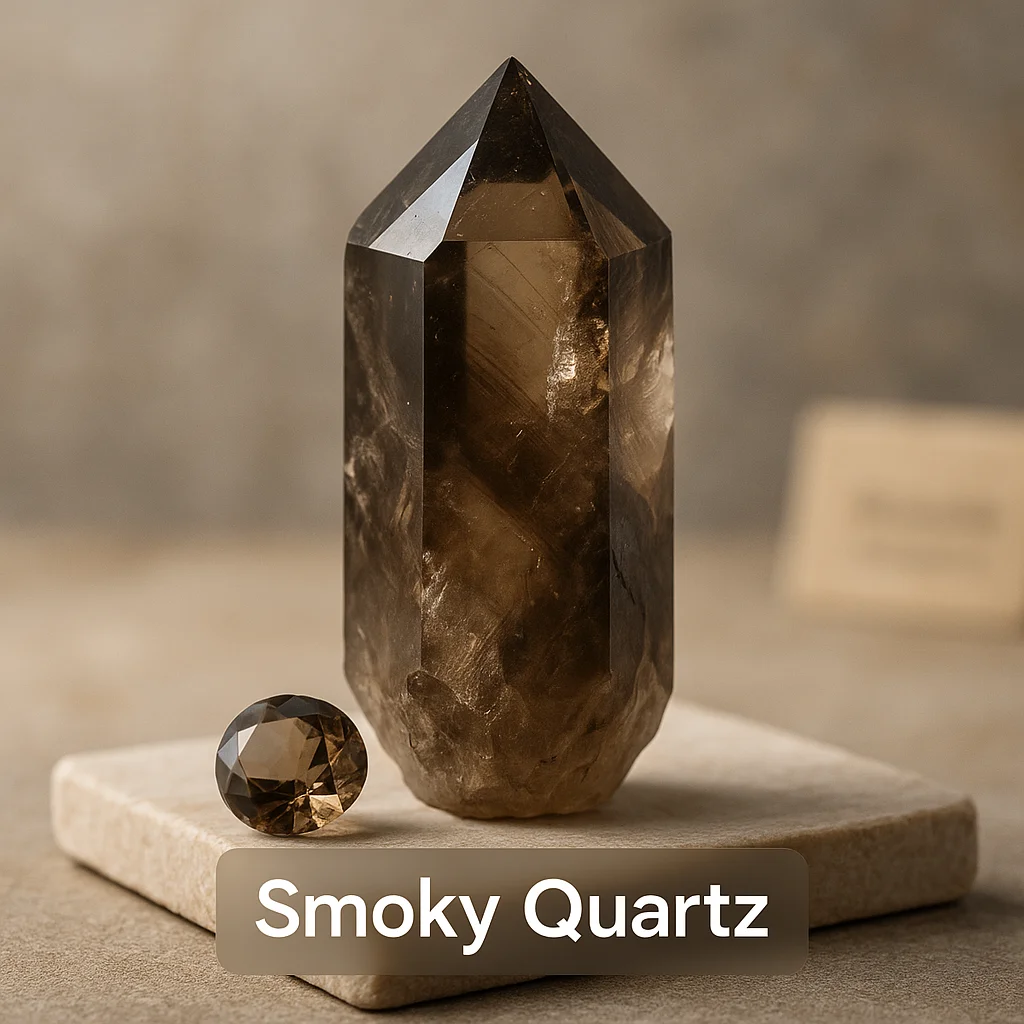
Quartz is one of the most abundant minerals on Earth. Smoky quartz, specifically, is a popular choice for jewelry, often used in rings, pendants, and earrings. Its natural beauty, paired with durability and affordability, makes it appealing to both collectors and those new to the world of gemstones.
This article will provide insights into the origin, appearance, properties, and cultural significance of smoky quartz. By the end, readers will have a clearer understanding of this intriguing gemstone and practical tips for purchasing and caring for it.
🌍 Where It Comes From
Smoky quartz occurs naturally in various geological settings, most commonly in igneous and metamorphic rocks. These environments offer the heat and pressure conducive to the formation of quartz crystals. As such, smoky quartz can be found in substantial quantities around areas with volcanic activity and mountainous regions.
Notable sources of smoky quartz include Brazil, Switzerland, and Madagascar. These regions often produce high-quality crystals that are favored in the gemstone market. The reputation of the origin can sometimes influence the perceived quality and value of the smoky quartz.
The geological processes that lead to the creation of smoky quartz vary slightly depending on location. However, the consistent quality from reputable sources ensures a steady supply of this beloved gemstone for jewelry and collectors.
🔬 How It Forms
Smoky quartz forms under the influence of natural radiation over millions of years. It begins as colorless quartz, and its smoky hue develops when the aluminum content in the crystal lattice undergoes changes due to radiation exposure. This exposure often results from nearby radioactive minerals.
Typically, smoky quartz crystals are found in hexagonal shapes, growing within cavities of igneous and metamorphic rocks. These formations allow for the growth of well-formed, transparent crystals ideally suited for gemstone use.
The color intensity of smoky quartz can vary significantly, from light grays to deep browns or almost black, depending on the level of radiation exposure and the aluminum content in the crystal structure.
🎨 Color and Look
The most common appearance of smoky quartz is a translucent to transparent smoky brown, although shades can range from pale tan to dark brown and nearly black. The best smoky quartz stones possess a uniform color without zoning or color banding, adding to their visual appeal.
Several factors influence the appearance of smoky quartz, including cutting and polishing. A well-cut stone can enhance its natural beauty, maximizing its light reflection and showing off its smoky color.
Treatments such as irradiation are occasionally used to deepen or enhance the color of smoky quartz. While this process can improve aesthetics, it's essential to ask sellers about any treatments when buying.
🧪 Properties That Matter
Understanding the physical properties of smoky quartz can help potential buyers assess its suitability for various jewelry applications. Smoky quartz has a Mohs hardness of 7, meaning it can resist scratches from most everyday materials. This makes it suitable for frequently worn items like rings or bracelets.
Despite its hardness, smoky quartz can be susceptible to chipping if struck with a sharp impact, as it has a conchoidal fracture pattern instead of perfect cleavage. This fracture type means it breaks in smooth curves rather than along flat planes.
Smoky quartz has a vitreous luster, giving it a glass-like appearance when polished. Its transparency varies, but most gemstones used in jewelry are clear enough to display its lovely, earthy hues to best effect.
✨ Meanings, Birthstones, and Culture
While smoky quartz does not hold a place as a traditional birthstone, it is steeped in cultural symbolism. Historically, it has been associated with protection, grounding, and balance. In various cultures, the stone is thought to shield against negative energies, though these beliefs are purely traditional.
Jewelry designers value smoky quartz for its neutral tones, which complement many different styles and colors. Its rich, earthy color palette makes it an ideal choice for creating versatile, wearable pieces for both casual and formal settings.
In modern times, smoky quartz has gained popularity as part of holistic and metaphysical practices, though scientific backing for these uses is not established.
🧼 Care and Cleaning
Proper care ensures that smoky quartz retains its beauty over time. Cleaning should be done with gentle soap and lukewarm water, using a soft cloth to remove dirt and oils. Avoid harsh chemicals or cleaners, as these may damage the stone.
Dramatic temperature changes can cause stress fractures in smoky quartz, so it is advisable to avoid exposing it to extreme heat. As with most gemstones, long soaking should be avoided to prevent potential damage.
To store smoky quartz safely, wrap it in a soft cloth or place it in a padded box to prevent scratches from other jewelry items. These precautions will help maintain its appearance and durability over time.
🛒 Buying Tips and What to Check
Several factors influence the price and quality of smoky quartz. The depth and uniformity of the color, the clarity, and the quality of the cut are vital considerations. Larger stones with no visible inclusions are often more valuable.
When purchasing smoky quartz, inquire about any treatments it may have undergone. Synthetic lab reports for high-value pieces can provide more information about origin and treatments, offering peace of mind for buyers.
If buying online, check the seller’s reputation and ensure that the product descriptions are accurate. Ensure a return policy is in place, and request several photos to get a true sense of the stone’s appearance.
⚠️ Real vs Fake and Common Look-Alikes
Understanding the differences between natural, synthetic, and imitation smoky quartz can be crucial for buyers. Natural smoky quartz is formed over millions of years, whereas synthetic counterparts are manufactured in laboratories. Lab-created stones can have similar physical and chemical properties to natural ones.
Imitations made of glass or plastic may resemble smoky quartz in color but will lack the durability and overall quality. Assembled stones, known as doublets or triplets, often consist of multiple layers, including a layer of real quartz, combined with other materials.
Common look-alikes include topaz and citrine, which can appear similar at first glance. Reliable identification typically requires professional testing, as many look-alikes can fool even experienced collectors without proper equipment.
❓ Common Questions and Misconceptions
Is it a mineral or a rock? Smoky quartz is a mineral variety of quartz.
Is it a birthstone? Smoky quartz is not a traditional birthstone but is valued for its cultural meanings.
Will it scratch easily? With a Mohs hardness of 7, it resists scratches from everyday wear.
Can it go in water? Brief exposure is fine, but avoid long soaking and use only mild detergent.
Does color fade in sunlight? Prolonged exposure may cause color fading, so store away from direct sunlight.
What treatments are common? Irradiation may enhance color; always ask for disclosure when buying.
Is lab-grown 'fake'? Lab-grown smoky quartz is real quartz but not naturally formed.
How do I store it safely? Store wrapped in a soft cloth to prevent scratching.
Do inclusions always lower value? Inclusions can affect clarity but may be tolerable in some styles.
How do I pick a good one for jewelry? Look for uniform color and consider the setting type based on daily wear needs.
📌 Summary
- Smoky quartz is a transparent to translucent variety of quartz.
- Typical colors range from light tan to nearly black.
- Forms through natural radiation affecting aluminum in quartz.
- Mohs hardness of 7 provides scratch resistance suitable for jewelry.
- Irradiation is a common enhancement treatment.
- Gentle soap and water cleaning is recommended; avoid harsh chemicals.
- Best used in jewelry like rings, pendants, and earrings.
- Common look-alikes include topaz and citrine.
- Authenticity confirmed through professional testing.
- Buyers should check color, clarity, and potential treatments.
- Not a traditional birthstone but rich in cultural symbolism.
- Memorable takeaway: Smoky quartz combines natural beauty with versatility and affordability.