💎 Sodalite
🪨 What It Is
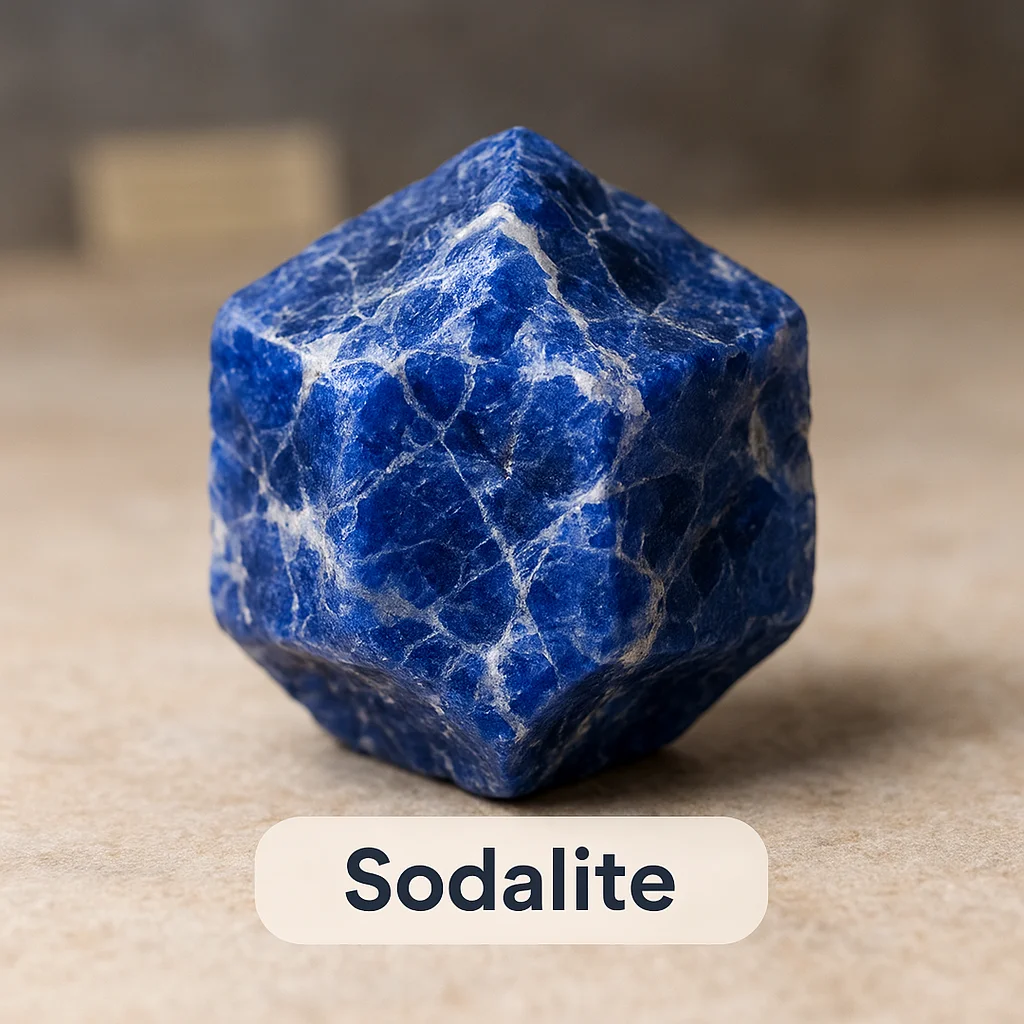
Sodalite is a mineral belonging to the feldspathoid group, composed mainly of sodium, alumina, and silica. It is known for its striking blue color, often interspersed with white calcite veining. This gemstone, while not typically used as a birthstone, is appreciated in the world of jewelry for its unique appearance and relatively affordable price point.
In this article, we'll dive into the fascinating world of sodalite, exploring its unique characteristics, including its origin, formation, and properties. We will also cover essential buying tips, care methods, and how to distinguish genuine sodalite from imitations or similar-looking stones.
As a beginner in the study of gemstones and minerals, you'll find this guide will help you appreciate the natural beauty and complexity of sodalite. Whether you are considering purchasing sodalite jewelry or simply wish to expand your knowledge of gemstones, this introduction will lay a solid foundation.
🌍 Where It Comes From
Sodalite typically forms in igneous rocks, particularly in alkaline environments. It is commonly found in regions with syenites and phonolites, which are igneous rocks rich in sodium. The mineral can also form in metamorphic rocks through the process of metasomatism, where the rock's original composition is altered by fluid interactions.
Significant deposits of sodalite are located in regions around the world, including Canada, Russia, and Brazil. It's noteworthy that the quality and appearance of sodalite can vary depending on its geographic origin. Some locations are renowned for their particularly vivid blue sodalite, which can influence market reputation and value.
The place of origin can sometimes play a role in the market value of sodalite. For instance, sodalite from certain areas may fetch higher prices due to perceived rarity or superior appearance. However, as with any gemstone, individual pieces should be evaluated based on their quality and desirability.
🔬 How It Forms
Sodalite forms under specific geological conditions. It typically occurs in an environment where two key components, sodium and alumina, are present along with low silica levels. The mineral crystallizes in the cubic system, often forming in massive aggregates rather than distinct crystals.
The formation of sodalite can also involve the presence of other minerals such as calcite, which contributes to the characteristic white veining in the otherwise blue stone. The presence of additional trace elements and minerals during the formation process can lead to the variation in color and pattern seen in sodalite specimens.
Sodalite's unique color is primarily due to the presence of trace amounts of sulfur or iron, which influence its vivid blue hue. Unlike some other blue gemstones, sodalite's color remains relatively stable, and its natural beauty can be enhanced by cutting and polishing.
🎨 Color and Look
Sodalite is best known for its rich blue color, which can range from light to dark shades. This blue is often speckled with white veining from intergrown calcite, adding to its distinct appearance. Occasionally, sodalite may occur in shades of gray, green, or even yellow, although blue is the most prized.
The overall appearance of sodalite can be significantly enhanced by how it is cut and polished. This process can bring out its natural beauty, highlighting both its color and veining. While sodalite is generally opaque, a high-quality polish can reveal a waxy to vitreous luster.
Treatments such as dyeing are sometimes used to enhance or alter the color of sodalite. While this is not considered standard practice, it is essential for buyers to be aware and inquire about any treatments that might affect the gemstone's appearance and value.
🧪 Properties That Matter
When it comes to practical properties, sodalite has a Mohs hardness of around 5.5 to 6. This means it is relatively softer compared to other gemstones like sapphire or diamond but still suitable for jewelry that doesn't endure significant wear, such as necklaces or earrings.
Sodalite exhibits poor cleavage, meaning it doesn't split smoothly, which makes it less prone to accidental chipping. Its toughness, however, is considered fair, so care should be taken to avoid knocks and drops that might cause damage.
Because of its inherent luster and opaque nature, sodalite works well in pieces where the emphasis is on color rather than brilliance. This makes it particularly popular in beads and cabochons rather than faceted cuts.
✨ Meanings, Birthstones, and Culture
Though not an official birthstone, sodalite has its place in cultural traditions and is often associated with the expression of truth and logic. It is popular in metaphysical circles for its purported ability to enhance communication and creativity.
Symbolically, sodalite is sometimes regarded as a stone of insight and mental clarity. These associations, while not scientifically proven, have made sodalite a meaningful choice for those who appreciate its cultural significance and beauty.
Modern jewelry trends often embrace the use of sodalite for its unique beauty and rich hues. It is a favorite for those seeking something other than the mainstream blue stones like sapphire or lapis lazuli, offering individuality and charm.
🧼 Care and Cleaning
Caring for sodalite involves gentle cleaning practices to preserve its natural beauty. It is best cleaned with mild soap and water, using a soft cloth or brush. Harsh chemicals and ultrasonic cleaners should be avoided as they can damage the stone.
Sodalite should be kept away from heat and sudden temperature changes, which can cause it to crack. It is also prudent to avoid prolonged soaking and to thoroughly dry the stone after cleaning to prevent any potential damage.
For storage, sodalite should be kept separate from harder gemstones to prevent scratches. Individually wrapping pieces in soft cloth or placing them in a padded compartment of a jewelry box are ideal methods for keeping sodalite safe.
🛒 Buying Tips and What to Check
When purchasing sodalite, knowledgeable buyers look for vivid color, pronounced veining, and a high-quality polish. While size and weight also contribute to the value, the evenness of color saturations and the skill of the cut are significant determinants.
Always inquire about any treatments, such as dyeing, and ask for a gemological report for higher-value pieces. Such reports can confirm the gemstone's authenticity but may not necessarily comment on treatments unless specifically tested for.
When buying sodalite online, ensure that the seller provides high-quality photos that accurately depict the item. Check the return policy and ensure the seller has a solid reputation with clear disclosure of any stone enhancements or treatments.
⚠️ Real vs Fake and Common Look-Alikes
Distinguishing real sodalite from synthetic or imitation products can be challenging without professional gemological tools. However, knowing some common look-alikes, such as lapis lazuli or dyed howlite, can help in making a preliminary assessment.
Synthetic sodalite, though less common, is lab-grown and shares the same properties as natural sodalite. Imitations, on the other hand, might include dyed glass or plastic, which lack the same mineral composition.
Professional testing is the most reliable method to confirm the authenticity of a sodalite gemstone, as home tests can be inaccurate and may damage the stone.
❓ Common Questions and Misconceptions
Is it a mineral or a rock? Sodalite is a mineral.
Is it a birthstone? No, sodalite is not traditionally recognized as a birthstone.
Will it scratch easily? With a Mohs hardness of 5.5–6, it can scratch easier than many other gemstones.
Can it go in water? Yes, brief contact is fine, but soaking should be avoided.
Does color fade in sunlight? Generally, the color remains stable, but long exposure is not recommended.
What treatments are common? Dyeing is sometimes used to alter or enhance color.
Is lab-grown 'fake'? Lab-grown sodalite is not fake; it is chemically identical to natural sodalite.
How do I store it safely? Keep it in a soft pouch or compartment away from harder stones.
Do inclusions always lower value? Not necessarily; distinctive veining is a valued characteristic in sodalite.
How do I pick a good one for jewelry? Look for even color, attractive veining, and a good polish.
📌 Summary
- Sodalite is a blue mineral valued for its striking appearance.
- Typical colors are rich blue with white veining, influenced by calcite.
- Forms in igneous rocks, often associated with syenite and phonolite.
- Mohs hardness is 5.5–6, suitable for low-wear jewelry pieces.
- Common treatments include dyeing to enhance or alter color.
- Clean with mild soap and water; avoid harsh chemicals and heat.
- Ideal for necklaces, earrings, and decorative items.
- Lapis lazuli and dyed howlite are common look-alikes.
- Authenticity is best confirmed through professional testing.
- When buying, check for color, polish, treat disclosures, and seller reputation.
- Although not a birthstone, it is culturally valued for its symbolism.
- Takeaway: Sodalite offers elegance and unique beauty as an accessible choice in gemstone collecting.