💎 Spinel Crystal
🪨 What It Is
Spinel is a mineral that belongs to the group of gemstones. These charming crystals are cherished for their striking range of colors and outstanding brilliance. Often found in a variety of hues, Spinel is a favorite among gemstone enthusiasts and jewelers alike.
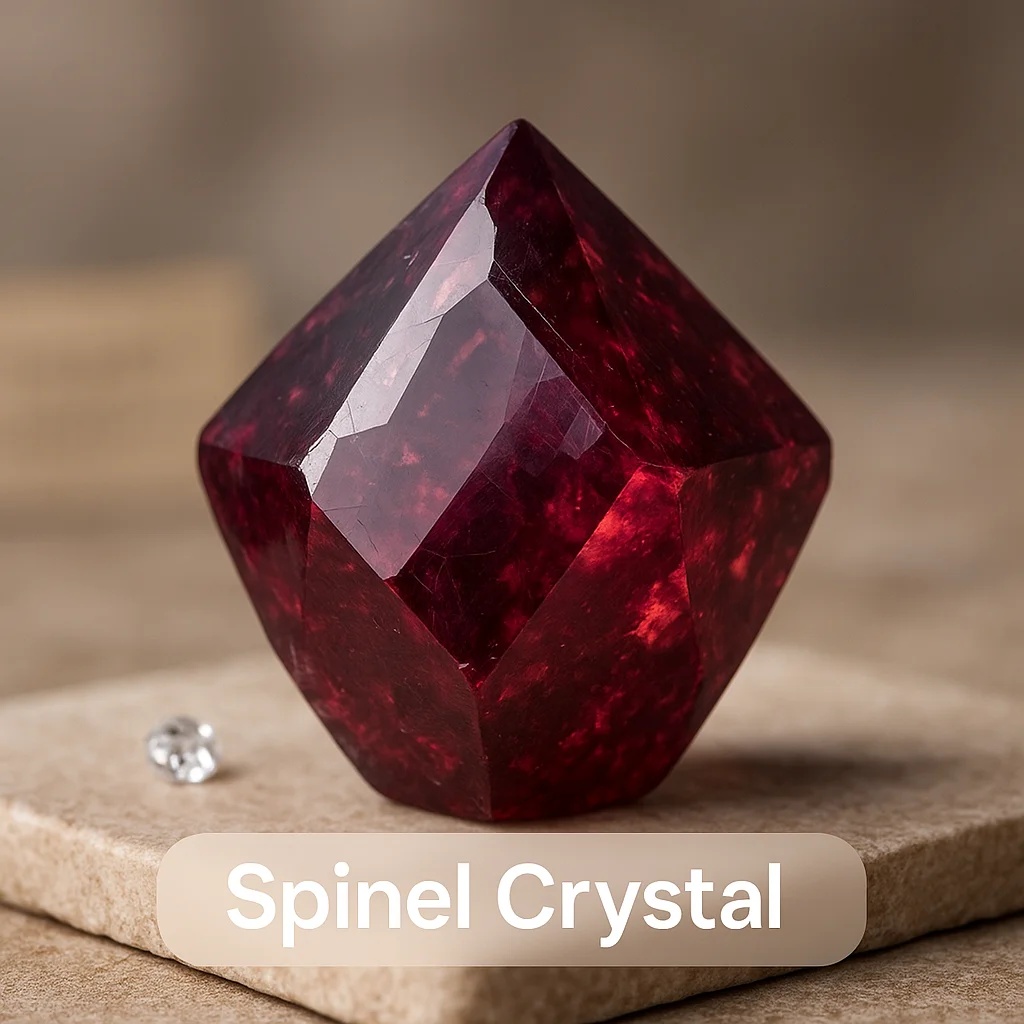
It is important to note that Spinel has been historically confused with other gemstones such as ruby and sapphire. This confusion arose because Spinel can be found in colors similar to those of these well-known stones while also sharing some comparable properties.
This article will walk you through Spinel's various facets, including its vibrant appearance and essential properties. You'll also gain insights into its origin, formation, care tips, and pointers on what to look out for when buying Spinel.
🌍 Where It Comes From
Spinel is typically found in metamorphic rocks and alluvial deposits where it forms through the metamorphism of limestones and dolomites. These natural processes enable it to develop over millions of years. The presence of Spinel is usually a sign of aluminum-rich environments.
Some of the most notable producing regions of Spinel include parts of Southeast Asia, such as Myanmar and Sri Lanka, as well as locations in Africa and the Middle East. Each region can impart subtle differences in the color and clarity of the crystal, which can, in turn, influence its value and desirability.
For prospective buyers and collectors, understanding the origin of a Spinel crystal can offer valuable insights into its quality and reputation. While origin alone doesn't determine overall value, it can be a significant factor in evaluating the market worth of a piece.
🔬 How It Forms
Spinel forms under conditions involving high heat and pressure, typically penetrating host rocks within the earth's crust. The formation process involves metamorphism, in which limestone and dolomite transform under these extreme conditions to yield Spinel and other minerals.
The vivid colors of Spinel are influenced by the presence of trace elements during its formation. For example, red Spinel usually contains chromium, while the addition of iron leads to blue or violet hues. The mineral crystallizes into an isometric system, contributing to its well-formed octahedral crystal habit.
In some cases, hydrothermal activity may also contribute to the formation of Spinel, adding additional variety to its appearance depending on the geological conditions at play.
🎨 Color and Look
Spinel is celebrated for its dazzling color palette, ranging from bright red and cobalt blue to softer pinks, purples, and even black. The stone's ability to refract light with extraordinary brilliance makes it highly sought after for jewelry.
The color of Spinel is typically even throughout the stone, allowing it to be cut into striking gems with remarkable clarity. Light and angle can influence the perceived color due to Spinel's high refractive index, enhancing its visual appeal.
While natural Spinel is often left untreated, some forms may undergo treatments to improve color or clarity. However, these treatments should be disclosed during purchase as they can influence a stone's perceived value.
🧪 Properties That Matter
Spinel has a Mohs hardness of approximately 8, which makes it relatively resistant to scratching and ideal for use in a variety of jewelry types. This hardness level also makes Spinel durable enough for daily wear as a ring or pendant.
It's worth noting that Spinel exhibits excellent toughness, which refers to its ability to resist chipping and breaking. Unlike some other stones, Spinel does not have cleavage, meaning it will not split easily along specific planes.
In terms of luster, Spinel is often described as having a vitreous or glass-like appearance. Its transparent nature further enhances its brilliance and clarity, displaying well even with slight inclusions.
✨ Meanings, Birthstones, and Culture
Throughout history, Spinel has been traditionally associated with healing and rejuvenation. However, these associations are more rooted in folklore and cultural symbolism rather than proven scientific effects.
Spinel is not officially recognized as a birthstone, but it enjoys popularity as a mystical stone believed to encourage passion and vitality. In modern jewelry traditions, its dazzling color options and excellent durability make it a favorite for both casual and fine jewelry pieces.
When considering the cultural aspects of Spinel, it's valuable to appreciate its historical prestige. Once mistaken for rarer stones, Spinel was treasured by royalty and continues to carry that aura of opulence.
🧼 Care and Cleaning
To maintain the beauty of Spinel, simple care guidelines should be followed. Spinel can be safely cleaned with mild soap and warm water, using a soft cloth to gently remove dust and dirt. Avoid using harsh chemicals or ultrasonic cleaners, which could potentially damage the stone.
It is advisable to store Spinel gems individually wrapped or in separate compartments to prevent them from scratching other softer stones or being scratched by harder materials. Always ensure jewelry pieces are dry before storing to prevent any moisture-related damage.
Given its good balance of hardness and toughness, Spinel doesn't require excessive caution; however, avoiding extreme temperatures and harsh impacts will help preserve its beauty.
🛒 Buying Tips and What to Check
The quality and price of Spinel are generally influenced by factors like color, clarity, cut, and carat weight. Rich, saturated colors, such as vivid red or cobalt blue, are typically valued higher. A well-executed cut will enhance the natural luster and display physical attributes like color and clarity attractively.
Potential buyers should inquire whether the stone has undergone any treatments, as this can affect its value. Asking for a gemological report from a trusted lab can confirm the stone's identity, whether it's natural or synthetic, and any treatments applied.
For online purchases, request clear photos and ensure a solid return policy is in place. Always buy from reputable sellers who offer transparency regarding the stone’s specifications and authenticity.
⚠️ Real vs Fake and Common Look-Alikes
Spinel naturally occurs in the earth but is also produced synthetically in laboratories. Lab-grown Spinel possesses the same chemical composition as natural Spinel and is not considered "fake," although it typically holds a different market value.
Imitation Spinels, often made of glass or plastic, differ significantly in physical properties such as hardness and luster. Assembled stones like doublets may contain layers bonded together to mimic Spinel's appearance.
For accurate identification, it's essential to seek professional gemological testing. Avoid attempting to determine authenticity through unverified home tests which may be unreliable or damaging.
❓ Common Questions and Misconceptions
Is it a mineral or a rock? Spinel is a mineral.
Is it a birthstone? Spinel is not officially a birthstone, but it's often valued in jewelry.
Will it scratch easily? With a Mohs hardness of 8, it's resistant to scratching.
Can it go in water? Yes, but avoid prolonged immersion or rapid temperature changes.
Does color fade in sunlight? Spinel is stable and generally resistant to fading.
What treatments are common? Treatments are rare, but any should be disclosed.
Is lab-grown 'fake'? Lab-grown Spinel is genuine but synthetic, with the same properties as natural.
How do I store it safely? Separately wrap or store to avoid scratches.
Do inclusions always lower value? Not always; they can be minor and not affect overall appearance.
How do I pick a good one for jewelry? Look for vibrant color, good clarity, and a quality cut.
📌 Summary
- Spinel is a mineral gemstone with a wide range of colors.
- Typical colors include red, blue, pink, purple, and black.
- Forms in high-pressure, heat environments during metamorphism.
- Features a Mohs hardness of 8, suitable for various jewelry.
- Generally untreated, but treatments should be disclosed if present.
- Clean with mild soap, water, and a soft cloth.
- Excellent for rings, pendants, and earrings due to durability.
- Common look-alikes include ruby, sapphire, and glass imitations.
- Authenticity confirmed by lab testing; avoid unverified methods.
- Buying comes with considering color, clarity, cut, carat, and origin.
- Although not a birthstone, Spinel has historical and cultural value.
- A striking gemstone often confused with more famous stones but distinguished by its vibrant range and durability.