💎 Tourmaline Black Schorl
🪨 What It Is
Tourmaline Black Schorl is a fascinating mineral variety from the broader family of tourmalines. It stands out for its intense black color, offering a striking appearance. Tourmaline itself is a group of minerals with similar physical properties but differing chemical compositions. Schorl, the black variety, is particularly popular for those interested in gemstones for jewelry and collections.
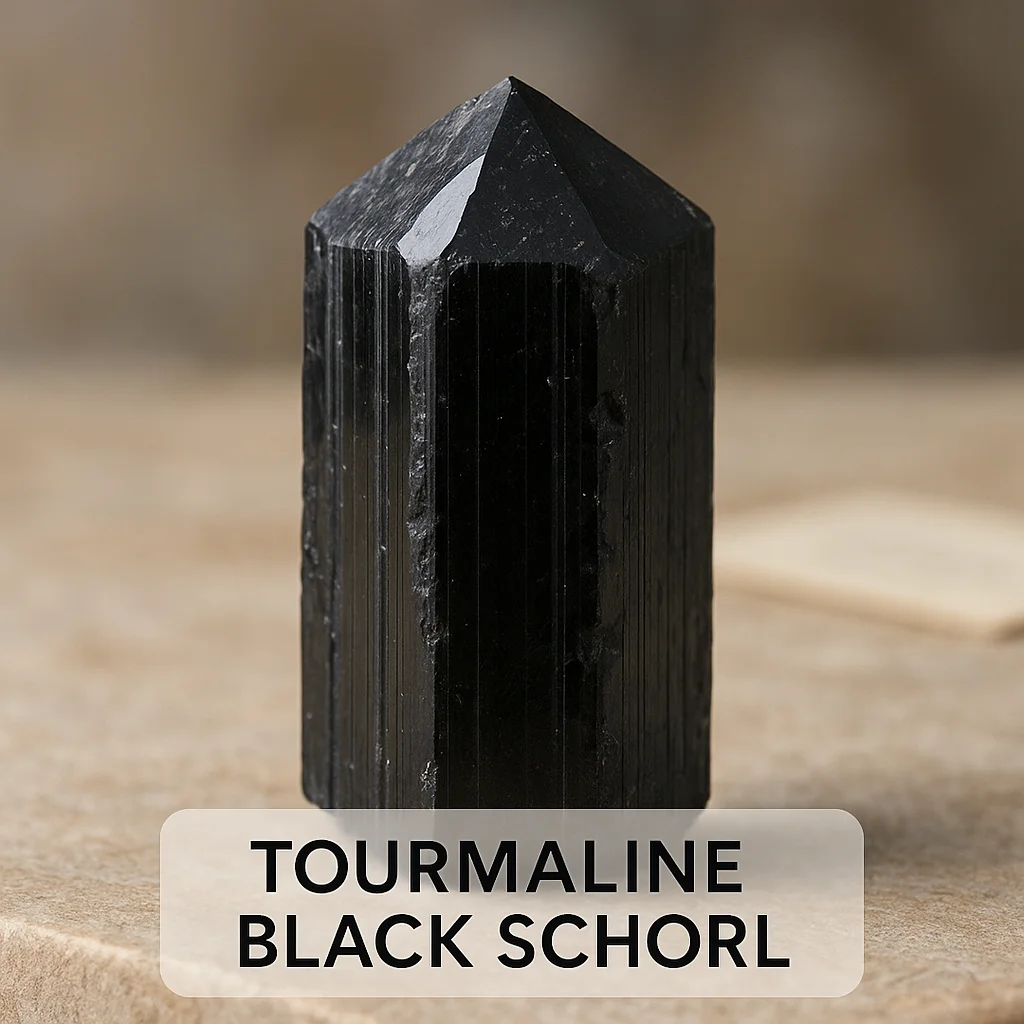
This mineral is not an official birthstone, but it is widely accepted in the gemstone community for its unique aesthetic and cultural significance. Many people appreciate schorl for its dense, opaque appearance and its role in jewelry design, from rings to pendants.
In this guide, you'll learn about Tourmaline Black Schorl's appearance, properties, origin, value, care, and tips for buying. By understanding these details, you will appreciate why this mineral is a special addition to any collection.
🌍 Where It Comes From
Black Schorl tourmaline is typically found in metamorphic environments, where heat and pressure change existing rocks into new forms. It can also occur in igneous settings, where solidified magma produces crystals, making it versatile in its geologic formation.
This mineral is mined in various regions around the world. Notably, it is sourced from parts of Africa, including Namibia and Mozambique, as well as Brazil and the United States. The geographic origin influences the quality and characteristics of the schorl, impacting attributes like color intensity and clarity.
While the origin doesn't necessarily alter the mineral's value drastically, certain sources like Brazilian and African Schorl are popular due to their consistent quality. Collectors and jewelers often seek out these sources for their reliable properties.
🔬 How It Forms
Schorl forms when mineral-rich fluids interact with heat and pressure over time. These fluids typically contain elements like iron, which gives black schorl its characteristic color. The iron component is essential in the chemistry of black tourmaline, distinguishing it from other varieties.
The mineral usually crystallizes in needle-like or columnar formations, although it can also appear as dense masses. This crystal habit contributes to its unique look, favored in both raw form and polished jewelry pieces.
The formation of schorl can take millions of years, as natural processes gradually build up the mineral structure. It is this lengthy formation time that adds to the mystique and allure of the stone in both commercial and collector markets.
🎨 Color and Look
Tourmaline Black Schorl is renowned for its deep, opaque black color. The intensity of the black can sometimes display subtle hints of dark green or blue, adding depth to the stone’s appearance. This color is consistent throughout the mineral, giving it a uniform appearance that's prized in jewelry making.
The appearance of schorl is smooth and glassy when polished, with a vitreous luster. This quality makes it a popular choice for polished stones in rings and pendants, where its vibrant blackness can be showcased against metals like silver or gold.
Schorl doesn't typically undergo treatments to alter its color or clarity, ensuring that what you see is natural. Unlike some other gemstones, heating or dyeing is rarely needed for schorl, keeping its natural beauty intact.
🧪 Properties That Matter
The Mohs hardness of Tourmaline Black Schorl is typically around 7, which means it is fairly scratch-resistant. This hardness level makes it suitable for everyday jewelry, such as rings and bracelets.
When it comes to toughness, schorl is considered resilient, though it can chip if struck with great force. It generally breaks with a conchoidal to uneven fracture, characteristic of many tourmalines.
Schorl has no significant cleavage, meaning it doesn’t split in predictable ways, which is advantageous for durability. Its vitreous luster enhances its polished appearance, providing a glossy sheen that catches the eye.
✨ Meanings, Birthstones, and Culture
Traditionally, black tourmaline has been associated with protection and grounding, though these associations are cultural rather than scientific. While not an official birthstone, it is often selected for personal reasons relating to these symbolic qualities.
In some cultures, it is believed to have protective benefits, though such claims are not supported by scientific evidence. Its deep color and historical use have embedded it in various myths and traditions worldwide.
In modern jewelry, Tourmaline Black Schorl remains popular for its aesthetic appeal. It is frequently seen in unisex designs, adding a bold, dramatic touch to any piece.
🧼 Care and Cleaning
Caring for your Tourmaline Black Schorl involves using gentle methods. Clean it with mild soap and water and a soft cloth to maintain its luster without risking damage. Avoid harsh chemicals that might dull or harm the surface.
Be cautious not to expose schorl to sudden temperature changes, as rapid heating and cooling can lead to fractures. Long soaking should also be avoided to prevent potential damage.
For storage, keep schorl separate from harder gemstones to avoid scratches. A soft pouch or a separate compartment in a jewelry box is ideal for maintaining its pristine condition.
🛒 Buying Tips and What to Check
When purchasing Tourmaline Black Schorl, factors like color, clarity, and cut influence its price. Although black schorl is often consistent in color, clarity can vary. Look for stones with minimal visible inclusions.
Always ask about any treatments that the stone may have undergone, even if schorl is usually untreated. If buying high-value stones, request a credible gemological report to confirm authenticity.
When buying online, check for clear photos from multiple angles, understand the return policy, and ensure the seller discloses any treatments or enhancements. Reputation is key; prefer sellers with positive reviews and reliable credentials.
⚠️ Real vs Fake and Common Look-Alikes
Understanding the difference between natural, synthetic, and imitation schorl is crucial. Natural schorl is mined and untreated, whereas synthetic versions are lab-grown to mimic the natural stone. Imitations may include glass or plastic replicas that look similar from afar.
Tourmaline Black Schorl can sometimes be mistaken for other black stones like onyx or obsidian. Professional testing is necessary for accurate identification, as it's not feasible to determine authenticity conclusively at home.
Doublets or triplets, stones made by assembling different layers, can also confuse buyers. Always seek professional guidance and verification when authenticity is in question.
❓ Common Questions and Misconceptions
Is it a mineral or a rock? Tourmaline Black Schorl is a mineral.
Is it a birthstone? No, it is not an official birthstone.
Will it scratch easily? With a Mohs hardness of 7, it is quite resistant to scratching.
Can it go in water? Yes, but avoid prolonged soaking to maintain integrity.
Does color fade in sunlight? No, schorl's color is stable under sunlight.
What treatments are common? Schorl is generally untreated; most are as found in nature.
Is lab-grown 'fake'? Lab-grown stones are real but created in a controlled environment.
How do I store it safely? Store in a soft pouch or separate compartment to avoid scratches.
Do inclusions always lower value? Not always; visible inclusions can affect clarity but not always value.
How do I pick a good one for jewelry? Look for uniform color, good luster, and minimal visible inclusions.
📌 Summary
- Tourmaline Black Schorl is a mineral variety known for its deep black color.
- Typical colors include intense black, sometimes with hints of green or blue.
- Formed through mineral-rich fluids, heat, and pressure over time.
- Mohs hardness of 7 makes it scratch-resistant.
- Schorl is usually untreated, maintaining its natural beauty.
- Clean with gentle soap and water; avoid harsh chemicals.
- Ideal for rings, pendants, and other jewelry.
- Common look-alikes include onyx and obsidian.
- Authenticity confirmed through professional testing.
- Buying checklist: color, clarity, reputable seller, return policy.
- Often chosen for personal symbolism, though not an official birthstone.
- Memorable for its intense black color and durability.