💎 Birthstone Gifts That Don’t Look Cheap: A Practical Guide
🧭 The 60-Second Take
Shopping online for a birthstone gift can be daunting, especially when every photograph seems perfect. All gemstones look sparkling and vivid under carefully controlled lighting, making it difficult to distinguish a true gem from a clever imitation. Certificates and ratings systems can add layers of confusion with technical terms and numbers.
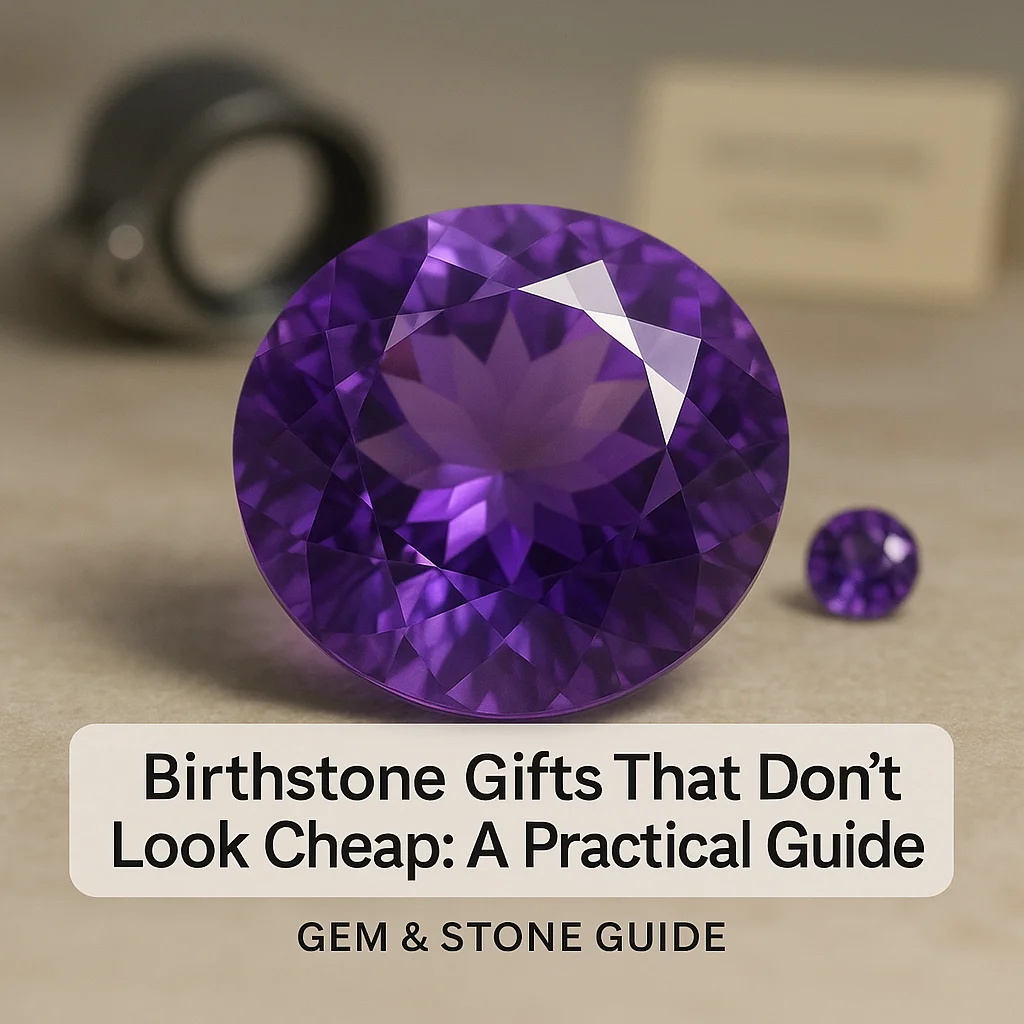
The reality is, even an experienced buyer can feel overwhelmed by the variety of choices and the fear of making a wrong purchase. Knowing where to start and what to prioritize can help prevent common pitfalls. Here’s the checklist I use to make confident gemstone purchases:
- Look for reputable sellers with established reviews.
- Request detailed images from different angles.
- Compare advertised gem specifications with a trusted source.
- Always verify the return policy.
- Ask about any treatments or enhancements.
- Check if a lab report is available for higher-value gems.
- Evaluate the lighting conditions in which photos were taken.
- If price is suspiciously low, proceed with caution.
🧪 What Actually Makes It “Real”
Understanding the difference between natural, lab-grown, imitation, and assembled stones is crucial. A natural gemstone is formed by geological processes, while lab-grown stones have the same physical properties but are created by humans. Imitations mimic the appearance but lack comparable qualities, and assembled stones, like doublets and triplets, are crafted from multiple materials.
Photos, price, and paperwork can give some indication of a gemstone's authenticity, but they are not foolproof. Photos can be edited, prices manipulated, and paperwork at times misleading. Authenticity certificates should be looked at critically and ideally verified through independent reputable labs.
🔍 My Buyer Checklist (Step by Step)
- Identify the gemstone type and compare it with reputable sources. If the type is specific, verify with expert databases.
- Check the seller's return policy. If it's lenient, evaluate the gem at home, if not consider another vendor.
- Ask about treatments. If common for that gemstone, decide if this affects your purchase.
- Evaluate price in the context of the market. If it's too good to be true, it likely is.
- Inspect gem photos critically. If lighting feels artificial or edited, request additional images.
- Consider the gem’s cut and ask for close-up images. If not provided, be cautious.
- Seek a certificate from a reputed gem lab. If provided, verify the lab’s credentials.
- Ask about the gem's origins. If undisclosed or vague, proceed carefully.
- Verify the stone’s carat weight and dimensions.
- Confirm that payment methods are secure.
- Check if the gemstone is accompanied by any form of warranty.
- Read previous buyer reviews and feedback for insights.
This checklist helps you make informed decisions without being overwhelmed. Use it as a balancing tool—to empower but not paralyze your purchasing decision.
⚠️ Mistakes People Make (And the Fix)
- Mistake: Buying based solely on online images. Correction: Always request additional images and details.
- Mistake: Ignoring the return policy. Correction: Always ensure there is a return option.
- Mistake: Believing “too perfect” stones are the ideal. Correction: Real gemstones usually have minor inclusions.
- Mistake: Trusting only the seller’s certificate. Correction: Cross-check with a third-party lab certificate.
- Mistake: Overlooking lighting conditions in photos. Correction: Verify with diverse lighting images.
- Mistake: Not asking about treatments. Correction: Directly ask the seller about any treatments.
- Mistake: Assuming expensive always means better quality. Correction: Quality and authenticity are key, not just price.
- Mistake: Forgetting about packaging for shipping. Correction: Confirm secure packaging to prevent damage.
- Mistake: Bypassing research on seller's reputation. Correction: Prioritize vendors with verified feedback.
- Mistake: Ignoring reviews on service quality. Correction: Read reviews for insights on seller reliability.
🎨 Look & Red Flags That Matter
The appearance of a gemstone can be greatly influenced by its cut, polish, and internal inclusions. These factors play a significant role in how the gem reflects light. Always look for even polish, and avoid stones that are overly pristine at low costs, indicating they might be synthetic or treated.
Common treatments in the market like dyeing, surface coating, and fracture filling can alter a gem's visual appeal but may reduce its longevity. This is especially important when selecting birthstones like emeralds or opals that might be treated to enhance appearance. Be aware of these possibilities and confirm specifics before purchase.
🧼 Care & Storage (Safe Defaults)
- Do use mild soap and water for cleaning.
- Do dry with a soft cloth to avoid scratches.
- Don’t expose stones to harsh chemicals or cleaners.
- Do store gemstones away from direct sunlight.
- Don’t store multiple gemstones together to prevent scratching.
- Do check regularly for signs of wear and tear.
- Do keep porous stones like opal and turquoise moisturized.
- Don’t use ultrasonic cleaners on soft stones like pearls and opals.
- Do keep treated stones away from extreme temperature changes.
- Don’t expose dyed stones to long periods in water.
- Do take extra care with surface-coated stones.
- Do consider professional cleaning for high-value pieces.
🧾 What Certificates Can (and Can’t) Prove
Certificates from esteemed labs can affirm a gemstone's identity, detailed characteristics, and if any treatments were applied. Labs generally report on clarity, color, carat weight, and origin if determinable. Such documentation is invaluable for higher-value purchases.
Sellers, however, may exaggerate features in their descriptions and might issue certificates from less recognized labs, creating a false sense of security. It's essential to authenticate any certificate against trusted industry standards.
A report is worth the investment if the stone's value is significant or if it brings peace of mind. More so, it helps in understanding the complete narrative of the stone you intend to gift.
❓ Quick Questions Buyers Ask
Q: Can I trust online images of gemstones?
A: Use images as a guide but request more angles and lighting conditions.
Q: Are lab-grown stones worth considering?
A: Yes, they offer similar properties to natural stones at a lower cost.
Q: How do I identify treated stones?
A: Ask the seller and verify through a reputable gemological lab if unsure.
Q: Do all stones need certificates?
A: Not all, but certificates add value for significant purchases.
Q: Is a high price always an indicator of quality?
A: Not necessarily. Quality is informed by various factors, including sourcing and treatment.
Q: How can I check a certificate’s authenticity?
A: Contact the certifying lab directly with certificate details.
Q: Should I insure my birthstone jewelry?
A: Consider insurance for high-value or sentimental pieces.
Q: Are certain birthstones more durable?
A: Yes, stones like sapphires and diamonds are highly durable.
📌 If You Only Remember 5 Things
- Always research both the stone and the seller.
- Request comprehensive photos in various lighting.
- Clarify if the stone is treated and ask for details.
- Verify certificates with trusted labs when necessary.
- Understand that real stones possess natural inclusions.