💎 Real vs Fake Turquoise: The Quick Eye-Test + Smell-Test Debate
🧭 The 60-Second Take
Picture this: you just stumbled across a stunning piece of turquoise jewelry in an online store, complete with a convincing "authenticity certificate." But how do you know if it's real? The photos look promising, but lighting tricks can deceive even the most visual of shoppers.
Perhaps the price seems too good to be true, and the seller boasts a slew of positive reviews. Yet, doubts linger as you consider if the turquoise has been treated or is merely an imitation. A savvy buyer can’t help but question, “How reliable is this purchase without seeing it face-to-face?”
For those unsure about turquoise authenticity, here's a concise checklist to guide you:
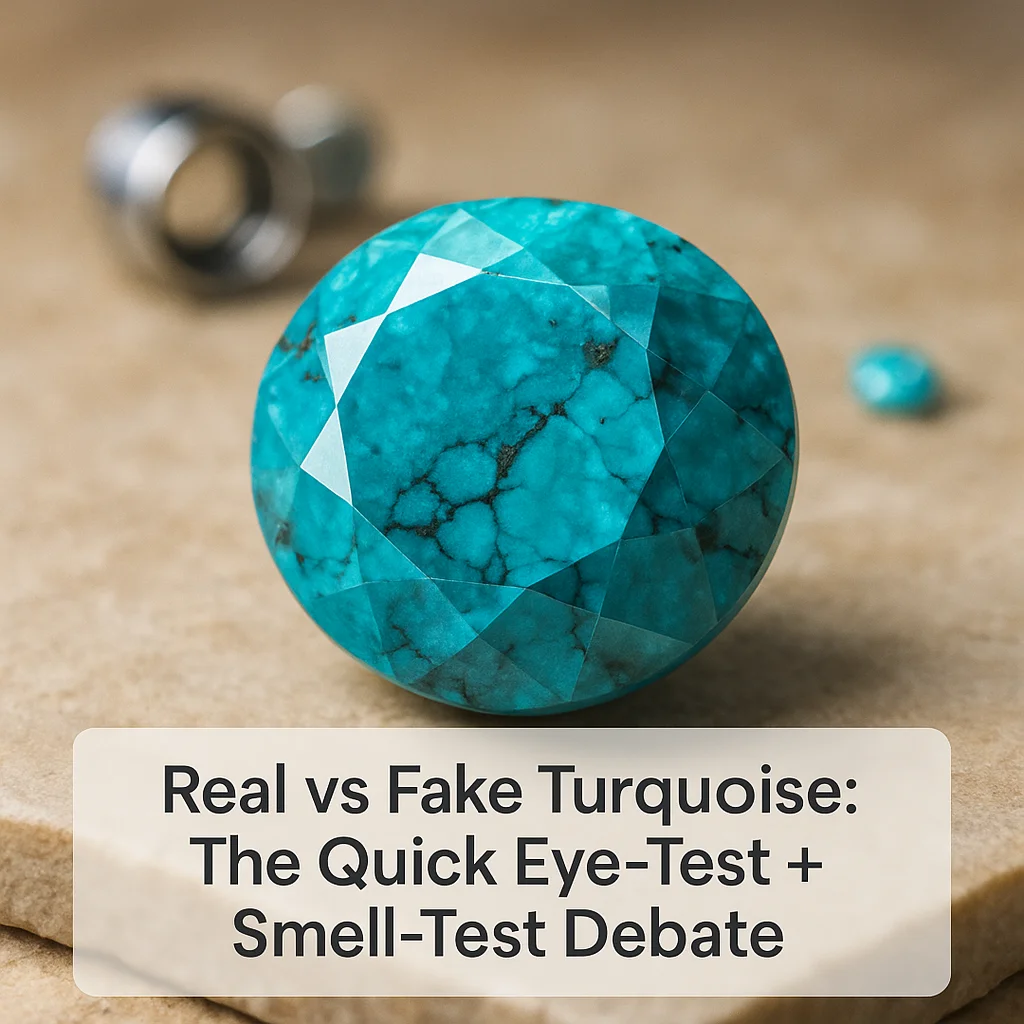
- Inspect for irregularities in color; natural turquoise is never too perfect.
- Look for matrix patterns typical to genuine turquoise.
- Smell it: genuine turquoise has no odor.
- Consider the price; prices that seem too low may indicate imitation.
- Consult a gemologist for high-value items.
- Check the return policy before purchasing.
- Ask for high-quality certification from reputable labs.
- Investigate the seller’s reputation and customer feedback.
🧪 What Actually Makes It “Real”
The question of what “real” turquoise means can be somewhat complex. Natural turquoise is mined from the earth, and its beauty lies in its natural imperfections. It may have inclusions or a matrix that indicates it’s the real deal. Lab-grown turquoise, while chemically similar, is less expensive and more uniform in appearance.
Imitation turquoise, often plastic or dyed howlite, lacks the physical properties of real turquoise and is widely available at a fraction of the cost. Assembled stones, like doublets or triplets, combine a thin layer of genuine stone with cheaper backing materials, affecting value and authenticity.
Photos alone may not reveal these differences, and a "certificate" can often be misleading. While it provides some assurance, it’s no substitute for a trained eye or professional analysis.
🔍 My Buyer Checklist (Step by Step)
- Examine the color: if it's overly uniform, question authenticity.
- Feel the texture: rough or gritty textures often indicate authenticity.
- Check for a matrix pattern: look for dark lines and patterns of minerals.
- If unsure, conduct a smell test: genuine turquoise should be odorless.
- Consider price versus appearance: surprisingly low prices warrant skepticism.
- If a certificate is provided, verify the issuing authority.
- Place the stone in direct sunlight; authentic turquoise should retain vividness.
- Weigh the stone in hand: lighter stones can indicate imitation materials.
- Consider purchasing from sellers offering a return policy.
- Consult an experienced jeweler if stakes are high.
- Look for consistent reviews of the seller from different buyers.
- Trust your instincts; if something feels off, reconsider your purchase.
This checklist is a tool, not a fail-safe. Use it to inform your purchase and reduce anxiety, but remember that verifying authenticity usually requires expert consultation.
⚠️ Mistakes People Make (And the Fix)
- Assuming certificates are foolproof: verify with known labs.
- Ignoring lighting: always check in natural light.
- Overlooking pricing red flags: if it's too cheap, be cautious.
- Failing to check the return policy: ensure returns are easy.
- Seeing "perfection" as a positive: real turquoise has imperfections.
- Trusting reviews at face value: look for detailed customer experiences.
- Not confirming seller credentials: research before buying.
- Relying solely on visual cues without expert opinion.
- Forgetting to ask if the stone is treated or stabilized.
- Hesitating to consult a gemologist for valuable pieces.
🎨 Look & Red Flags That Matter
Lighting significantly impacts how we perceive turquoise, with artificial lighting sometimes enhancing its appeal artificially. It's common to see polished stones that betray imperfections usually present in natural turquoise.
Many stones are treated with dyes or surface coatings to enhance their color. Such treatments may not always be apparent to the untrained eye and usually require professional lab tests for confirmation.
While dyed stones are prevalent in the market, you must remain vigilant about identifying them. Remember, these treatments can affect not only the value but also the stone's durability.
🧼 Care & Storage (Safe Defaults)
- Do clean with mild soap, water, and a soft cloth.
- Don't use ultrasonic cleaners or harsh chemicals.
- Do store separately to prevent scratching.
- Don't expose turquoise to extreme heat or direct sunlight for extended periods.
- Do handle with care, as turquoise can be porous and soft.
- Do keep away from oils, perfumes, and cosmetics to prevent staining.
- Don't wear turquoise in chlorinated pools or during vigorous activities.
- Do routinely inspect for signs of damage or wear.
- Do dry thoroughly before storing to prevent moisture absorption.
- Don't attempt home polishing or treatments.
- Do consult a professional for restoration services.
🧾 What Certificates Can (and Can’t) Prove
Certificates from reputable labs often include a gemstone’s physical properties, treatments it may have undergone, and its origin. These can provide peace of mind but are not foolproof.
Sellers may exaggerate a stone’s quality or origin, sometimes misrepresenting assembled stones as solid ones. Rely on certificates from trusted laboratories and question documents from obscure sources.
Not all stones merit certification. For high-value pieces, especially, a credible report can reassure authenticity and possibly influence resale value.
❓ Quick Questions Buyers Ask
Q: Can I really tell fake turquoise just by looking?
A: Not always. Expert evaluation is often necessary.
Q: What price range is reasonable for genuine turquoise?
A: It varies, but consistently low prices should be a concern.
Q: Is it okay to buy turquoise online?
A: Yes, if the retailer is reputable and offers a return policy.
Q: Does stabilized turquoise count as "real"?
A: It is still genuine but has undergone treatment for added durability.
Q: Can turquoise be too blue?
A: Extremely vibrant colors can suggest dye treatments.
Q: What if the stone smells like chemicals?
A: It might be treated or synthetic; follow up with expert analysis.
Q: Will turquoise color fade over time?
A: Yes, especially if exposed to harsh chemicals or sunlight.
Q: What’s a common sign of dyed turquoise?
A: Uniform color with an overly glossy finish can be a sign.
📌 If You Only Remember 5 Things
- Natural turquoise is never too perfect; imperfections are normal.
- Certificates need to come from respected labs to be trustworthy.
- Avoid bargains that seem unrealistic for genuine turquoise.
- Handle with care as turquoise can be soft and porous.
- Lighting and smell tests aren't foolproof but provide clues.