💎 Ametrine
🪨 What It Is
Ametrine is a unique and striking gemstone that is known for its beautiful blend of colors, primarily purple and yellow. It is a variety of quartz, which is one of the most abundant and diverse minerals on Earth. Ametrine is particularly popular in jewelry due to its captivating appearance and relatively affordable price compared to some other gemstones.
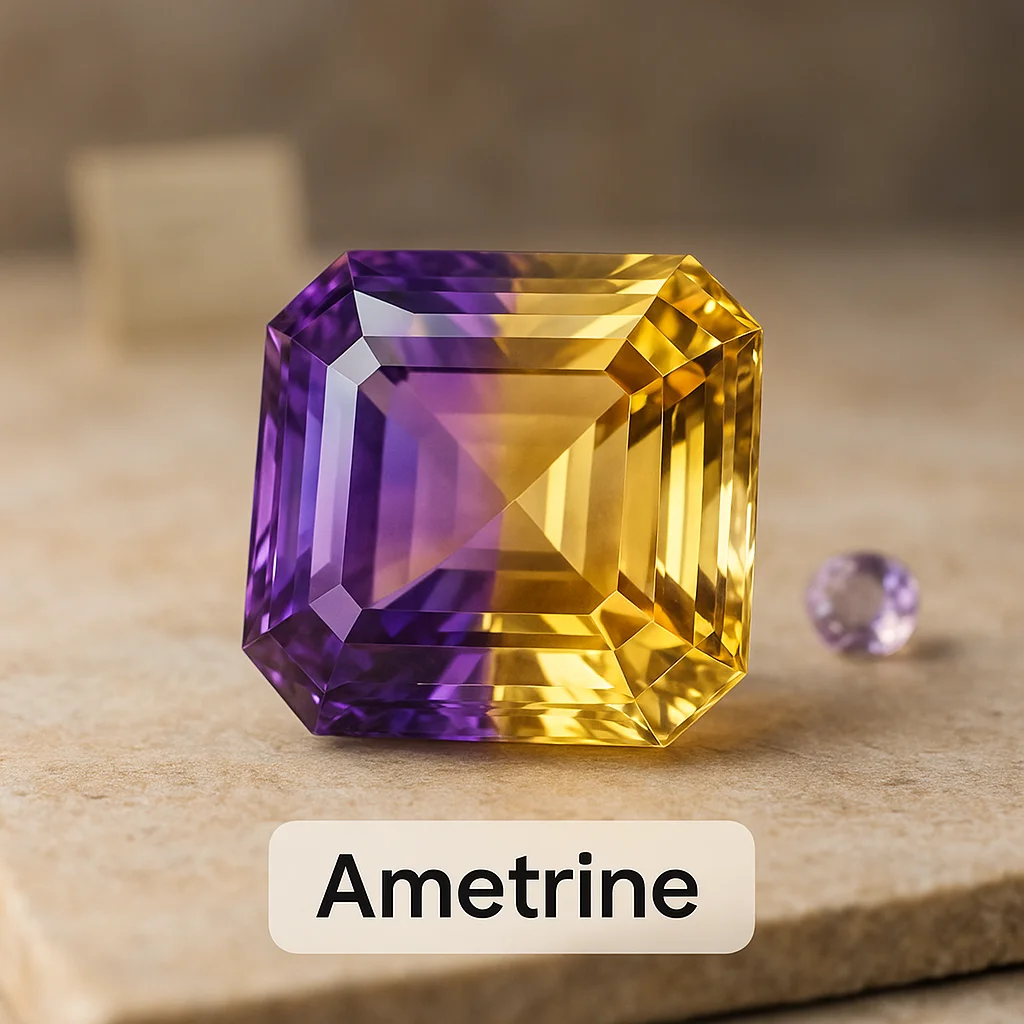
This gemstone is linked to the birthstone tradition, often associated with those born in November, similar to citrine and topaz. Ametrine is highly appreciated by gem collectors and jewelry enthusiasts for its dual-toned beauty and the skill required to cut and polish it properly.
In this article, you will learn about ametrine's origins, physical properties, appearance, cultural significance, care instructions, buying tips, and how to distinguish it from look-alikes.
🌍 Where It Comes From
Ametrine primarily occurs in hydrothermal environments where quartz crystals grow in conjunction with both the yellow citrine and purple amethyst varieties. These environments typically require specific geological conditions, like the presence of silica-rich fluids and the right temperatures for the crystal structures to form.
The most renowned source of ametrine in the world is the Anahi Mine in Bolivia. This location is famous for producing high-quality ametrine that is highly sought after in the gemstone market. The unique combination of purple and yellow in this mine's ametrine makes it quite distinctive and popular among jewelers and collectors alike.
Origin plays a significant role in the value and reputation of ametrine. Generally, Bolivian ametrine is considered top-tier because of its pure, vibrant colors and even color distribution. Although smaller deposits may be found elsewhere, Bolivian ametrine remains the standard against which others are compared.
🔬 How It Forms
Ametrine forms under specific geological conditions that allow for the growth of quartz crystals with both amethyst and citrine color zones. These color zones are a result of differing temperatures and trace elements present during the crystal's formation. Iron is a key element that influences the color change between amethyst and citrine.
The process begins with the slow cooling of molten rock in a hydrothermal environment. As the silica-rich fluids cool, quartz crystals start to solidify, incorporating iron and other trace elements. This results in the distinct color zoning that characterizes ametrine, with gradients of purple and yellow.
Ametrine commonly appears in well-formed prismatic crystals. The challenge for gem cutters is to reveal the stone's characteristic bi-color effect by orienting the cut properly along the crystal's natural color boundaries.
🎨 Color and Look
Ametrine is celebrated for its vibrant combination of purple and yellow hues, creating a striking and eye-catching display. The colors can appear distinctly separated or blend smoothly, depending on the specific specimen and how it is cut.
The appearance of ametrine can vary significantly with the cut and polish. A well-cut ametrine will showcase the transition between colors seamlessly. Lighting can also affect the perceived vibrancy of the stone, as different light sources may accentuate either the purple or yellow tones.
While ametrine generally does not require treatments to enhance its appearance, as natural stones are often vibrant on their own, some specimens may undergo heat treatment or irradiation to improve color or clarity. These methods should be disclosed to potential buyers as they can affect the stone's value.
🧪 Properties That Matter
The Mohs hardness of ametrine is about 7, which means it is fairly resistant to scratching, making it suitable for everyday wear in jewelry. However, like other quartz varieties, it can still be susceptible to damage if struck with force.
Ametrine has no cleavage, which means it doesn't split easily along any specific direction. It has a vitreous luster, giving it a shiny, glass-like appearance that can enhance its visual appeal when polished well.
When considering ametrine for jewelry, it's ideal for use in pendants or earrings, where the risk of impact is lower compared to rings that are worn on the hands. However, with proper care, ametrine can perform well in all types of jewelry.
✨ Meanings, Birthstones, and Culture
Ametrine is not specifically tied to any single cultural symbolism but is generally appreciated for its balance of energies due to its dual color nature. Traditionally, the purple element, like amethyst, is associated with creativity and serenity, while the yellow tones, similar to citrine, suggest energy and abundance.
Although not officially recognized in the main list of birthstones, ametrine shares the month of November with citrine, offering an alternative for those who admire its unique appearance.
Many people who enjoy wearing ametrine appreciate it for its aesthetic properties, and it is often gifted as a symbol of balance and harmony.
🧼 Care and Cleaning
Caring for your ametrine involves regular cleaning to maintain its shine and prevent dirt from dulling its appearance. The safest method is to clean it using warm, soapy water and a soft cloth, ensuring all soap residues are thoroughly rinsed off.
Avoid exposing ametrine to harsh chemicals, extreme temperatures, or prolonged sunshine, as these can affect the stone's color over time. Although ametrine is relatively durable, it's wise to remove jewelry when engaging in activities that might risk impact or scratching.
Store ametrine separately from harder gemstones like diamonds and sapphires, ideally in a soft pouch or cloth-lined box, to prevent surface scratches.
🛒 Buying Tips and What to Check
When purchasing ametrine, consider factors like color consistency, clarity, and the quality of the cut. Stones with a well-defined balance of purple and yellow are often more desirable. Be sure to ask about any treatments the stone might have undergone and request certification for high-value pieces.
Lab reports are beneficial in verifying a stone's natural origin versus being lab-grown or treated. Although a report does not necessarily guarantee quality, it provides assurance of the stone's authenticity.
When shopping online, check seller reviews, ask for detailed photos or videos, and understand return policies, ensuring you only purchase from reputable sources.
⚠️ Real vs Fake and Common Look-Alikes
A distinction exists between natural and synthetic ametrine, both of which can appear stunning in jewelry. Synthetic stones are lab-grown and more affordable but considered equivalent when disclosed properly.
Imitations, such as colored glass or composite stones, mimic ametrine's dual hues but lack the natural characteristics and durability. Doublets and triplets, assembled from multiple layers, can enhance appearance but should be disclosed.
To distinguish between real and imitated ametrine, an expert's eye or professional testing is often required, as visual inspection alone can sometimes be misleading.
❓ Common Questions and Misconceptions
Is it a mineral or a rock? - Ametrine is a variety of the mineral quartz.
Is it a birthstone? - While not traditional, it's an alternative November birthstone.
Will it scratch easily? - At Mohs 7, it's resistant, but caution is wise.
Can it go in water? - Yes, but excessive soaking should be avoided.
Does color fade in sunlight? - Prolonged exposure may lead to fading.
What treatments are common? - Occasionally heat treatment or irradiation.
Is lab-grown 'fake'? - No, but it's important to disclose in sales.
How do I store it safely? - Soft pouch, away from harder stones.
Do inclusions always lower value? - Minor, typical inclusions often do not.
How do I pick a good one for jewelry? - Look for vibrant color zones and quality cutting.
📌 Summary
- Ametrine is a colorful quartz with purple and yellow zones.
- Distinct colors are due to specific trace elements.
- Origin: Primarily from Bolivia, affecting market value.
- Mohs hardness 7: scratch-resistant, ideal for varied jewelry.
- Commonly untreated; appearance generally natural.
- Use soap and water for safe cleaning; store carefully.
- Best for pendants and earrings; rings with care.
- Recognizable look-alikes include synthetic and imitations.
- Authenticity confirmed through lab testing.
- Buying checklist: Color, origin, cut, treatments matter.
- November birthstone alternative, traditional symbolism.
- Remember: Shares traits of both amethyst and citrine.